
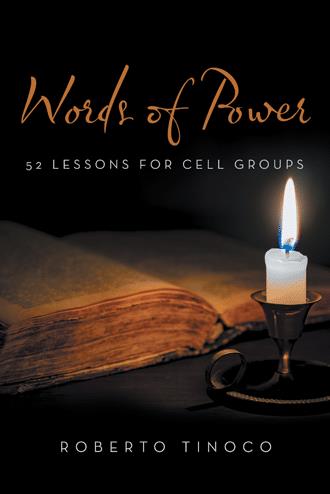
Words of Power
52 Lessons for Cell Groups
by
Book Cover & Preview Text
“And God said, Let there be light: and there was light.” (Genesis 1:3) Introduction The Word of God is something truly marvelous, yet often misunderstood by many. It is so powerful that when it is set in motion, wonderful things happen. An example is when God said, “Let there be light,” and immediately light appeared at the sound of the voice of the Almighty God. For so is the word that goes forth from His mouth: it shall not return unto Him void, but it shall accomplish that which He pleases (Isaiah 55:11). In this lesson and throughout this book, the emphasis will be on highlighting those words in the Bible that changed the course of all humanity. These were the words of God. Therefore, the focus will be on them, their power, and how they can impact the life of the believer. Arnoldo Arana from bible.com states, “The Bible is not merely a book of religion, philosophy, or morality. The Word of God is the creative verb of God.” I. God Having Spoken Many Times From the time man was created, God has not ceased to communicate with him, speaking in many ways. The writer of Hebrews expresses it as follows: God, who at sundry times and in divers manners spake in time past … (Hebrews 1:1) Many times and in many ways. This statement contrasts with what many sociologists and philosophers claim about the Creator, as the author reveals in his book on suffering. Some have dared to say that God created man but then forgot about him. However, this is not so. God has spoken many times and in many ways with words that have transformed all of humanity. On countless occasions, God spoke directly to His servants without needing intermediaries or spokespersons to make His will known. They saw, heard, and even spoke with God, leaving traces of those encounters. Some of them were Adam, Noah, Abraham, Jacob, Moses, and others. The list of people who saw and spoke with God face to face, receiving His will, is extensive. Finally, God spoke through His written Word, which He Himself commanded to be written from ancient times. One of the earliest and most notable examples is Moses: And the LORD said unto Moses, Write thou these words: for after the tenor of these words I have made a covenant with thee and with Israel. (Exodus 34:27) In this latter case, this great servant of God laid the foundation for communication between the Creator and His creation through written words. Thanks to the interaction of this man of God, we now have the most widely read manual of all time, “The Bible.” Although this lesson and book are not a study of the Holy Scriptures, they will focus on specific words that changed lives, families, kingdoms, and continue to transform us today. II. The Power of Jesus’ Words Despite all this, man has always been reluctant to hear the voice of God. Therefore, God came to earth in human form, in the person of Jesus Christ, to speak directly to humanity. When Jesus came to earth, God’s words were not only preached but came to life and manifested powerfully. From that point forward, there was a connection between the ancient words and the new ones that Jesus and His disciples introduced to the world. The Word of God became alive. One need only read a few biblical passages to realize the response and impact of God’s Word on the people of that time. A fascinating example is when the chief priests of Israel, in their attempt to stop Jesus from preaching, sent officers to arrest Him, but they returned and answered when asked why they had not brought Him: “The officers answered, Never man spake like this man” (John 7:46). Those words must have been profoundly impressive for the temple guards to return without arresting Him. What did Jesus say to them? No one knows, but undoubtedly, the words He spoke moved and changed them, preventing His arrest. Another remarkable episode involves a centurion who had a great need for a paralyzed, gravely ill servant and came to Jesus for help and healing. The words of this man have been recorded among the words of power for what he said and the faith with which he said it: “The centurion answered and said, Lord, I am not worthy that thou shouldest come under my roof: but speak the word only, and my servant shall be healed” (Matthew 8:8). “Speak the word only, and my servant shall be healed.” What powerful, faith-filled words, capable of raising the dead. Even Jesus marveled at the centurion’s faith, declaring that He had not found such great faith, even in Israel. This signifies that the centurion was not an Israelite, nor had he grown up under the law or in contact with the Word. Yet, something powerful within him moved him to believe that with just a word from Jesus, his servant would be healed. He likely connected this to the phrase we read earlier, when God said, “Let there be light,” and light was made. So Jesus said: “Go thy way; and as thou hast believed, so be it done unto thee” And in that moment, his servant was healed. Glory to God! III. What Is the Purpose of God’s Words? So, why does God speak to men? Or what is their effect on man? Without a doubt, the words of the Lord, both in the Old and New Testaments, have a well-defined purpose from the Lord, which will be explored throughout this lesson and book. However, due to space, only a few are highlighted here. The Word can draw us closer to Jesus. The primary purpose of God’s Word is, without question, to draw us closer to the Lord. The reason is that man has been far from God since Adam’s fall, and the Creator has done everything possible to seek him and bring him back to His path. Then said Jesus to those Jews which believed on him, If ye continue in my word, then are ye my disciples indeed. (John 8:31) The Word can strengthen our faith. Lack of faith is one of man’s weaknesses, even among believers. However, when the Word of God flows, it activates faith in the believer, and they believe in God. Two biblical passages support this point. The first is John 20:31: “But these are written, that ye might believe that Jesus is the Christ, the Son of God; and that believing ye might have life through his name”. The second is Romans 10:17: “So then faith cometh by hearing, and hearing by the word of God”. In both passages, the listener is encouraged to understand the focus of this lesson: the power of the Word of God. First, the words were written so people would believe that Jesus is the Christ. Then, when these words are preached and heard, they produce faith in believers. The Word can improve our lives. It goes without saying that when a person puts the Lord’s commandments into action, everything transforms for the better. One result is the joy and gladness of the heart. The prophet Jeremiah expressed it as follows: “Thy words were found, and I did eat them; and thy word was unto me the joy and rejoicing of mine heart…” (Jeremiah 15:16). In addition to joy and gladness, the Word of God is spirit and life in a person. Jesus said of this: “It is the spirit that quickeneth; the flesh profiteth nothing: the words that I speak unto you, they are spirit, and they are life” (John 6:63). The Word guides us on the right path. Another significant benefit for the believer who has the Lord’s Word is guidance and direction for their path. The psalmist expressed it this way: “Thy word is a lamp unto my feet, and a light unto my path” (Psalm 119:105). In this sense, the Word of the Most High is a light that shines in the darkness and illuminates the believer’s path so they do not stumble: “The entrance of thy words giveth light; it giveth understanding unto the simple” (Psalm 119:130). Among other benefits, the Word of God can help us achieve success and prosperity in life (Joshua 1:8) and ultimately lead us to salvation (Romans 1:16).
Formats






Book Details
About the Book
The book “Words of Power: 52 Lessons for Cell Groups” has been designed for small groups and even for preaching. It also aims to highlight the life and power that the Word of God produces in our lives. It is not a focus on miracles and wonders but rather on the transformation that it can bring to our person. From this perspective, the reader will be able to come face to face with an individual reality and be confronted with the truth of the Holy Scriptures. Furthermore, the book is designed to be read individually or to be presented in a small group or a larger audience, so each lesson is fluid and does not contain too many points. There are fifty-two lessons, providing material for an entire year of exposition. The first nineteen lessons address the Ten Commandments and some related matters. In this first section, the reader will learn about the commandment, its meaning, its purpose, and its teaching for our days. The next section focuses on the spiritual disciplines of the believer, emphasizing worship, prayer, fasting, Bible reading, and church attendance. These teachings highlight the great need for believers not to forget the basics of the Christian life. The following section covers five standalone topics that address matters of utmost importance for the believer, but with the same focus: highlighting the impact of the Word of God. Finally, the theme of God’s calling and purpose for believers is addressed. In this final section, it is emphasized how God calls, prepares, equips, and sends those He will use in His great work. In this last section, the topics presented can help motivate even the workers of the Word of God. Additionally, they can also support those who desire to serve God in a deeper, more meaningful way. We hope that this book will be a blessing to the entire church and a tool for preachers, teachers, and cell group leaders to utilize.
About the Author
Author Roberto Tinoco is a minister of Hispanic descent who has dedicated more than 20 years to pastoral ministry and the formation of Christian leaders. He graduated from the Evangelical Seminary of Puerto Rico, where he earned a Master of Arts in Religion, and from McCormick Theological Seminary in Chicago, Illinois, where he earned a Doctorate in Ministry. He is currently the pastor of one of the Apostolic Assembly churches in Homestead, Florida, where he has served as District Bishop.