
Roots of Mercy, Branches of Hope
by
Book Cover & Preview Text
Thomas Cole stepped off the faded-blue Greyhound bus onto soil he once knew by heart. The late afternoon sun saturated the small, nondescript bus stop in a soft amber haze, as if nature itself were offering a gentle welcome. Yet, for Thomas, that warmth felt more like a spotlight casting harsh judgment upon the man who had dared to return. He swallowed hard, duffel bag clutched so tightly in his grip that his knuckles turned white. It was the only bag he owned—an apt representation of how small his life had become after eight years in prison. A brisk country wind carried the scent of freshly turned earth, reminding him of the farmland that sprawled beyond Cedar Grove’s boundaries. Once, that scent had evoked peaceful memories of playing catch with his best friend, Steven Bradley, under the wide-open sky. But now, it was more a reminder of the things he had lost—of a life left to wither under the burden of his guilt. He felt like an interloper, trespassing on a place he no longer had the right to call home. The bus’s diesel engine roared behind him as it pulled away, leaving him alone on the gravel shoulder. It coughed up a cloud of dust that shimmered in the sunlight, then slowly dissipated into the horizon. He inhaled deeply, trying to steady the tremor in his chest. Every step along the cracked pavement was a sentence, pronouncing him guilty in the court of his own mind. His time in prison had been a relentless loop of regret, replaying the moment of the accident in his head: the screeching tires, the blinding headlights, the horrified expression on Steven’s face a split-second before impact. Even here, outside the suffocating walls of incarceration, his mind was a more confining prison than any cell block he’d known. Thomas drew the collar of his worn jacket up against the chill. It wasn’t that cold, but nervous sweat clung to his skin, making him shiver. He pressed onward, following a rutted dirt path that wound from the bus stop toward Cedar Grove’s modest Main Street. If he had come during winter, the endless fields to his left and right would be barren, brown, and lifeless. But now, in mid-spring, green shoots of new growth were everywhere—so alive, so hopeful. He almost resented nature for its insistent renewal, as though mocking the stagnation in his own soul. His thoughts flicked to the stark prison yard he had left behind just last week. Rows of gray concrete walls, chain-link fences, and the constant hum of fluorescent lights had defined his world. He had eaten, slept, and labored there—haunted by what he had done and by the painful knowledge that he had destroyed not just one life but multiple lives. No matter how many times he prayed, the memory of that crash refused to release its chokehold on his conscience. The biblical words from Romans 3:23 echoed in his mind, words he had read during one of the mandatory prison chaplain sessions: “For all have sinned and fall short of the glory of God.” Indeed, he felt that truth down to his bones. But did it really apply to someone like him—a man who had taken a friend’s life through reckless choices? He tried to believe that if there was grace to be found, it might exist here in Cedar Grove, the only home he had ever known. Maybe. Or perhaps he was simply deluding himself. Thomas soon reached a faded wooden sign that read, “Welcome to Cedar Grove,” chipped white paint curling away from the letters. A shudder rippled through him. This was it—the threshold of his old life. He could almost feel the weight of the next steps pressing into the dirt, one foot in front of the other, an inevitable journey of confrontation. The smallness of the community meant that every face would be familiar. Every whisper behind his back would carry a name he recognized. His heart pounded in his chest. What if they hate me? a voice in his head demanded. What if they never let me forget what I did? Thomas almost smiled bitterly at that. As if he would ever let himself forget.
Formats









Book Details
About the Book
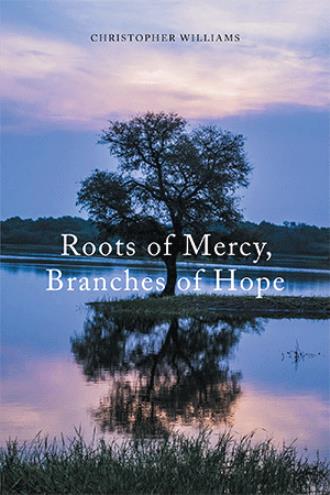
One reckless night behind the wheel costs Steven Bradley his life, and Thomas Cole spends eight years in prison as a consequence. He eventually returns to Cedar Grove convinced forgiveness is impossible. The town remembers. Steven’s grieving parents remember, and Thomas remembers most of all. When relentless rain drives the Cedar River toward disaster, Thomas is forced out of hiding and into the very pain he caused. As floodwaters rise, he risks his life to protect the Bradley family’s home, memories, and fragile hope. Guided by Pastor James and trauma-scarred counselor Harriet Moore, Thomas discovers that repentance is not a single apology but a daily surrender. Roots of Mercy, Branches of Hope is an emotionally charged Christian novel of grief, resilience, and grace, where a wounded community learns that forgiveness does not erase loss—it transforms what remains. Beneath a young oak planted in Steven’s memory, mercy takes root and hope begins to branch outward.
About the Author
Christopher Williams writes redemptive Christian fiction that meets brokenness with honesty and gospel hope. Devotedly married to his wife for more than twenty-four years, he brings the steadiness of family life, the tenderness of a grandfather, and the discipline of teaching adult Bible study to every page. Roots of Mercy, Branches of Hope is his debut novel.