
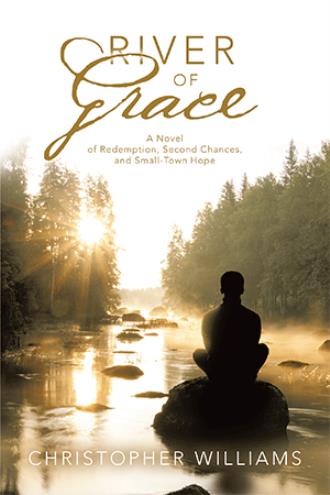
River of Grace
A Novel of Redemption, Second Chances, and Small‑Town Hope
by
Book Cover & Preview Text
Excerpt from Chapter One: “Homecoming” The rain had thinned to a silver mist by the time Sam Clarkson turned onto Main Street. Headlights skimmed the slick asphalt, catching the glint of puddles that pooled in shallow dips and the hairline cracks in the road that time had left behind. The town looked smaller in the wet—quieter, too—as if Greenhaven held its breath and listened to the Rushwater River a mile away. Sam eased his battered pickup to the curb beneath the flicker of the general store’s old neon sign. WELCOME TO GREENHAVEN arched above the window in fading paint he’d known since he was a boy. The sight tightened something in his chest. Ten years away, and still the place could find his softest spot without trying. He crossed the street and climbed the sagging steps of his childhood house, the smell of damp wood greeting him like a memory. Inside, dust floated in the beam of his flashlight; sheets ghosted the furniture; silence lay heavy on the floorboards. On the mantle, his mother’s narrow-lipped vase waited beside a frame whose glass had gone cloudy. He wiped it with the edge of his sleeve. Two boys, sunburned and grinning, stared back: Sam with an arm slung over Luke’s shoulders, a church picnic in the background, the Rushwater a ribbon of light beyond the trees. A ripple of nausea rose through him. Ten years hadn’t dulled the sound of tires skittering on rain-slick pavement, the squeal of brakes, Luke’s shout—sharp and terrified—before the world folded in metal. He shut his eyes. The picture frame clicked back to the mantle. The river’s hush, even from here, threaded through the walls. He didn’t turn on the overhead lights when the power flickered alive again; the house didn’t need to see him. He found the old transistor radio, twisted the dial, and a local voice crackled through: more rain tonight, flood watch extended… Rushwater above seasonal average… sandbagging begins at first light. He let the words pass over him like weather. Floods had always been Greenhaven’s unwelcome season. By morning he was walking, hands in his jacket pockets, mist lifting off the sidewalks as if the town were exhaling. The Cornerstone Diner’s neon hummed—still that soft cherry-red glow he remembered. For a minute he watched through the window: steam drifting from coffee cups, a boy in a letter jacket laughing at something the waitress said, a mother cutting pancakes into quarters for a little girl who kicked her heels against the booth. He could have kept walking. He told himself he should. Instead, the bell over the diner door chimed and he stepped inside. Warmth wrapped him—the butter-sugar scent of cinnamon rolls, the sizzle from the flat-top, the comfortable rattle of plates. Then Marla Benson looked up from the register, and the room tilted, just a little. She was thinner than he remembered, stronger too; the kind of strength that grows in the lean years and stays. “Sam.” Not a question. Not quite a welcome either. He managed a nod. “Morning.” She slid a menu across the counter, her expression unreadable. “Coffee?” “Please.” His voice came out rougher than he liked. The mug landed with a soft clink. He wrapped both hands around it to steady himself. The heat seeped into his fingers, then deeper. “Place looks good,” he said. “New booths?” “After the spring leak.” She poured her own cup and didn’t look at him as she added, “We fix things when they break around here.” He took the nudge without flinching. “I heard the river’s high.” “It is.” She glanced at the window as if she could see the water from here. “Sheriff Tucker called a meeting for tonight. Sandbags, volunteers, evacuation routes. Same drill as always.” “Pastor Ruth still at the chapel?” he asked. Marla gave him the first small, almost-smile of the morning. “Still and always.” The bell chimed again. A girl with dark curls peered around the kitchen door, a paper crown made from a dessert menu slipping over one eyebrow. “Mama, is the cinnamon roll guy here yet?” she asked in a conspiratorial whisper. Marla’s eyes flicked toward Sam and back to her daughter. “He might be.” The little girl spotted him then, bright curiosity lighting her face. She marched straight to the counter, planted both hands on the chrome edge, and stood on tiptoe. “I’m Grace,” she announced. “Do you like cinnamon rolls?” Sam felt something unclench in his chest. “I do,” he said solemnly. “Very much.” “She helps on Saturdays,” Marla said, a warning and a pride all at once. She reached to straighten the paper crown. “Back to the kitchen, peanut.” Grace darted behind the swinging door and Sam let out a breath that surprised him. He looked down at the menu though he knew every breakfast item by heart, because looking at Marla any longer felt like stepping too close to fire. “Eggs. Whatever’s easiest.” Marla wrote it down. “Easy isn’t always best.” She said it lightly, but it landed with weight. They didn’t say much while he ate. The diner spoke for them—the scrape of forks, a burst of laughter from a corner booth, the radio’s low murmur about rising water and caution near the Rushwater’s edge. When he finished, he slid a few bills onto the counter. “Keep it,” Marla said, already turning to refill another customer’s cup. Then, softer, not quite looking at him: “There’s a meeting at the chapel at six.” “I’ll be there,” he answered. Outside, the mist had finally lifted. Sunlight pushed through the thinning clouds and fell across Main Street in long, pale bands. Sam stood on the curb a moment longer than necessary, his truck keys cold in his palm. He heard the river then—faint but certain—like a voice calling from a distance he could finally face. He turned toward the sound. The bell above the diner door chimed behind him, and he walked on.
Formats







Book Details
About the Book
River of Grace by Christopher Williams In the quiet town of Greenhaven, ordinary lives are stirred by extraordinary grace. Christopher Williams, author of heartfelt faith-forward fiction, invites readers into a story of redemption, community, and the courage to forgive. Drawing from years of ministry, mentorship, and creative service, Christopher crafts characters and settings that feel lived-in and deeply familiar. His warm, rustic voice and cinematic storytelling have resonated with readers across church groups and local publications. River of Grace is a moving portrait of how faith can mend what’s broken—and how love can bloom in the most unexpected places. Step into Greenhaven. Stay for the healing.
About the Author
The author of River of Grace writes faith‑forward fiction about ordinary people who encounter extraordinary grace. A longtime church volunteer and youth mentor, the author has led small‑group studies, coordinated disaster‑relief service projects, and coached teens in the arts—experiences that inform the authenticity of Greenhaven’s community. Their work has appeared in church newsletters and local outlets, where readers value a warm, pastoral voice and cinematic storytelling. When not writing, the author walks river trails, serves at church potlucks, and sketches new story ideas at the local diner. River of Grace is their newest novel.