
The Road to Calvary
(A Journey with Jesus) From the Cradle Through the Cross
by
Book Cover & Preview Text
The setting is the Passover. The scene is the Upper Room. It is approaching sunset on Tuesday the 14th of Nisan on the calendar of the Jews. The disciples are seated on cushions eating and talking among themselves. Jesus shocks them by rising from his cushion, crossing the room to a basin of water, taking a small white cloth, tying it around his waist, knotting it securely in the back, and God, like a common houseboy, stoops before His disciples, and awaits permission to scrub the grime from their feet. They are bewildered by this action taken by Jesus. John who was there, in essence, wrote in John 13:1, “That before the Feast of the Passover, when Jesus knew that His hour had come that he should depart from this world to the Father having loved His own who were in the world (He loved them to the end). Supper being over and the devil having already been put into the heart of Judas Iscariot, Simon’s son, to betray Him, Jesus, knowing that the Father had given all things into His hands and that he had come from God and was going to God, rose from supper, laid aside His garments, took a servant’s towel, and made a belt with the towel. After that, He poured water into a basin and began to wash the disciples’ feet and wipe them with the towel that he had used for a belt. Then He came to Simon Peter and Peter said, “Lord what are you doing washing my feet? [I ought to be washing yours].” As we approach this passage, some people say, “Who cares? So what if Jesus washed some feet? What’ is the big deal about that?” The roads were not paved in those days. People’s feet got dirty walking around in mud. Whose feet needed more washing than people who would scatter, abandon Him, refuse to submit to His authority, and even betray Him for the price of a slave? We are all supposed to be servants. What does this story have to do with me or you? What would you do if Jesus knelt before you and said, “May I wash your feet?” How would you react? Would you say with Simon Peter,” I do not want it and I do not need it” Would you refuse God the privilege of ridding your life of the daily dirt and grime that we pick up naturally by living in society here on Planet Earth? This is not so much a story about twelve (12) disciples. It is a story about us. We need cleansing from the daily dirt of life. That cleansing required love. Jesus lived on a timetable not His own. In John 2:4, Jesus said to Mary “Mine hour is not yet come.” In John 7:30 when the Jews tried to arrest Jesus but could not, John wrote it was because “His hour had not yet come.” In John 12:23, 27, in dealing with some Gentiles, Jesus said, “ Now my soul is troubled. [It is approaching that dreadful day. The hour is near but] the hour has not yet come that the Son of Man should be glorified.” They could not touch Him until His hour had come. But in John 13:1, Jesus knew His hour had come. He confirmed it in John 17:1 because Jesus was going home. His two-stage departure through Calvary and from Olivet was close and about to happen so Jesus said the hour of the culmination of Christ’s greatest crisis experience had come. It was zero hour. It was the time for the death, burial, and resurrection of Jesus where he would provide God’s salvation for fallen man. It was the hour of total endurance. Of this hour, John said in John 13:1, “It was the hour of a perfect and everlasting love that loved His people to the greatest extent in terms of time and readiness to save and serve His own.” That wonderful, perfect love is like the little girl who was playing with her doll in the same room where her mother was busy at work. When her mother was finished, she said, “You can come now, honey. As that little girl rushed to her mother’s side, she said, “I am so glad you called. I wanted to love you so very much.” The mother said, “But I thought you were happy with your little dollie.” “I was” (the girl replied). “But I get tired of loving her. She never loves me back.” “Is that the reason you love me, because I love you back (the mother asked)?” “O no (the daughter replied). I loved you because you loved me when I was too little to love you back” The prophet wrote in Jeremiah 31:33, “The Lord has appeared from ancient times saying, I have loved you with an everlasting love, therefore with lovingkindness (with the fact God keeps His word) I have drawn you, I will build you, and you shall be rebuilt.” God said in Revelation 13:8 that Jesus is “the Lamb slain before the [creation] of the world.” Before time began, He knew about the pain. He came anyway because God so loved us that he gave His uniquely His begotten Son that whosoever believes on Him should not perish/go to hell but have everlasting life.” There is incredible love in the God Who died at Calvary.
Formats







Book Details
About the Book
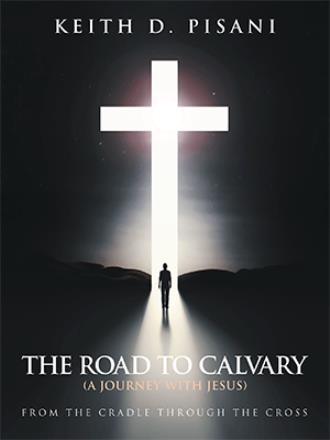
Did you ever wonder what it would have been like to travel with Jesus, be with Jesus, walk and talk with Jesus, and be there with Christ on His road to Calvary? Imagine no longer. You will not physically go back in time and take a journey with Jesus but you will be able to vicariously experience and “get a sense” of many of the events that took place between Christ’s birth, His crucifixion at Calvary, and His resurrection from the grave. The structure of this book has twenty-one (21) chapters. One chapter looks at the Preexistence of Christ (He was before He was born). The others look at Christ’s life between Christmas and Easter as the book takes the reader from Bethlehem to Christ’s empty tomb. As you read this book, I pray that you will grow in the grace and knowledge of our Lord and Savior Jesus Christ (2 Peter 3:18). Christ’s disciples did as they walked with Jesus. So can we.
About the Author
Keith D. Pisani is an evangelical pastor, international evangelist, conference speaker, seasoned author, family counselor, Scripture-based Bible teacher, and regional church leader. His books (10), seminars, and presentations have impacted thousands of lives on three continents. For more about Keith, visit www.keithpisaniministries.com.