
The Twelve Gates of Grace
A Novel of Faith, Forgiveness, and the Power of Community
by
Book Cover & Preview Text
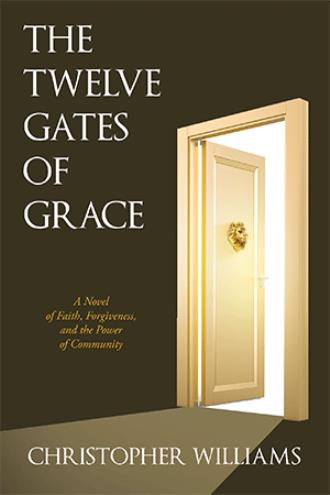
The arrivals hall smelled like coffee and rain. Ethan Rivers stepped off the last flight with the slow, deliberate gait of someone who had learned to measure each breath. Fluorescent light flattened everything—the tired faces, the glossy floor, the questions he wasn’t ready to answer. Above him, a monitor blinked baggage claim codes like ciphered messages from a world he’d just left behind. A boy laughed somewhere near the vending machines. A stroller wheel squeaked. A man in a ball cap held a cardboard sign that said WELCOME HOME. Ethan fixed on that word—home—as if staring at it might make the feeling return. “Ethan!” Amelia’s voice cut across the noise, warm and incredulous. She came at him with too much joy and too careful a smile, the way you approach a skittish animal. He dropped his bag and let her hug him, ribs and all. For a moment he kept his arms at his sides, then something inside unclenched and he held his sister like a man bracing in a storm. “You made it,” she whispered. “I made it.” His voice sounded older than the airport. “How’s Mom?” Amelia’s smile faltered. “She had a rough night, but she’s holding on. The doctors think… we should come soon.” He nodded. The words arranged themselves in a careful stack in his chest. He could feel the tremor beneath them—the kind that took one wrong breath to collapse. A fellow passenger slowed as he passed. “You’re Ethan Rivers, right? Read your piece on the border clinic—what you did for those families…” He trailed off, sensing the wrong moment. “Anyway—thank you.” A quick, embarrassed salute, and the man moved on. Ethan waited for the familiar twist in his gut, the one that came whenever someone mentioned the work. This time it didn’t come; something gentler did, like a wave deciding not to break. Amelia looped her arm through his. “C’mon. I parked close.” They walked. Outside, the evening had broken open into that wet, electric quiet after rain. Wipers clacked across windshields like metronomes. Amelia kept a measured pace, as if she’d practiced not to look back. “Church still sings on Sundays?” he asked, aiming for lightness and missing. She smiled sideways. “They don’t just sing; they rebuild. You should see the doors after the restoration team finished the lion carving. The whole foyer glows when the morning light hits Judah’s door.” He almost said I remember when I believed things like that mattered. But the sentence stayed behind his teeth. “Judah. That’s the lion, right?” “Right. There’s Dan with the scales, Zebulun’s ship, Joseph’s wheat…” She shrugged, ashamed of sounding proud. “I know it’s just wood. But it helps.” They reached her car. She popped the trunk and lifted his bag. “You don’t have to—” he began. “—I want to.” She shut the trunk firmly, as if ending years of unfinished conversations. “We’ll stop by the house first. You can rest, and in the morning we’ll go see Mom.” They drove through streets that remembered him. The diner still blinked its red neon PIE sign. The hardware store still leaned into the corner as if listening to every rumor. He kept noticing the places where his memories stopped and hers kept going. “People from church asked about you,” she said. “Pastor Gabriel said to tell you you’re welcome, no questions asked.” “I appreciate no questions.” “You’ll get some,” she said softly. “We’re not great at mysteries.” They passed Beth‑El. Even in the wet dark, the building sat like an old friend who had learned to keep quiet. Streetlight poured down the stone and pooled around the steps. He saw the doors—twelve along the side walls, twelve carved emblems like a private language. The lion’s mane on Judah seemed to shine even without sun. “After the flood,” Amelia said, “we thought we’d lose them. But people came from everywhere. Someone cut a check none of us can explain. We paid off the mortgage. Folks say God did it. I think… God did it through people.” Ethan watched the church recede in the mirror. He wanted to say war taught me how easily water defeats stone, but Amelia’s face held so much tired hope he could only nod. At the house, the porch light burned steady. Dust had learned the contours of everything since he left. A stack of mail sat on the entry table: hospital envelopes; a sympathy card with lilies he tried not to read. In his old room, trophies blinked from a life where winning had rules. A shoebox held prayer journals he didn’t remember keeping. He lifted the top one and a page fell open on its own: Lord, lead me back when I forget the way. He laughed once, without humor, and set it down. Night thinned around the edges. Something like sleep almost came, then broke. Images flickered: a clinic tarp flapping like a wounded bird; a friend’s hand slipping from his; the sound a body makes when earth accepts it. He sat up, palms on knees, and forced his mind toward the only thing he could do next. In the kitchen, Amelia poured tea she would not drink. “You okay?” she asked, not because it was true, but because saying it gave them both a place to stand. “I will be,” he said, astonishing himself with the verb’s courage. She touched his wrist. “Mom will be awake in the morning. And… Ethan? If you can manage church on Sunday, even just to sit in the back—there’s a new song Paul wrote. It weaves the tribes and the disciples. People hum it when they’re scared.” He pictured the lion carving and the ship and the scales and the wheat. He pictured doors that remembered better stories than his. “We’ll see,” he said. As he turned out the kitchen light, she spoke into the dark. “I’m glad you came home.” He stood there, letting the sentence find every place in him that still needed it. “Me too,” he said. And for once it felt like more than a line you say to comfort someone else. It felt like a door you might actually walk through.
Formats







Book Details
About the Book
When a war-scarred journalist returns to a small hometown church
on the brink of foreclosure, he finds more than vandalized doors
and mounting debt—he finds a people who refuse to give up on
grace. Twelve Gates of Grace follows Ethan Rivers, a former correspondent
who lost his faith overseas, as Beth-El Ministries battles a ruthless developer,
a devastating act of sabotage, and the slow heartbreak of illness. Each of
the church’s twelve carved doors bears a biblical emblem, reminding the
congregation—and Ethan—that God writes redemption through flawed tribes
and fearful disciples. As the community rallies to restore the sanctuary, Ethan
must confront his anger at God, reconcile with an estranged father, and decide
whether love and forgiveness can still change a life. Inspired by Revelation 21’s
“twelve gates,” this uplifting, emotionally rich novel invites readers to believe
that no betrayal is beyond mercy and no ruin is beyond repair.
About the Author
Christopher Williams is a faith-centered storyteller whose work illuminates
how grace renews broken places. He writes contemporary Christian fiction
grounded in Scripture and lived courage, and his novels are regularly chosen
for church book clubs and community reading groups.
He contributes devotionals and essays to local ministries and has led
small-group studies on forgiveness and reconciliation. Beyond his writing,
Christopher serves with an adult bible study ministry and mentors emerging
writers, blending practical service with creative discipleship.
Christopher lives in Upper Marlboro, Maryland, with his family. Connect
and subscribe for behind-the-scenes notes, discussion guides, and bonus
chapters at www.topherbooks.com.