
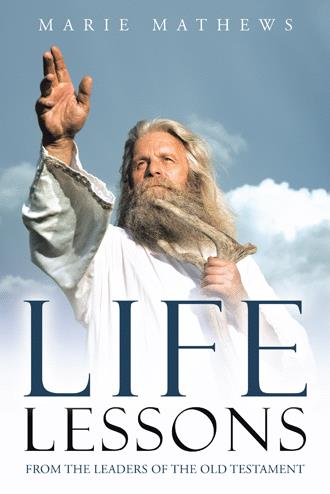
LIFE LESSONS
FROM THE LEADERS OF THE OLD TESTAMENT
by
Book Cover & Preview Text
Part 2: Abraham receives divine visitors
God chose Abram for His covenant relationship, promising him countless offspring and a land of blessing (Genesis 12, 15, 17). This covenant established Abram as the father of nations; it also laid the foundation for God’s redemptive plan through his descendants. After God made a solemn vow to Abram, He changed his name to Abraham (Genesis 17:5), which meant “father of the multitudes”.
Yet even after God’s repeated promises, Abram questioned how Sarah could bear a child at her advanced age (Genesis 17:17-18). Abram and Sarah made a decision without God which would have lasting consequences: Abram would father a child through Hagar, Sarah’s maidservant (Genesis 16:1-6). This led to conflict within the family. However, God reassured Abram and fulfilled His promise.
Read Genesis Chapter 18:1-19
The appearance of the Lord to Abraham at Mamre was personal and direct. God did not send a message through a dream or a prophet. Instead, He came in person. The text describes three men – one was the LORD. He is not distant – He draws near to His people and engages with them.
Abraham responded with faith, reverence and humility to provide his guests with hospitality. After the meal began, the Lord reaffirmed his promise to Abraham, that He would provide him with a son. However, Sarah did not believe: “How could a worn-out woman like me enjoy such pleasure, especially when my master—my husband—is also so old?” (18:12). As the Lord is omniscient, He responded directly to her doubt, stating “Is anything too hard for the LORD?” (18:14). This question reminds us that God’s promises do not depend on human ability. Instead, they rest entirely on His power and faithfulness. The Lord did not reject Sarah for her skepticism.
Life Lessons from Abraham:
1. God was shaping Abraham into a great man of faith. This meant circumstances where Abraham would have to learn to trust in God to understand His will and purposes. Abraham’s doubt showed that even Abraham had times of uncertainty.
2. God communicated His plans clearly. He told Abraham, “Abraham will certainly become a great and mighty nation, and all the nations of the earth will be blessed through him” (18:18).
Self-reflection and group discussion questions:
1. How does Sarah's reaction to the promise of a son reflect our own reactions to seemingly impossible promises of God? What does the Lord's response to Sarah's laughter reveal about His character?
2. How does this narrative challenge us to believe in God's promises when they seem impossible? What does this reveal about the importance of faith, even in the face of doubt and impossibility?
3. How do the promises made to Abraham in 18:18 highlight God’s promises to his descendants, and shape our understanding of God’s redemptive plan for humanity?
Part 3: God tests Abraham’s faith and obedience
Child sacrifice was practiced among the surrounding Canaanite peoples, but God does not desire human sacrifice (Leviticus 18:21). The test God gave Abraham was a great challenge because it seemed to contradict the previous promise He had made when He stated, “Isaac is the son through whom your descendants will be counted” (Genesis 21:12). It was inconsistent to sacrifice the son who was promised to carry on the covenant, when it had not yet been fulfilled.
Read Genesis 22:1-18
When God commanded Abraham to sacrifice his son Isaac, born in his old age, Abraham could have seen this order as unreasonable and unbearable. But Abraham rejected that thinking. Instead, he chose to trust God. This test proved Abraham’s unshakeable commitment to the Lord’s plan for his life. In God's covenant relationship with Abraham, the account of Jehovah-Jireh is significant. It is seen as a foreshadowing of God's provision through Jesus Christ. Just as God provided the ram instead of Isaac (22:8), He provided His Son as the sacrificial lamb for the sins of humanity (John 3:16).
God confirmed His promise of divine provision to Abraham: “Because you have obeyed me and have not withheld even your son, your only son, I swear by my own name that I will certainly bless you. I will multiply your descendants beyond number, like the stars in the sky and the sand on the seashore. Your descendants will conquer the cities of their enemies. And through your descendants all the nations of the earth will be blessed—all because you have obeyed me” (22:16-18).
Self-reflection and group discussion questions:
1. What is the significance of God testing Abraham with such a difficult task?
2. What does the story teach us about surrendering to God's will, even when His plans are not clear? Are you willing to follow God’s direction, even when you do not know where it is going to lead, and without being able to work out what is going to happen in advance?
3. What does the Angel's intervention signify in the context of God's relationship with Abraham?
4. What does the concept of "The LORD Will Provide" (22:18) mean in your personal life?
5. What testing or trials have you experienced in your life of faith? How has God redeemed you?
Further Life Lessons from Abraham:
1. Abraham’s life reveals faith in action. His willingness to sacrifice Isaac shows his deep-seated faith and trust in God. His continual obedience to God strengthened his faith and led to blessings.
2. Genesis Chapter 22 teaches us that faith is refined through testing. God never asks for obedience without His purpose, yet He can be trusted even when we do not understand His plans.
Formats


Book Details
About the Book
The Old Testament Biblical characters struggled, trusted, failed and persevered. Their stories reveal the challenges inherent in human experience. Studying the patriarchs, leaders and kings enables us to understand God’s faithfulness to them, and His abiding love. Their lives reveal how He worked through ordinary people who chose to put their trust in Him. They teach us about obedience to God and the role of leadership. Abraham was known as the “friend of God” and the father of many nations because of his great faith. Through his son Isaac’s descendants, God’s promise continued through generations. Jacob’s life also revealed how God transforms people. After many years of struggle and personal growth, God changed his name to Israel, as he became the father of the twelve tribes. The remaining chapters contain life lessons from Joseph, Moses and Joshua along with King Saul, David and Solomon, who were all leaders of the Old Testament. None of these men lived flawless lives – they struggled with doubt, fear and personal failures. Abraham waited many years for God’s promise to be fulfilled. Moses faced enormous opposition as he led Israel out of Egypt. Yet God remained faithful to these men, even when they failed. Throughout the Old Testament, we see a consistent pattern: God worked through these imperfect leaders as He continued to work toward His plan for the redemption of mankind. Each Bible Study includes: An introduction to the lesson Selected Bible Reading Insights on the text Life Lessons Self-reflection and group discussion questions
About the Author
God gave Marie vocations in full-time Christian ministry and education. The Holy Spirit then inspired Marie to publish her life story and to create Bible study guides. Her first was on Life Lessons from Evangelists of the New Testament, followed by Life Lessons of the Leaders of the Old Testament.