
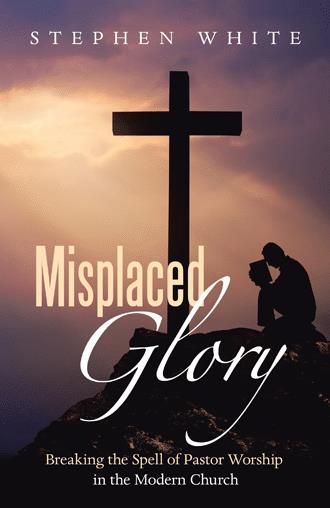
Misplaced Glory
Breaking the Spell of Pastor Worship in the Modern Church
by
Book Cover & Preview Text
Christian leaders now have fan bases. We monitor social media engagement, book deals, podcast downloads, and conference lineups. We talk about pastors “rising” and “platforming” as if ministry were a media strategy. And even in churches that criticize this trend, it often remains quiet beneath the surface—where certain leaders become essential, and their voice begins to overshadow even Scripture in authority. This is unsustainable. For pastors, it fosters pressure, burnout, moral compromise, and spiritual drift. For congregations, it encourages dependency, immaturity, and confusion. And for the mission of the Church, it corrupts the gospel into a personality cult. The solution isn’t to shame pastors or critique leadership. Leadership is biblical and necessary. But it must be shaped by the cross—cruciform. The kind of leadership that doesn’t seek admiration but gives it freely. That doesn’t build a platform but points beyond it. That doesn’t thrive on visibility but on quiet faithfulness, even in obscurity. That’s why we need to restore the vision of leaders like Peter, who said, “Don’t look at us,” and of John the Baptist, who said, “He must increase, I must decrease.” Because if the Church is going to survive the collapse of spiritual celebrity—and the disillusionment that follows—it must become a people who are discipled in Christ, not in charisma. When Glory Corrupts Grace John the Baptist’s statement in John 3:30—“He must increase, I must decrease”—is more than a motto. It serves as a theological compass. Because when a leader doesn’t intentionally, repeatedly, and joyfully accept this truth, something else begins to fill the void: glory that doesn’t rightfully belong to them. And the consequences are not abstract. They are very real. When a pastor begins to carry the glory meant for Christ, it transforms him. It alters his leadership, his relationships, his preaching, and even how he perceives himself. Often, these changes are subtle at first. They happen not through scandal, but through a gradual re-centering of the ministry around the self. This is the risk of being admired. The Subtle Seduction of Influence It’s entirely possible to be doctrinally correct and spiritually out of sync. Many pastors caught up in the celebrity culture still preach biblical messages, pray passionately, and affirm gospel truths. But beneath the surface, something changes. The pastor begins to depend more on his presence than on God’s presence. He starts using influence not just to lead, but to maintain admiration. He begins to perform instead of shepherd. You can hear it in his sermons. They become more polished, safer, less vulnerable, and less urgent. You can see it reflected in his schedule, with fewer spaces for prayer and study and more time spent managing his brand and visibility. You can feel it in the room—the weight of the church’s culture begins to revolve around his personality. None of this starts out maliciously. Usually, it begins with appreciation. The congregation responds positively. Growth occurs. People praise the pastor’s influence. But gradually, what was once a blessing turns into a burden. The pastor starts to rely on that praise to feel secure in his calling. He begins to fear what will happen if the church shrinks, if the applause fades, if someone else begins to rise. That fear is the evidence that the glory is being misdirected. And it creates an emotional prison. The Pastor Who Can’t Stop Performing Pastor worship not only hurts the church— it breaks the pastor. It turns the pulpit into a stage, and preaching into a performance. It creates an invisible set of expectations that the pastor must meet every week. If his identity is based on being admired, he can’t afford to show weakness. He can’t afford to be unsure, to confess, or to say “I don’t know.” He has to be on. Always. This is a profoundly lonely place to live. The pastor becomes isolated—not because people don’t love him, but because they love him for the wrong reasons. They love the persona. They love the version of him that always has answers. And so he can’t risk being truly known. He can’t risk being ordinary. Because being ordinary might mean losing everything that makes him feel secure. This is not how ministry is supposed to work. The New Testament pattern is for pastors to serve as undershepherds—not driven by personality, but under the authority of the Chief Shepherd (1 Peter 5:4). They are meant to demonstrate dependence, not mastery. To equip the saints, not to gather followers. But pastor worship short-circuits this by conditioning pastors to showcase strength instead of humility, leading from their gifts rather than grace. Over time, this approach becomes spiritually unsustainable. This is often how burnout starts. Not just from the workload of ministry duties, but from the emotional drain of constantly being “admired.” The Immaturity It Breeds in the Church And what happens to the congregation? They grow dependent. Church members start to equate spiritual growth with how close they are to the leader. They seek the pastor’s opinion before making moral choices. They copy his preferences, not just his theology. They see him as the door to God instead of a guide showing the way. This creates a fragile spiritual ecosystem. People are not prepared to study Scripture independently. They don’t pray deeply because they believe the pastor’s prayers are more powerful. They don’t take on leadership roles because they assume they aren’t as “anointed.” And in times of crisis, they struggle—because their faith was attached to a man. And then, one of two things happens. Either: • The pastor eventually disappoints them—whether through sin, pride, or just human weakness—and their faith collapses along with his; or, • The pastor leaves, and the church gradually withers because it wasn’t built on Christ. It was built on charisma. This isn’t just theoretical; it’s real. In recent years, we’ve seen church after church fall apart when a lead pastor resigned, burned out, or was exposed. And in almost every case, the issue wasn’t just the pastor—it was the culture. A culture that subtly, over time, started to treat a man as a messiah. And when the messiah fails, the people scatter.
Formats






Book Details
About the Book
The Glory That Belongs to Another
In Acts 3, Peter and John heal a man who has been lame since birth. It's a remarkable miracle—exactly the kind of event that naturally draws a crowd. And it does. Luke tells us that the people “were filled with wonder and amazement.” They rush toward the apostles in awe, wide-eyed and marveling.
But Peter doesn’t accept the awe. He doesn’t bask in the glow of the moment. Instead, he interrupts the celebration with a disarming question:
“Why do you stare at us as if by our own power or godliness we had made this man walk?” (Acts 3:12)
That verse is the key to this entire book.
Peter refuses to let their gaze remain on him. He senses the temptation. He sees the crowd beginning to assign power to the wrong place. And he stops it—not gently, but bluntly. Don’t look at us. Don’t assign us that glory. Don’t confuse the vessel with the source.
That’s the burden of every faithful pastor: to know when to step aside, how to redirect glory, and to sense when people are looking too closely—and to respond not with defensiveness or denial, but with joyful surrender. This is not about me. This is about Jesus.
But that response doesn’t happen naturally. It requires discipline. It involves crucifying the ego. It calls for training your soul to find worth in Christ, not in admiration. And in our cultural moment—where platforms are rewarded, charisma is monetized, and visibility is confused with value—that discipline is more difficult than ever.
About the Author
Stephen White is a former pastor, Christian school superintendent, and vice president of a leading Christian urban ministry in San Jose, California. With decades of experience working alongside hurting and broken people and building ministries rooted in compassion and justice, Stephen writes with the heart of a shepherd and the insight of a seasoned leader and teacher. His writings invite readers to experience God’s grace, presence, and compassion more deeply. He and his wife, Dawn, feel very blessed to be the parents of six adult children and grandparents to ten grandchildren—plus there’s always his dog, Gracie, by his side.