
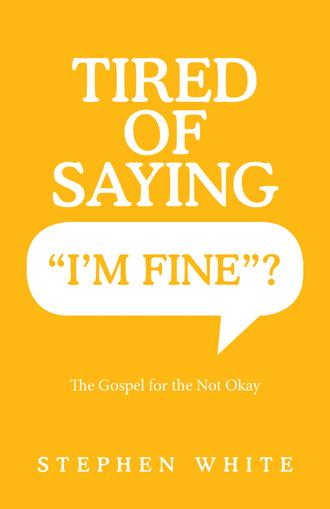
Tired of Saying “I’m Fine”?
The Gospel for the Not Okay
by
Book Cover & Preview Text
Chapter One: We Were Made for More The Ache with No Name There is a kind of ache that isn’t easily named. It’s not the sharp pain of a broken bone or the ache of fresh grief. It’s quieter and slower. It resides in the background like static you’ve learned to ignore until the room grows quiet enough to hear it again. It’s the ache of feeling like you don't quite belong. The ache of sitting with people you love and wondering if they truly understand you. The ache of asking yourself, “Would anyone stay if they knew what I carry? What I hide?” It’s not a dramatic kind of loneliness. It’s the type that settles in smoothly, learning the patterns of your days. It folds your laundry, goes to your church, volunteers on the hospitality team, and smiles during small group. It rarely makes itself known; it simply stays. And it does not discriminate. I’ve seen this ache in all kinds of people—churchgoers and pastors, retired men and young mothers, recovering addicts and straight-A students. It doesn’t matter how well you present yourself; this ache will find you. Because it’s not just about being alone; it’s about being unknown. It’s about wondering if the parts of you that you’ve kept in the shadows might be the very parts that disqualify you from love. And yet, you keep them hidden because you’ve learned somewhere along the way—maybe in your family, maybe in church, maybe in your own chest—that love is safest when it doesn’t have to see everything. The Ache Beneath the Ache For a long time, I believed that the core of people’s struggles was sin. And to be clear—sin matters. It wounds us. It breaks things. It costs us more than we realize. But the more I’ve listened to people—and to myself—the more I’ve come to believe that before sin, there was a wound. And before the wound, there was disconnection. That’s what most of us encounter. We are not only sinners in need of grace; we are hurting individuals seeking connection. Before individuals drink heavily, they often feel isolated. Before someone lashes out, there's usually a history of being ignored. Before a person becomes numb, a long silence often exists where no one has asked about their true feelings. So when I sit across from someone in a counseling session or at a hospital bed, I’m not just listening to their current situation. I’m listening for the loneliness that comes before it—the ache that never had a name. Because what’s broken in us isn’t just our behavior; it’s our ability to be deeply known and still loved. And I believe that is the ache most of us carry. The Soul Was Built for Something Better This isn’t just self-help talk. It’s not pop psychology with a Bible verse on top. It’s theology. When the Bible says we were made in the image of God, it’s not just referring to reason, creativity, or the ability to make moral choices. It’s about relationship, community, and being shaped by and for love. The Trinity—Father, Son, and Spirit—is not just a doctrine to debate. It’s a divine mystery that shows us that God, at the core, is relationship. God has never been alone. God is community. So when God said, “Let us make humankind in our image,” He wasn’t drafting solo artists. He was creating beings who were never meant to thrive in isolation. That’s why God said, “It is not good for the man to be alone,” even before sin entered the world. That statement wasn’t about marriage; it was about human nature. We are not meant to be alone, yet many of us are, even when surrounded by others. We’ve learned to craft versions of ourselves, showing the acceptable parts while hiding the rest. We become who we believe others need us to be, not out of dishonesty, but because of fear. We struggle to be both seen and safe at the same time. The Risk of Being Seen That’s what’s at stake here: not just whether we are known, but whether we can be known and still loved. Most people’s resistance to vulnerability isn’t rooted in pride. It’s all about fear. · If I show you this part of me, will you leave? · If I admit that I’m not as steady as I appear, will you still respect me? · If I stop performing, will I still belong? These questions are rarely asked aloud. They stay in the quiet spaces of our hearts. They shape how we pray, parent, talk with our spouse, and serve in church. We keep things superficial because the deeper parts feel too risky. We pretend to be fine. We stay busy. We offer help instead of asking for it. We lead others in prayer while secretly wondering if God still listens to us. And then we ask ourselves why we feel so exhausted all the time. But this is what hiding does: it wears us down, causes us to forget who we are, and makes us believe that disconnection is normal. The Day We Started Hiding The story begins, as it so often does, in a garden. It is the oldest story we have. Two people walking with God in the cool of the day. Naked. Unashamed. Unafraid. And then, in a single moment, everything changes. They take the fruit, eat it, and suddenly they see—what? That they are naked. Not just physically exposed, but soul-exposed. Seen in a way that now feels unbearable. Their initial response isn’t remorse. It isn’t admitting fault. It isn’t even saying sorry. It is sewing. Fig leaves, hastily stitched, held together more by panic than by thread. Then they hide among the trees, not from danger but from the source of all that is good: from love itself. One of the saddest sentences in Scripture is “They hid from the Lord God among the trees of the garden.” (Gen 3:8) We’ve Been Hiding Ever Since That ancient scene is not a myth.
Formats



Book Details
About the Book
The Gospel for the Not Okay
We often assume the gospel is good news for the strong: that Jesus came for the capable, obedient, and tidy. However, the gospel is not good news for those who are self-sufficient. It is not for those who have figured it out. It is not for those who never cry, question, or admit they are weary.
It is for the poor in spirit, the mourners, the meek, and those who hunger and thirst — not for answers, but for righteousness they cannot produce on their own.
Jesus never said, “Blessed are the emotionally self-contained.”
He never said, “Blessed are those who never crack under pressure.”
He said, “Come to Me, all you who are weary and burdened, and I will give you rest.”
We don’t need a gospel that toughens us up.
We need a gospel that makes us honest.
About the Author
Stephen White is a former pastor, Christian school superintendent, and vice president of a leading Christian urban ministry in San Jose, California. With decades of experience working alongside hurting and broken people and building ministries rooted in compassion and justice, Stephen writes with the heart of a shepherd and the insight of a seasoned leader and teacher. His writings invite readers to experience God’s grace, presence, and compassion more deeply. He and his wife, Dawn, feel very blessed to be the parents of six adult children and grandparents to ten grandchildren–plus there’s always his dog, Gracie, by his side