
FOUR SEASONS WITH JESUS
ADVENT, CHRISTMAS, LENT, EASTER
by
Book Cover & Preview Text
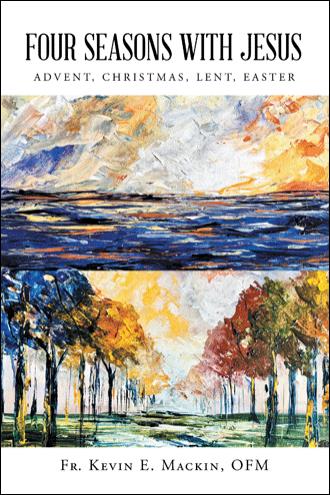
Advent marks the beginning of the liturgical year and is a four-week season of preparation for the celebration of the Nativity of Christ. Advent emphasizes themes of hope, expectation, and watchfulness for the coming of the Lord. Think of it as an adventure.
Christmas, then, celebrates the mystery of the Incarnation: The Word became flesh and made his dwelling among us. Yes, Jesus is completely human and yet completely divine, a central mystery of the Christian faith. In the Christian tradition, he is the Light of the World. This season nourishes us until the Feast of the Baptism of the Lord: a time when we renew our own baptismal promises.
Lent is a season of repentance and prayer, observed by many denominations, that begins on Ash Wednesday and lasts for 40 days, culminating in the Paschal Triduum: Holy Thursday, Good Friday, and the Easter Vigil.
Easter celebrates the Resurrection of Jesus Christ, the central event of Christian faith, and is the most significant liturgical feast in the calendar. The Easter season concludes with Pentecost: the bestowing of the Holy Spirit, “the Lord, the giver of life, who proceeds from the Father and the Son” (Council of Nicaea).
These four seasons provide a rhythm to spiritual life, inviting us to immerse ourselves in the mysteries of Christ and grow in our understanding of salvation history. St. Paul describes all Scripture as “inspired by God.” (2 Tim 3:16). The Bible actually has God’s breath, His Spirit. Through biblical readings, God speaks to us. And having sent Jesus to us, He wants us to be not just listeners to God’s Word, but doers of God’s Word.
As you contemplate Scripture each day, I hope this book of brief reflections and questions will accompany your own thoughts and gratitude for the life of Jesus. Included too are longer reflections for special feast days. You will, of course, find biblical words or phrases that speak to you, and help discern your own prayerful questions.
My books of Sunday homilies will also be of interest.
I am indebted to Janet Gianopoulos for helping me to assemble and edit this book.
ADVENT
<IMAGE ADVENT.jpg>
Read Is 4:2-6
On the Monday of the First Week of Advent, the reading from Isaiah reminds me of the anthem from the musical “Annie”: “The Sun’ll Come Out Tomorrow.” The prophet speaks of how God will dwell with his people after they have survived much suffering. God will cleanse and enlighten them and shelter them from the storms of life.
This points to coincidences in our own lives. St. Bonaventure articulated a mystical system, realizing that apparent opposites can be mutually beneficial. Darkness to light. A grace-filled yet sometimes painful journey. It’s all part of the adventure as we prepare to meet God face-to-face.
A question: Do I believe that God is with me, in good as well as challenging times?
Read Is 2:1-5
Isaiah has a vision of a new Jerusalem where all people will find peace and wisdom and light and reconciliation. Our faith community should be a place where people find wisdom, pardon and peace. Yes, we should be peacemakers and bridgebuilders in our relationships with one another. How can I be a peacemaker today?
Read Mt 8:5-11
In the Gospel, Jesus is astonished at the extraordinary faith of this good and compassionate Roman centurion who begs Jesus to heal his terribly ill servant. “Only say the word and my servant will be healed.” Note the resemblance to the Eucharistic liturgy. These faith-filled people will “recline at the banquet in the Kingdom of heaven.” Do I trust in God even when things don’t seem to go my way?
Tuesday of the First Week of Advent
Reading Is 11:1-10
Isaiah speaks about hope. Out of the ashes of the Davidic monarchy, which ceased with the Babylonian exile, will arise a new king who would possess the qualities of an ideal leader: wisdom, understanding and knowledge, counsel, piety, fortitude and fear of the Lord. This leader will usher in an era of justice and peace for all and will be compassionate with the poor.
A question: Do I realize I already have gifts of the Spirit by virtue of baptism and confirmation?
Gospel Lk 10:21-24
In the Gospel, Jesus rejoiced at seeing the power of God at work in his disciples. “Many prophets and kings desired to see what you see and did not see it, and to hear what you hear, but did not hear it.” Yes, if we live closely with God’s word, with love and joy, we can make God rejoice!
A question: Do I pray for the true wisdom to see who Jesus of Nazareth is: our way, our truth and our life!
Wednesday of the First Week of Advent
Reading Is 25:6-10
Isaiah uses the image of a heavenly banquet to symbolize eternal happiness. The banquet will be a feast of delicious foods and choice wines on his holy mountain in Jerusalem. There will be only peace and friendship with God and no more death or suffering.
A question: Do I envision a future in which God will transform this universe into a new heaven and new earth?
Formats



Book Details
About the Book
FOUR SEASONS WITH JESUS – ADVENT, CHRISTMAS, LENT, EASTER dwells in the daily Bible readings of Jesus’s earthly mission. Kevin E. Mackin, OFM, a popular priest and former college president and professor, gently motivates readers to begin again with Jesus and early Christians as they lived the core beliefs of Incarnation and Resurrection, and to ask how the Word of God and biblical acts apply to life today. This volume of brief reflections and questions is a fulsome companion to the author’s books of Sunday homilies.
About the Author
Fr. Kevin E. Mackin, OFM, of The Franciscan community at St. Anthony Friary in St. Petersburg, Florida, is a priest in the Order of Friars Minor province of Our Lady of Guadalupe. Born in Brooklyn, New York, he served at Christ the King Seminary, a graduate theological school, as president-rector; at Siena College on the faculty and as president; as director of development/public relations for his Franciscan Province; and as president of Mount Saint Mary College, where he also served as a professor. Most recently he has ministered at St. Raphael Catholic Church, and as a board member for special works with St. Vincent de Paul CARES.
Fr. Kevin holds degrees from St. Bonaventure University, Siena College, and the Catholic University of America, including a doctorate in sacred theology, cum laude. He has taught Christian Theological Tradition, Catholic Tradition, Biblical Studies, Modern Search for Jesus, Contemporary Catholic Thought, Contemporary Protestant Thought, and The Gospels. His books include A Spirituality for Sunday People, Integrity: Living God’s Word, Enjoying God’s Gifts, Get Thee behind Me Satan: Rejecting Evil, and Christian Unity - The Next Step ‘That They May All Be One, published by WestBow Press.
Front cover images: Fr. Michael Reyes, OFM