
Irrevocable: The Case for Israel
Why Scripture Leaves No Reasonable Doubt About Israel’s Future
by
Book Cover & Preview Text
It’s Far More Than Just a Matter of Theology Some might ask, “In a day when we see a dizzying array of books, podcasts, and stimulating online articles on world events pertaining to Bible prophecy, why should I read a book about what God’s Word says about Israel’s future?” The short answer is that our beliefs regarding the Jewish state are far more than simply matters of theology. So much more. Our beliefs regarding Israel’s place in Bible prophecy impact our understanding of God’s mercy toward us. As New Testament saints, we rest in the same “steadfast love” of the Lord that formed the basis of His covenants with Israel. The Hebrew word is chesed. Some Bible versions translate it as “lovingkindness,” “kindness,” or “mercy.” No single English word or phrase captures its full meaning. At its heart, it signifies the enduring nature of the Lord’s covenant love for His people, whether for Israel or for us as New Testament saints. Despite Israel’s waywardness and rebellion throughout history, God remains true to all His promises to the nation; His steadfast love (chesed) toward them never fails or falters. We will see this theme repeated throughout our study of the Old Testament prophets. Remarkably, many of the Lord’s assurances of a glorious future for Israel came during times when its people worshiped idols and refused to repent despite the pleadings of the prophets God sent to them. The Lord’s unfailing love for the Jewish people demonstrates the security we enjoy as believers. He will never renege on His promises. If He says we have eternal life, we have it; nothing can change our redeemed status. Our salvation is a done deal because it rests on His steadfast love for us, despite our past or ongoing unworthiness. As with the nation of Israel, our glorious future is wholly dependent on the Lord, with no basis whatsoever in our own merit. Israel’s story, from Genesis through Revelation, highlights God’s great mercy toward His people. He will fulfill all His promises to the Jewish people despite their rejection of the Messiah and their current state of unbelief. A deeper understanding of how this same mercy applies to us as believers, despite our many shortcomings, will likely be a key takeaway as you read this book. It was for me as I wrote it. Beyond a Reasonable Doubt In the chapters that follow, I will demonstrate how numerous biblical texts confirm that the Lord’s covenants with and promises to the Israelites remain intact today. My purpose in presenting a variety of texts from many different books of the Bible is to provide abundant evidence that puts the matter far beyond a reasonable doubt. The numerous Old Testament prophecies about the future of the Jewish state, given over many centuries, varying in size, depth, and purpose, make the case for Israel’s place in Bible prophecy all the more formidable. Throughout Scripture, we see God’s relentless resolve to bless Israel with a glorious future. I adhere to Premillennialism, the belief that Jesus will return to the earth after a literal seven-year Tribulation and establish His thousand-year rule over the earth. This kingdom, the Millennium, will feature a gloriously restored Israel with the Lord reigning over all the nations from Jerusalem. Those who say there is no Millennium before the start of the eternal state—the amillennialists—fall into many camps. Those who adhere to Replacement Theology claim that God rejected Israel after Jesus’ crucifixion and replaced the nation with the church. Still others maintain that the Lord’s intention all along was for Israel to become the church. While amillennial viewpoints differ widely in how they present the relationship between Israel and the church, they share this persuasion: they believe the church is, in some way, the new Israel and, as such, fulfills all of God’s kingdom promises to the nation, albeit spiritually. Irrevocable: The Case for Israel will show that to follow one of the various amillennial paths, one must retrofit hundreds of verses throughout Scripture that predict a future restoration of a kingdom to Israel to fit with the church. If we accept what the words meant when the Lord inspired them or spoke directly through the prophets, they support the premillennial viewpoint. The same is true for the covenants that God initiated with His people. Before we begin our journey through Scripture defending Israel’s place in Bible prophecy, we will examine the pattern God gave us for interpreting Bible prophecy. This is essential to understanding why God’s promises to the Jewish people remain unfulfilled to this day, and why we can trust these passages to mean what they did when the Lord initially inspired them.
Formats

Book Details
About the Book
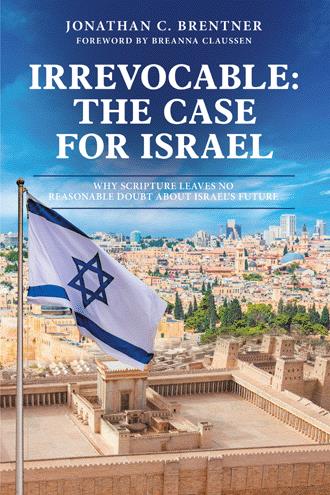
We live in a day like no other. Antisemitism continues to surge across the world, resulting in frequent attacks against the Jews. Sadly, antagonism toward Israel and its people also exists among Christians. The popular belief that God has rejected Israel fuels this hostility. But what does the Bible—our ultimate authority—say about Israel’s future in God’s prophetic plan for the world? In Irrevocable: The Case for Israel, Jonathan C. Brentner takes readers on a journey through Scripture to answer one of today’s most controversial and consequential questions: Has God replaced Israel with the Church as His earthly kingdom? Tracing the Lord’s promises to Israel through the Old and New Testaments, Brentner builds a compelling biblical case leading to an unmistakable conclusion: God has not revoked His everlasting covenants with the patriarchs and David. He will someday restore the promised kingdom to Israel. But why should this matter to us? It’s because God’s faithfulness to Israel is much more than a matter of competing beliefs. It powerfully testifies to His steadfast love and mercy and, as such, reminds us of our security in Christ. His promise of eternal life to all who believe is irrevocable. Irrevocable: The Case for Israel challenges readers to look beyond headlines, social media narratives, and popular theological narratives to discover what God’s Word says about Israel’s continuing place in Bible prophecy.
About the Author
Jonathan C. Brentner (MDiv, Talbot Theological Seminary, 1978) is a former pastor, author of several books, blogger, and retired financial analyst. He reaches tens of thousands each month with his perspectives on biblical prophecy. Jonathan and his wife Ruth have five children and twelve grandchildren in Iowa, Illinois, and Texas.