
Baptism
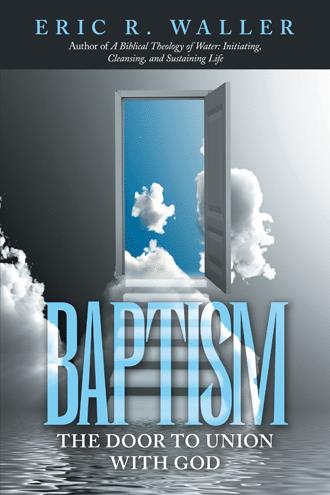
The Door to Union with God
by
Book Cover & Preview Text
Grace Versus Faith and Baptism Paul’s insight of human nature could foresee some suggesting that if faith eliminates law and sin with it, then one could just keep living in what had been sinful since God’s grace abounds under the system of faith (6:1-2). But he quickly nixes this line of thought by saying, “May it never be,” followed by, “Or do you not know that all of us who have been baptized into Christ Jesus have been baptized into His death? Therefore we have been buried with Him through baptism into death, so that as Christ was raised from the dead through the glory of the Father, so we too might walk in newness of life” (6:2-4). Paul is writing to those who have already been baptized (1:6-7). In 6:3-4 “have been baptized,” “have been baptized” (yes, twice), and “we have been buried” are all past events, echoing that his audience is the Roman church. To these who have been baptized Paul reminds that it is in baptism where one dies in the similitude of Jesus’s death. It is also in baptism where one experiences resurrection to new life, like Jesus. Baptism is where the transformation within one’s heart takes place which is Holy Spirit work, not a human effort. Scripture does not list any place other than baptism where this cleansing conversion occurs. That transformation is where the old person dies through crucifixion with Jesus, and escapes sin’s grasp (6:6). It is in this death that one is justified before God (6:7). If we have died in baptism, then, like Jesus, we also will live (6:8-10). Thus, Paul not only anticipates and curtails the erroneous thinking about continuing in sin because of grace, he also reminds these believers of the commitments they made via baptism, and the spiritual significance of the event. Romans 6 indicates that adopting a life of faith, as opposed to living under the Law of Moses, does not eliminate a rule-free or lawless existence. Thus, the supposition of some that Paul anticipated was a misunderstanding of the nature of faith, as well as grace (6:1-2). This same attitude is seen today where some claim they “got saved” at some point, but then fail to live a transformed life. Living in the realm of faith requires adopting the teaching and example of Jesus. Paul calls this the “law of faith” (Rom 3:27). Michael J. Gorman correctly points out that no matter the faithfulness of Jesus and his ability to save or justify, such does not occur “in people without a response on their part. That response is faith, specifically faith ‘toward’ or ‘into’ (eis) Christ Jesus” (Gal 2:16-17). His explanation of this faith as inclusive of baptism also fits with what this book advocates. Gorman says, “Those who respond in trust or faith. . . are moved into Christ, into the sphere of his life. In that sphere, and there alone, is justification to be found.” Living in the realm of faith requires adherence to truthfulness, honesty, holiness, prayer, worship, love of others, and more. Negatively, it prohibits lying, fornication, drunkenness, carnality, greed, deception, and more. Living in the realm of faith does not eliminate the obligation to walk in the light (6:1-2; 1 John 1:7), nor the obligation to shun sinfulness (13:12; 1 John 1:6). Some have rejected the necessity of baptism under the guise that it is a rule or law and therefore, conflicts with the life of faith. But, as illustrated above, living in the realm of faith does not exclude living apart from the principles, standards, and instructions of God that are commensurate with his holiness, including the example of Jesus (Matt 28:19; Acts 1:2: Heb 5:8-9). The difference is that the onus of adherence to this holy standard does not evolve from a mentality of human works or law following, but from the sincerity of one’s faith as the indwelling Holy Spirit interacts with our spirit, to teach, lead, convict, and adjudicate (8:16; 12:1; 15:16; John 14:26; 16:13; Acts 13:4; 16:6; 20:23; 21:11; 2 Cor 13:14; Eph 4:30; Col 3:22; 1 Thes 1:5; 4:8; 2 Tim 1:14; Tit 3:5; Heb 3:7). What one seeks will impact how one lives. Gregory of Nyssa said (c. 392-394) that “human nature came into being as something capable of becoming whatever it determines upon, and to whatever goal the thrust of its choice leads it, it undergoes alteration in accord with what it seeks.” If one seeks law, then law will be the standard. If faith is sought, then faith leads into transformation. Faith then, is a chosen lifestyle, and living in the dominion of faith includes adopting the values, priorities, prohibitions and instructions that align with the holiness of God the Holy Spirit who dwells within. One of those instructions is to be baptized (Matt 28:19; Acts 2:38). The spiritual rationale for baptism will be explored in more detail later, but it is important that faith is not opposed to baptism, nor is it agnostic about it. Instead, it sets forth baptism as an act by which spiritual transformation occurs for the one seeking life in the sphere of faith. One claiming life in the realm of faith and simultaneously rejecting the necessity of baptism either lacks understanding of the nature of faith, or does not understand the purpose and effects of baptism, or both.
Formats

Book Details
About the Book
Most are unaware of baptism’s colorful history that fills the Old Testament dating back to creation. Why is it that many modern believers are uninformed of baptism’s rich spiritual heritage and divine purposes? During the church’s first five-hundred years there was general agreement that baptism was the portal to union with God and necessary for salvation. It carried heavy significance as a fundamental Christian construct that was critical to believers for centuries. Today these robust perspectives that were anchored deeply in Scripture have been largely forgotten, obscured and replaced with shallow popular trends that appear more appealing. Contemporary views of salvation often center on language of “getting saved,” or “receiving Jesus” where little contemplation, change, or commitment is expected. Baptism for some has become a frivolous affair with negligible preparation and less grasp of its function. Why is it so different today? Isn’t it time Scripture is allowed to speak? Are you ready to get serious about proper doctrine? Do you want to discover why God ordered baptism? Are you interested in the fascinating history of baptism and its rich meaning and purpose? This astonishing story unearths many truths few have explored. It connects many texts in Scripture that most overlook. Challenge your current perspective. Get enriched! Jump on in! The water is soothing!
About the Author
Eric R. Waller holds a PhD in Bible Exposition, as well as a Juris Doctor. He has served as adjunct professor of the Bible, Greek, and Theology at seminaries in the United States, Ethiopia, India, and Nepal. He is author of A Biblical Theology of Water: Initiating, Cleansing, and Sustaining Life. He and his wife, Angela, reside in Florida.