
The Transformative Power of Community
Stronger and Better Together
by
Book Cover & Preview Text
Chapter One WHAT IS COMMUNITY? “Community is much more than belonging to something; it’s about doing something together that makes belonging matter.” – Brian Solis What exactly do we mean when we talk about community? The dictionary defines community as “a social unit of people sharing common characteristics, such as location, interests, norms, or identity, often characterized by a sense of belonging.” Some words that also describe community are fellowship, group, and neighborhood. “People may speak of a real sense of ‘community’ in this neighborhood”. Community is the experience of people coming together, sharing life, giving and receiving and helping each other fulfill their purpose. I have been a life-long tennis player. I started playing tennis in junior high school and have been playing it ever since. In addition to being fun and a source of good exercise, tennis has always been a social experience for me. I have found enjoyment and been blessed by the friends I have made playing tennis. Not only do we enjoy the competition of the sport and try to improve our skills and our game, but we also spend time enjoying and learning what is going on in each other’s lives. We know each other’s family members and work and how things are going in those areas. We also experience caring and sharing. When problems arise or a crisis or tragedy takes place, there is genuine caring, support, love and sometimes tangible help. This is community. It has been interesting to see how the game of pickleball has caught on and grown so quickly. My observation of people playing pickleball is that the experience of community is even greater than that of tennis. I’m sure that the fact that there are so many people playing at any given time and others waiting to play adds to the element of community. What makes sporting games and activities places of, and experiences of community is that people are having fun and mixing exercise and entertainment all together. Everyone is working toward a goal (trying to win or improve their game). And when you’re playing doubles or on a team playing in a league, you’re working together with others to reach a common goal. For a while you are away from the stress of work and the problems of life. Social and economic differences don’t seem to matter. In these sporting events, often team composition changes frequently so you are constantly playing with different people and against different opponents. Typically, what I see is people standing or sitting before, during or after these sporting events and sharing life together. This is community. The Christian understanding of community is different than this, though it does include the “sense of belonging.” The early church experience of community or being together as a faith community was one of sharing everything together. “All the believers were one in heart and mind. No one claimed that any of their possessions was their own, but they shared everything they had,” (Acts 4:32). Thus, an important part of Christian community is sharing. Christian community for the early church included fellowship. Luke, in his careful description of the history of the early church tells us that after Peter preached what must have been a powerful sermon that cut to the people’s hearts and instructed them to repent and be baptized, about 3,000 were added to their number (Acts 2:41). Luke then tells us how they practiced their newly formed faith community: “They devoted themselves to the apostles’ teaching and to fellowship, to the breaking of bread and to prayer,” (Acts 2:42). Four important elements of the early church’s life together as a community: teaching, prayer, breaking bread (sharing meals or Holy Communion) and fellowship. I love the definition of fellowship as a “group of fellows (or sisters) in a ship!” Christian community is about being together and growing spiritually together. It is about belonging and accepting others the way they are. It embraces others and values are shared. Love and compassion are defining characteristics of Christian community. Luke described how the early Christians formed community following Pentecost where the Holy Spirit was given to them. They held all things in common. They gave to all who had need. They spent hours in the temple and broke bread with gladness and generosity. They experienced solidarity. They embodied God’s intention for humankind. Acts 2:44-46). Community can look very different. Any group or gathering that comes together and engages with each other is a form of community. There are certain characteristics, like sharing (giving and receiving), acceptance and belonging that are part of the experience. Community is also the experience of sharing life together with other believers. It is the experience of being with people who have discovered God’s love and grace and forgiveness. It is the experience of brothers and/or sisters in Christ having a common bond of being “in Christ” and sharing together in the journey of life. In this book I refer to “community” as it is experienced in Christian community as well as non-religious community settings.
Formats

Book Details
About the Book
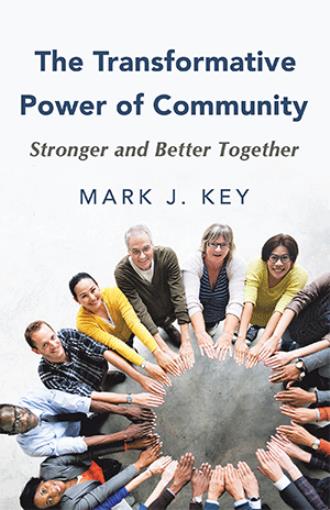
THE TRANSFORMATIVE POWER OF COMMUNITY Community has the power to change us and the world. Community is both a gift that is given to us and a need everyone has. We were made for community. It is through community that we are given opportunities for restoring our nature as divine. We grow spiritually and experience wholeness through community. Community can be the scene where brokenness is healed. Times of aloneness can prepare us for more fulfilling experiences of community. Change-agent leaders use community to confront injustice and bring about a more just world. Love and acceptance are found in community. Barriers to community are many and are adding to feelings of loneliness and isolation. However, these barriers can be overcome. We can find meaning and purpose in community. We can discover who we were meant to be and how our unique personalities and gifts are useful to others. Community is necessary for the redemption and salvation of the world. While God is the One who redeems and saves us, most of this work is done in the numerous contexts of community. God gives us the opportunity to work with Him in the important work of spiritual transformation and wholeness through community. Life is about relationships: relationship with God and with those around us. Come and discover the wonder, gift and power of community.
About the Author
Mark J. Key is a third-generation United Methodist Church pastor, retired after 40 years of ministry in the Western N.C. Conference. He has a B.A. degree in Religion from Oral Roberts University, MDiv. degree from Duke Divinity School and a DMin. degree from Seabury-Western Theological Seminary. He served as the Director of Congregational Development for seven years. He served small and large churches, including a new church plant. Pastor Mark enjoys hiking, playing tennis, traveling and volunteering.