
The STEWARD Blueprint
A Compass for a Purposeful Life
by
Book Cover & Preview Text
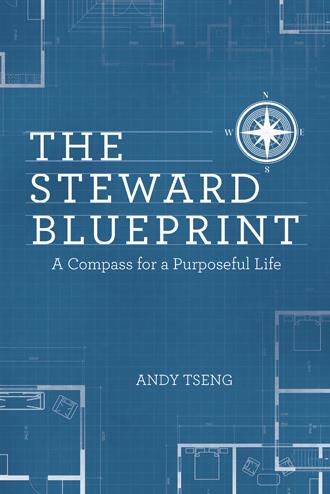
Have you ever doubted yourself? Have you wondered if your presence or effort makes a difference? We are trained and expected by society and culture to pursue success and build our values on accomplishments. We are created in God’s image, but we all have moments in our lives when we cannot recognize our values because we “failed” society’s expectations. Moreover, Jesus comes to give those who follow Him an abundant life, as mentioned in John 10:10. What does having an abundant life mean to you? A successful and lucrative career? Good fortune? Becoming visually appealing? Popularity? Influence? We come up with these illustrations and dreams quite easily because these are what the world and culture show us every day. Yet as we pursue these, we still often feel empty. We believe “the grass is always greener in the neighbor’s front yard.” It seems almost impossible to ever feel satisfied. I believe that an abundant life, as promised by Jesus, means becoming rich in well-being, peace, love, and purpose. Although it still takes constant work, helping Sam has enabled me to shift my focus from external accomplishments to internal gains–feelings, growth, relationships, and a lifted spirit. Accordingly, my understanding of an abundant life, or what I call “a purposeful life,” starts to form. Focusing on the internal gains gives me a sense of fulfillment, and changes my intention and view on various things I do as a Christian. For a long time, I wanted to be viewed as a “good” Christian by attending Sunday services, joining small groups, donating money, serving in ministries, and reading the Bible, but now I do these things because I feel valued, make new friends, and grow a deeper understanding of and connection to God through the process. This is how I envision Christian stewardship to be–using all of our “talents” given by God, not for the external accomplishments but for the benefit of others, and we will harvest internal gain in return. We are all called for stewardship. This means we should use the gifts we have to serve others, as the Apostle Peter said in 1 Peter 4:10 (NET), as “faithful stewards of God’s grace in its various forms.” Jesus illustrates the concept through the parable of the talents in Matthew 25:14-30 (ESV) to convey that good stewards should use and grow their given talents. He describes a wealthy man who gathered three of his servants before leaving on a journey. He entrusted the servants with his assets according to their capabilities: five talents of money to one servant, two talents to another, and one talent to the other. Those servants reported their outcomes when the master came back from his trip. The master was delighted with the two servants who earned more talents with what they were originally given, and he gave compliments to the servants by calling them “good and faithful” and putting them in charge of bigger tasks. Still, he got angry with the other servant who held onto the one talent given to him without doing anything to grow it, and he took the one talent away from him and gave it to the other, who earned more. This parable teaches us that we are each given unique talents by God according to our capabilities. He expects us to grow our talents and put them to use, and those of us who obey Him will be given opportunities to yield and grow. God sometimes rewards us with tangible growth, prosperity, or opportunities to create a greater impact, but often with opportunities to cultivate a deeper relationship with Him, establish new connections with other people, feel valued and fulfilled, and grow personally. … I realized that “abundance” in God comes from aligning our gifts with His will. We can “put our talents to use” by pursuing a healthier lifestyle, establishing authentic relationships, finding a community and contributing to it, practicing gratitude and positive thinking, seeking growth, and having faith in God’s promises and provision. Stewardship to me is a partnership with God that involves our commitment and His faithfulness. God blesses each of us with unique gifts. We fulfill God’s will when we dedicate our gifts and lives to Him and His people. Christian stewardship requires proactive dedication, and it is our way to glorify God, uplift others, and develop a sense of purpose and fulfillment. … People often think of stewardship in terms of tangible gifts like money and physical possessions. While this is valid, we should be aware that God also gives us gifts or talents that may not be tangible, including our physical strength, faith, mindset, and personal connections. Nurturing these non-tangible gifts also benefits us tremendously and gives us additional opportunities to serve others. Christian stewardship is not a burden, but a way to truly possess peace and joy, find meaning and purpose in everything we do, and fulfill our various needs by providing others with benefits. To show the holisticity of His blessing, I have developed the STEWARD Blueprint, which comprises seven pillars in our lives–Spirituality, Training, Eating, Wealth, Attitude, Relationship, and Development. When we fortify these seven pillars of stewardship in God-honoring ways, we can experience greater fulfillment and quality of life, serve God at a higher capacity, and become a significant blessing to those around us. These seven pillars support us and allow us to become fully formed stewards of God.
Formats

Book Details
About the Book
What if stewardship is about more than money? Most people think being a “good steward” means managing finances, so you can give back on Sunday. But true stewardship entails cultivating all the gifts God has given us. As you think about what it means to be a steward, physical therapist and author Andy C. Tseng invites you to move beyond the balance sheet and into a life of whole-person faithfulness. Drawing on clinical insights from the rehab clinic, personal stories from his journey as an immigrant from Taiwan who now lives in Texas, and reflections on Scripture, he provides a structural compass for navigating: Spirituality: Anchoring your soul in the divine. Training and eating: Honoring the temple of your physical health. Wealth: Managing resources with eternal perspective. Attitude: Cultivating a mindset of resilience and gratitude. Relationships: Investing in the people who walk beside you. Development: Pursuing growth as a tool for service. Whether you are seeking a sense of direction or looking to strengthen the foundations of your faith, you’ll discover how to live a life of meaning with the lessons in The STEWARD Blueprint. “...Tseng leaves readers with an inviting challenge: to recognize the gifts already present in their lives, care for them intentionally, and discover how those gifts can benefit the people around them...” —Literary Titan
About the Author
Andy Tseng views the world through an intersection of clinical science and divine calling. An immigrant from Taiwan now living in Texas, he’s learned that true health is far more than just “fixing” a body; it is about stewarding one’s entire life. As a practicing physical and occupational therapist, he is on a mission to help people move, feel, and live better.