
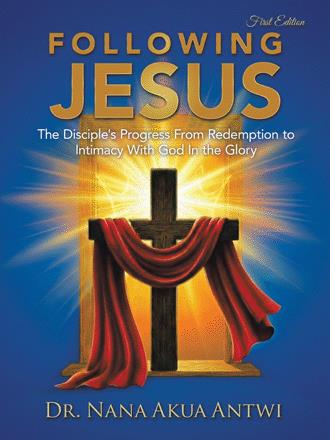
FOLLOWING JESUS
The Disciple's Progress From Redemption to Intimacy With God In the Glory
by
Book Cover & Preview Text
The power of Jesus’ Blood
Lesson Fourteen: Scriptural Application
The Value of Jesus’ Blood
We read in Isaiah 53:10 (ESV), “Yet it was the will of the LORD to crush him; he has put him to grief; when his soul makes an offering for guilt, he shall see his offspring; he shall prolong his days; the will of the LORD shall prosper in his hand.” The Hebrew word translated as “guilt offering” is 'āšām, and carries the dual meaning of both “guilt” and “guilt offering.” God can forgive or pass over our past sins without compromising His justice because Jesus was punished on our behalf. Paul comments in Romans 3:24–25 that God presented Jesus as the sacrifice of atonement to demonstrate His righteousness to all creation. This shows that God was being “just” when He passed over sins committed beforehand by those who would later receive Christ’s sacrifice by faith. God did not ignore sin; rather, He anticipated the payment Christ would make.
The blood of Jesus is the only substance with sufficient value to make amends for our guilt and make us as though we had never sinned. The priceless blood of Jesus satisfies God’s justice, saves us from the judgment of death, and cleanses our conscience. When we declare in faith what the blood has accomplished for us, it is as though we are sprinkling it upon the altar of our hearts. The book of Hebrews testifies to the superior power of Jesus’ blood:
The blood of goats and bulls and the ashes of a heifer sprinkled on those who are ceremonially unclean sanctify them so that they are outwardly clean. 14 How much more, then, will the blood of Christ, who through the eternal Spirit offered himself unblemished to God, cleanse our consciences from acts that lead to death, so that we may serve the living God! (Hebrews 9:13-14 NIV).
How liberating it is that Jesus’ blood not only removes our sin but also saves us from a guilty conscience!
The Application of Jesus’ Blood
It is important to note that it was not the blood shed in a container that saved the Israelites, but the blood applied according to God’s instructions. God said through Moses, “But the blood on your doorposts will serve as a sign, marking the houses where you are staying. When I see the blood, I will pass over you. This plague of death will not touch you when I strike the land of Egypt” (Exodus 12:13 NLT). God had to see the blood covering. The Israelites sprinkled the blood with a hyssop branch so judgment would pass over their households (Exodus 12:12). They were also instructed to eat the meat of the lamb, symbolizing the sacrificed body of Christ for sanctification, and to eat unleavened bread, symbolizing sincere and wholehearted devotion to God (1 Corinthians 5:7–8). If a household did not follow all these directives, they would not have been spared, even though the blood was shed. Likewise, we must apply the blood in faith to be saved from eternal judgment.
The first step in the redemption process is agreeing with the blood that testifies in heaven. Scripture tells us that the blood of Jesus speaks on our behalf before God, pleading for mercy (Hebrews 12:24). Therefore, we may approach God’s throne to obtain mercy so every curse of judgment in our bloodline may be set aside. We confess and renounce our sins to receive mercy instead of judgment. Proverbs 28:13 says, “Whoever conceals their sins does not prosper, but the one who confesses and renounces them finds mercy” (NIV). Likewise, Scripture assures us, “If we confess our sins, he is faithful and just to forgive us our sins and to cleanse us from all unrighteousness” (1 John 1:9 ESV). God no longer remembers sins that have been confessed and forgiven (Jeremiah 31:34); they are completely blotted out by the blood of Jesus. Through Jesus’ death on the cross, God offers forgiveness not only for our past guilt but also for our future guilt. Future guilt is addressed through the end of the Law as a means of righteousness. Jesus fulfilled the Law on our behalf, and God abolished it as the system by which we are made right with Him. God has dealt with future sin by removing the Law of Moses as the means of achieving righteousness.
Paul explains in Romans 7:12 that the Law was holy, righteous, and good, yet it could not produce righteousness—not because the Law was flawed, but because human nature is weak and fleshly. No one can become righteous before God by keeping any moral code or law (Galatians 3:11–12). Jesus fulfilled the Law completely, and God nailed it to the cross (Colossians 2:14). God now declares us righteous through our identification with Christ as our new life. To receive this righteousness, we must pass through the cross—laying down our own righteousness, accepting His death as our death, and receiving His life as our life. In doing so, we leave the realm and jurisdiction of Law, where Satan holds people captive through guilt, and enter the realm and jurisdiction of Christ, where our status is recorded as righteous because it is fully covered by His righteousness. Redemption through the blood concerns our status, not our character. God covered Jesus with our sinfulness so we could be covered with His righteousness in exchange, redeeming us from our former status of guilty and thus deserving of bondage.
Formats

Book Details
About the Book
This discipleship manual is a carefully structured guide designed to equip believers with the essential tools needed to faithfully follow Jesus Christ in every season of life. Organized into five progressive sections, it takes readers on a transformative journey—from laying a strong foundation in the core truths of the Christian faith to cultivating a deeper understanding of redemption in Christ. As the journey unfolds, believers are guided into embracing their identity as children of God and stepping confidently into their calling within the priesthood of Christ.
Rooted firmly in Scripture, this manual goes beyond theory to nurture a living, vibrant relationship with God. It teaches believers how to remain anchored in Christ, to abide consistently in His love, and to grow into lasting spiritual maturity. Each section is thoughtfully designed to shape the heart, helping it become a dwelling place for the presence and glory of God.
Whether you are a new believer seeking clarity and direction or a seasoned disciple longing for deeper intimacy with God, this manual offers both accessibility and depth. It is well-suited for personal devotion, small group study, Sunday School classes, and structured discipleship programs. More than just a teaching resource, it serves as a faithful companion—guiding, strengthening, and encouraging believers toward a steadfast, fruitful, and transformative walk with God.
About the Author
Readers are drawn to Dr. Nana Akua Antwi’s voice for its rare blend of academic rigor and spiritual depth. Trained in law across three continents, with studies at Oxford and scholarship at Yale, she brings theological clarity, pastoral sensitivity, and global discipleship leadership through teaching, media, and ministry.