
My Friend Luis Palau
by
Book Cover & Preview Text
It was a great honor for Evangelist Luis Palau to be invited to speak to the cadets at this prestigious institution. The invitation came through some unusual circumstances. Luis was asked by more than 1,000 churches to lead a statewide series of Christian outreach events across Connecticut, spanning three months from April through June 2001. The lead organizer of the 2001 campaign was Peter Scalzo, a businessman from Danbury, Connecticut. Peter had connections with the Protestant Chaplains, Col. John Cook and Lt. Col. Darrell Thomsen, at West Point. He suggested inviting Luis to address the academy during the Sunday morning chapel service. This request was met with enthusiasm and was approved by the academy's leadership. The role of chaplains is to help cadets engage in spiritual warfare and face the realities of killing and dying on the battlefield. They were familiar with combat; both Chaplains Cook and Thomsen had served in it, with Thomsen in Panama with the 82nd Airborne Division in 1989, and both men participated in Desert Storm in 1991. But on this peaceful Sunday morning, they had no thoughts of an imminent battle. Yet, within Luis' spirit, he felt a burden for these brave and dedicated young men and women, most of whom were in their late teens and early twenties. He revered the military and had always prayed for them. As my wife and I settled into our chairs, we noticed a sign at the front of the chapel encouraging attendees “not to leave without saying one prayer to God for yourself, for those who minister, and for those who worship here.” Soon, people began to enter the chapel slowly. The ‘Superintendent’ and his wife were among the first to arrive. General Daniel Christman was finishing his five-year tour of duty as the head of this historic institution, where he had graduated at the top of his class in 1965. They took their seats in the “Superintendent’s Pew” at the very front of the chapel. His name would soon be engraved on the pew, alongside those of other former superintendents, such as General Douglas MacArthur. Luis had previously asked the Chaplains if the Superintendent would be attending. They mentioned he rarely attended, which was the first sign that something special was happening that day. Gradually, the entire chapel filled with cadets, creating a good crowd for Sunday service. Luis prayed with the two chaplains before entering the chapel and was pleased to see the Superintendent and his wife sitting in the front row. Hundreds of cadets quietly filed into the sanctuary. I could only imagine Luis’ deep care for all these young men and women, and I would come to understand it more years later. During his talk, he shared God's deep love for each cadet. Almost prophetically, he reminded them that someday they might have to go to war and even lose their lives, facing their Creator. He urged them to consider the gift of forgiveness Christ offered through His blood shed on the cross, assuring them of eternal life. At the end of his talk, he invited them to join him in prayer to receive this gift from God. After the prayer, he encouraged all those who had committed to following Christ to come forward and discuss their decision with someone. Immediately, General Christman and his wife rose, came forward, and knelt at the altar. No one else in the chapel moved an inch. Luis was shocked but sensed that many cadets had made the same commitment to follow Christ. However, they hesitated to come forward because the superintendent and his wife were at the altar. Thinking quickly, Luis said to the cadets, knowing they were good military men and women, “If you have prayed to commit to follow Christ, I order you to come forward.” That opened the floodgates. Scores came forward and filled the entire center aisle. The sheer number of cadets committing their lives to Christ overwhelmed the chaplains and their staff. One of the chaplain’s staff spotted me in the audience and pulled me in to help talk and pray with one young cadet. Tears streamed down the young man's face as I approached him. His encounter with Christ had sparked this emotion. He recognized, for the first time, how much God loved him. He mentioned that his roommate had often invited him to the chapel, but he had never accepted. When he woke up that morning, however, he felt an overwhelming urge to attend. He explained that he had been raised in the church, had never rejected God, but had never experienced a real relationship with the Lord. Now it was real. Many similar stories unfolded that morning. The chaplains were overjoyed and invited Luis to return the following year, 2002. Once again, many cadets came to faith in Jesus Christ. Some may now be with Christ in eternity because they took Luis' words of hope seriously. One individual who most likely attended in 2002 was cadet Emily J.T. Perez, a member of the West Point class of 2005. She was an African American woman, a first-year cadet in the Spring of 2002, when Luis spoke. On September 12, 2006, Perez volunteered to lead a convoy in Al Kifl, Iraq. Around 11:00 p.m. that night, the lead vehicle hit an improvised explosive device; Perez, in her usual position in the vehicle, died instantly in the attack. Today, 2nd Lt. Perez is buried near notable generals like George Armstrong Custer and William Westmoreland in the academy’s cemetery overlooking the Hudson River. Reflecting on the classes from the two years when Luis spoke, I estimate that more than twenty former cadets lost their lives in Afghanistan and Iraq. Some likely attended those Sunday-morning chapels, and hopefully, many received the words of hope Luis shared. Luis loved each of the cadets who volunteered to serve and ‘…give their last full measure of devotion to our country,’ as famously said by Abraham Lincoln.
Formats

Book Details
About the Book
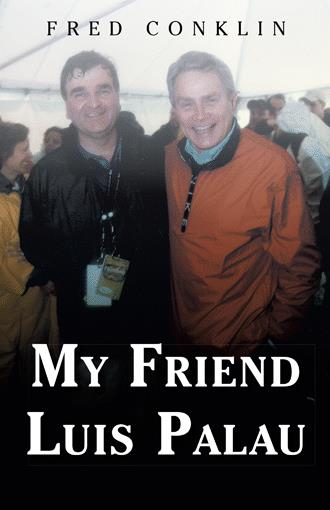
People have referred to evangelist Luis Palau as “The Billy Graham of Latin America,” but his ministry’s reach went far beyond that. During his lifetime, he preached face-to-face to over ten million people in eighty countries. Although much has been written about Luis, Fred Conklin offers a personal glimpse into his life and work from his perspective as his friend and colleague. As Fred leads others through his experiences with Luis as he came to know, admire, and respect him, he reveals all the ways that Luis not only loved the Lord, but also every person he met—no matter whether they were presidents, kings, generals, celebrities, the royal family, or the chambermaid cleaning his room. Through his touching stories, others will learn about not just Luis the evangelist, but also Luis the patriot, humorist, and friend, all while finding inspiration in a wonderful man and his life’s work. My Friend Luis Palau shares an inspiring glimpse into the experiences and character of a famous evangelist, whom God chose to lead many millions to a faith in Christ.
About the Author
Fred Conklin is a retired businessman from Connecticut who was led by God to work with the Palau Association for over twenty years. For eleven of those years, he traveled with Luis Palau. Since then, Fred has shared stories about his time with Luis with many friends and acquaintances, and now offers those stories in his second book, My Friend Luis Palau.