
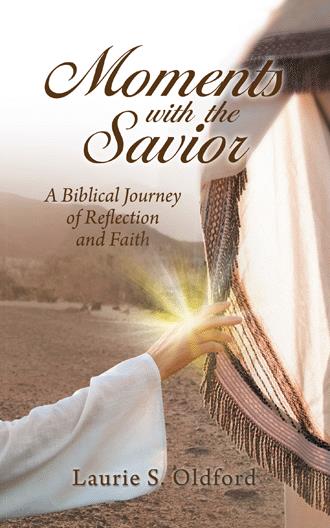
Moments with the Savior
A Biblical Journey of Reflection and Faith
by
Book Cover & Preview Text
The parable of the lost sheep is one of the most compassionate teachings from Jesus. It even remains relevant today. It's the story about a shepherd who leaves the ninety-nine sheep to find the one lost lamb that has wandered away. The parable is an example of divine mercy, unconditional love, and the ever-present guidance in our lives, themes that are just as important today as they were over two thousand years ago. We are spiritual beings trying to find our way on a human journey. We often find life to be like a maze that challenges our direction and purpose. Just as sheep stray from the flock, many Christians, overwhelmed by distractions, hardships, and doubts, find themselves feeling lost and disconnected. In this modern era of constant noise and priorities, the metaphor of the lost sheep reminds us that no matter how far we may stray, there is always a path back to belonging, love, and spiritual fulfillment. Jesus, our great shepherd, became an everlasting example to a world that is searching for meaning and direction. His role as the guide who relentlessly pursues the lost, offers hope, and assures us redemption is worthy of care and worthy of love. The shepherd's love and compassion for His flock are often marked by judgment and division. The shepherd does not condemn the lost sheep when He finds it. Instead, He rejoices after it is found. This shows an approach to relationships and community that transcends blame, thereby focusing on restoration and reconciliation. Such a perspective is especially significant in our time, where alienation and loneliness are evident. The parable's message calls on us to embody this shepherd-like compassion in our interactions with others, creating spaces where those who feel lost can find solace, acceptance, and direction. As followers of Christ, we are to be moved with compassion within our hearts and lives for those who do not yet know him and have wandered, trying to find their way. Everybody has a universal human longing: the desire to belong. Whether spiritually, emotionally, or socially, the need to feel part of something greater than us is essential to our nature. Yet, circumstances can lead us astray from our purpose, leaving us isolated and feeling alone. The parable assures us that the good shepherd sets us on a path to a higher purpose, and the love of those who care for us will always seek to find us, bringing us back into the fold when we wander away from the flock. This teaching compels us to live our lives like the shepherd, offering love and kindness to our fellow humans. Seek the one sheep without forsaking the ninety-nine, as we are reminded of the importance of looking beyond the majority to recognize the worth of each person. In our communities, families, and workplaces, this idea brings inclusion and deeper connections. Paul the Apostle wrote in 1 Corinthians that we are all members of a body. He teaches in verse 12 that, “The body is a unit, though it is comprised of many parts. Each member of the body has a purpose and a function. In the same manner, we are all members of humanity, and everyone has a purpose, even if it feels like you are only the little toe. In our spiritual journey on earth, the shepherd provides us with His guidance and helps us feel His presence through the Holy Spirit, who leads us through life’s troubles and trials, even after we fall and lose our way. This story is a beacon of hope, showing us that our problems are not going unnoticed and that we are truly loved and cherished by the great shepherd, Jesus Christ, no matter how blemished or imperfect we may be. Our world today is full of constant challenges, from social anxiety and inequality to a crisis of mental health never before observed in our civilization. The parable of the lost sheep ministers straight to the marginalized and the forgotten. It asks us not to overlook those who fall into these particular social groups, whether they are struggling with poverty, addiction, or mental health. The shepherd’s strong desire and perseverance to find the lost sheep inspire us to also be determined to help those who cannot find their way and to make sure that our communities reflect the caring narrative of the parable. The parable of the lost sheep has a very important hold over us today. It provides deep wisdom to a civilization looking for meaning and connection. It promises us that we are never going to be too far from the shepherd’s reach. He will always find us if we want to be found. This is the significance of His redemptive power of love and mercy toward His flock. As we travel on our journeys, this story teaches us about the shepherd’s love and our own responsibility to be a shepherd to others. Allow Him to Jesus in you. Allow His compassion, love, mercy, and care to embody the essence of this parable and create a world where no one feels lost and alone. And if they do, they will know that they are loved, cherished, and supported. They can take comfort in knowing that there is and always will be hope.
Formats

Book Details
About the Book
Two thousand years ago, a man walked the earth and performed unimaginable miracles. He turned water into wine, commanded storms to cease, healed blind eyes, set captives free from depression and anxiety, healed the deaf and mute, and raised the dead, including himself. However, the greatest miracle was not in all that He did; it was the reason why He did it. In an immersive journey designed to bridge the gap between then and now, Laurie Oldford invites believers to walk alongside Jesus Christ as He teaches His greatest lessons and performs miracles. Through these insights, believers will transform their walks with Christ while discovering how the same power that raised the dead is active and available to strengthen their spirits today; experiencing the profound compassion behind every healing touch that provides the comforting reminder that they are seen, known, and loved; and overcoming doubts to focus their eyes upon Christ, who always provides calm during life’s storms. Moments with the Savior shares inspiring biblical guidance to help believers rekindle a spiritual awakening, transform their perspectives, and begin a journey toward attaining a deeper, stronger faith.
About the Author
Laurie S. Oldford is a retired sheriff’s deputy and detective who is currently a police corporal. In addition to his twenty-seven years of law enforcement experience, he has also spent over twenty years in Christian ministry, serving as a Sunday school teacher, youth minister, evangelistic pastor, new-convert counselor, and leader of street, nursing home, and prison ministries. Oldford hopes to inspire others to obtain an unshakable faith.