
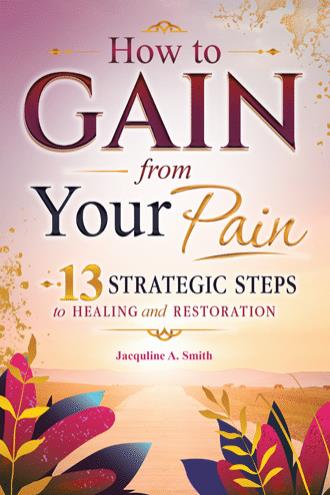
How to Gain from Your Pain
13 Strategic Steps to Healing and Restoration
by
Book Cover & Preview Text
Chapter 6: Waiting on God The Sacred Space Between Pain and Purpose Waiting on God is often one of the most misunderstood aspects of the healing journey. In a culture that rewards speeding, productivity, and visible progress, waiting can feel like failure or stagnation. Yet within the biblical and spiritual framework, waiting is neither passive nor empty. It is intentional posture of trust, alignment, and formation. The Bible repeatedly frames waiting as active reliance upon God rather that resignation; “those who wait for the Lord shall renew their strength” (Isaiah 40:31). If you have walked faithfully through the thirteen strategic steps in this book, you may expect movement, clarity, or visible change by now. Yet for many, what follows healing work is not immediate breakthrough but a season of waiting. This can feel confusing, even discouraging, especially when you have done the hard work of acknowledging pain, processing wounds, releasing baggage, and envisioning a restored life. This chapter is written to meet you right there, not with formulas or pressure, but with counsel, reassurance, and truth: waiting on God is not a setback. It is often the place where healing is sealed and purpose is protected. This chapter serves as a spiritual capstone – acknowledging that while healing requires intentional action, ultimate restoration unfolds according to divine timing rather than human urgency (Ecclesiastes 3:1). Waiting on God versus Waiting for God There is an important difference between waiting for God and waiting on God. Waiting for God often feels heavy. It can be filled with questions, restlessness, and the quiet fear that nothing is happening. You may feel you are simply enduring time until circumstances change. Waiting on God, however, is relational and participatory. It is not about marking time; it is about staying connected. This kind of waiting carries the image of being intertwined or bound together with God. Thus, “those who wait for the Lord shall renew their strength” (Isaiah 40:31) suggests not passive delay but strengthened endurance through relational attachment. In other words, waiting on God means allowing your life to remain braided with His, even when direction is unclear. It is an active posture of reliance, surrender, and attentiveness rather than inactivity. This posture aligns with the broader biblical call to “abide” or remain in God (John 15:4), emphasizing sustained relational connection over hurried movement. If you are honest, waiting can feel uncomfortable because it removes the illusion of control. Yet this discomfort is often where healing deepens. Psychological and spiritual research affirms that periods of uncertainty and delay can foster deeper self-awareness, emotional regulation, and meaning-making when approached intentionally. Waiting on God, therefore, is not a suspension of growth but a different mode of growth – one that prioritizes inner transformation over outward motion. In the context of healing from pain, this distinction is critical. The wounded soul often seeks immediate relief, yet God’s work frequently addresses foundations before outcomes (Psalm 37:7). You are not being idle; you are being aligned. How to Wait Without Losing Hope One of the greatest fears in waiting seasons is the fear of losing hope. Hope can quietly erode when prayers seem unanswered and timelines stretch longer than expected. Yet hope is not sustained by visible progress alone; it is sustained by trust in character, specifically, the character of God. Biblical hope is not wishful thinking but confident expectation rooted in God’s faithfulness: “Now faith is the assurance of things hoped for, the conviction of things not seen” (Hebrews 11:1). Waiting becomes unbearable when hope is attached solely to timelines, outcomes, or human control. Conversely, hope remains resilient when anchored in God’s unchanging nature (Lamentations 3:22-24). In a practical sense, waiting without losing hope involves three disciplines: remembrance, reframing, and rest. Remembrance involves intentionally recalling past instances of God’s faithfulness, reinforce trust in Him and stabilizes perspective (Psalm 77:11-12). Reframing involves interpreting delay not as denial but as development, a perspective supported by cognitive reframing practices in trauma recovery. Your hope and trust in God is strengthened by choosing to see delay not as denial, but as development (Romans 5:3-5). Rest, both spiritual and psychological, acknowledges human limitation and resists the urge to force outcomes prematurely (Matthew 11:28-30). It protects you from losing hope, giving you permission to stop striving and trust that God is not anxious about your future. Together, these practices allow waiting to become a space of sustained hope. Hope does not disappear in waiting; it matures there. What God is Doing in the Silence The story of Joseph offers one of the most profound illustrations of purposeful waiting. Few biblical stories speak as clearly to silent seasons as the life of Joseph. From the moment Joseph received prophetic dreams of leadership (Genesis 37:5-11), approximately thirteen years elapsed before his elevation in Egypt (Genesis 41:41-46) – years marked by betrayal, slavery, false accusation, and imprisonment. Notably, the Bible records no direct divine speech to Joseph during much of this period. God’s silence, however, did not signify absence. During these years, God was shaping Joseph’s character, emotional maturity, and leadership capacity. The same dreams that could have produced arrogance in his youth were refined into humility, wisdom, and discernment through prolonged suffering. Leadership research affirms that adversity often functions as a development crucible, cultivating resilience, self-awareness, and ethical clarity. Spiritually, Joseph’s waiting illustrates that silence is often the workshop of preparation. God was aligning Joseph’s internal capacity with the external weight of the destiny he would later carry. This principle applies directly to healing journeys. If you are in silent season, take comfort in this truth: God often does His deepest work without announcing it. What feels like stagnation may actually be strengthening. Roots grow in darkness long before fruit appears above ground (Mark 4:26-28). The silence is not empty – it is intentional. In order to experience gain from your pain, understanding God’s silent work prevents misinterpretation of delay as abandonment (Romans 8:28).
Formats

Book Details
About the Book
Your Pain Is Not the End— It's Your Turning Point. Life’s hardest seasons can leave us broken, confused, and questioning our next step. But pain is not meant to destroy you—it is meant to develop you. In How to Gain from Your Pain, you will discover 13 strategic steps that will help you transform your wounds into wisdom, your setbacks into setups, and your pain into purpose. THIS BOOK WILL HELP YOU: Understand the purpose behind your pain Break free from emotional burdens and limiting patterns Build resilience and regain your strength Walk in healing, wholeness, and restored identity Step boldly into the future God has prepared for you You can't change what happened, but you can choose what happens next. HEAL. RISE. GAIN. Your restoration is starting now.
About the Author
Jacquline Smith is an author, educator, and life strategist with a background in adult education, legal studies, public policy & management, and Christian counselling. She is committed to helping individuals move beyond pain and step into purpose through a unique blend of emotional healing, structured life strategy, and spiritual formation. Through her books, programs, and initiatives, she equips readers to become faithful stewards of their lives – transforming their scars into strength and their stories into impact. Author * Educator * Life Strategist