
NEVER ALONE!
A Memoire of Prayer & God’s Grace in Sub-Sahara, Africa!
by
Book Cover & Preview Text
TOYOTA LABORS! I climbed into my pickup truck, as I did every Monday, ready to deliver sacks of USAID bulgur wheat. It was early 1986, and I was heading to a remote village. Far off in the distance, I saw a solitary figure carrying a large, heavy-looking bundle of firewood on her head. The scorching equatorial sun made her distant figure appear to bend and ripple - even flicker - in the heat that often reached more than one hundred degrees. Seeing her in need of help, I detoured from my path and drove across the savanna to help her. As I got closer, I saw the woman struggled to carry the heavy bundle on her head. Once again, I wondered why the responsibility of gathering firewood always fell on women. Why did I never once see a man doing this? When I pulled up alongside her, she dropped her firewood and took a few faltering steps away from me, staring at me with surprise and fear. I shut off the truck. “Hujambo, Mama! Habari yako? Habari za Nyumbani? Pole na kazi! Naona umechoka sana! Nimekuja pia kuuleta kuni żako nyumbani! (Hello Ma’am! How is everything at home? I’m so sorry for your work! I see you are very exhausted! I have come to help you bring your firewood home!),” I said to her. The woman smiled at me and took a deep breath as I revealed my identity and that I was heading to the village of Kijiji cha Mhamba, which seemed to put her at ease. I offered to take her and her firewood to her home as we were both heading to Kijiji cha Mhamba, and she was so happy to receive this blessing. “Asante! Asante sana! (Thank you! Thank you so much!),” the woman repeated. I picked up her stack of firewood and tied it on top of the sacks of bulgur wheat in the back of my truck. Not until I invited her to climb into the cab with me, did I realize she was pregnant and actually very large with a baby! How did I not see that earlier? She had walked for miles alone wielding her machete to chop firewood, which she then bundled into a heavy stack and carried on her head! By herself! Her husband allowed her to go out alone this close to giving birth. She now must make the return safari back home, and that will take all day! I had to help the woman into the cab, as she was unfamiliar with the basic process of opening the door, climbing into the seat, and shutting the door. I learned, in fact, that until now she had never traveled in any vehicle whatsoever. “Hii ni mara yangu ya kwanza kwenye gari! (This is my first time in a car!)”, she exclaimed. We drove across the savanna towards her village, but it wasn’t long when she suddenly cried out in pain. “Mtoto anakuja mara moja! (The baby is coming now!)” Her water had broken! This marvelous and hardworking woman was in labor inside my truck! What was I supposed to do! I immediately slowed down, but she insisted we continue quickly to the village. “Usiishie hapa! Endelea kwenda nyumbani kwangu! (Don’t stop here. Keep going to my home!)” Unable to think straight, I sped off. Please don’t have this baby in my truck! Please! I prayed incessantly. A half hour later we arrived safely at the woman’s house, where a group of women quickly acted and brought her inside her home. Thank God! The next day, after finishing my work in the village, I stopped by the woman’s home to see how she was doing, and she greeted me holding her healthy daughter. “Jina la mtoto ni Bahati, kwa sababu kuzaliwa kwa binti yangu kulikwa na bahati! (The baby’s name is Lucky, as my daughter’s birth was blessed with luck!),” she announced. “Umenikuta umenileta nyumbani! (You found me and brought me home!)” “Can I pray for you and your daughter?” I asked. “Of course,” she answered in Swahili. “Bwana, nakushukuru kwa kuzaliwa kea Bahati na kwa afya njema ya mama yake. Ilbariki familia hii na uwaletee imani kubwa na afya njema. Amina! (Lord, I thank you for the birth of Bahati and for the good health of her mother. Bless this family and bring them great faith and good health. Amen!)” Before leaving to return home, I reached into the back of my pickup and pulled out her large sack of firewood and placed it near the entranceway to her home. I then pulled out a seventy-pound sack of bulgur wheat and told her that this was a gift from farmers in America. Undeniably, on this day the women in this homestead were queens! Finally, I turned to her husband in the presence of a bunch of village women helping to take care of her and her newborn daughter. “Sasa na milele, ni kazi yako kwenda mje kutafuta kuni! (Now and forever, it’s your job to go out and get the firewood!)” I spoke. He just smiled in silence at me as I left! Ha! I knew that was never going to happen!
Formats

Book Details
About the Book
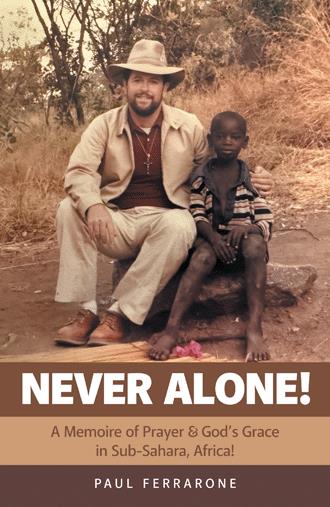
Come read the most remarkable, inspirational stories of a young, Christian Pastor, living and working with Vietnamese refugees escaping across the South China Sea to Refugee Camps in Hong Kong. A few years later he’s living with the Sukuma Tribe in Tanzania, Africa, helping them survive the most tragic and devastating drought and famine in modern history. Speaking only Swahili, he embraces people living in abject poverty during three years without rain. While Lionel Richie and Michael Jackson co-write “We Are the World,” raising tens of millions of dollars for famine relief, Pastor Paul is delivering thousands of 70-pound sacks of USAID bulgur wheat to the villages. Each story paints a vivid picture of enormous suffering and death in villages surrounding the small compound of Bugisi where Paul lives. He helps run a government medical dispensary, making multiple weekly trips to villages to bury children, infants, and many elderly farmers and shepherds who died of malaria, diarrhea, and dehydration. His stories frequent the Serengeti National Park and Lake Victoria, the primary reservoir for the Nile River. We witness the constant presence of uchawi, or witchcraft, which sometimes leads to persecution and violence. He lives in villages, leading worship, hosting soccer tournaments for men and women, and visits homes to build relationships and pray. Read stories of dramatic weddings and women giving birth to infants in need of a village to keep them alive. This book will inspire you to serve God and make a difference in people’s lives.
About the Author
Paul Ferrarone lives a life of prayer and biblical reflection. Yet he spent years helping Vietnamese refugees in China and the Sukuma in Tanzania, Africa, during unspeakable drought and famine. His love for the poor reflects remarkable experiences and stories of those who need him the most.