
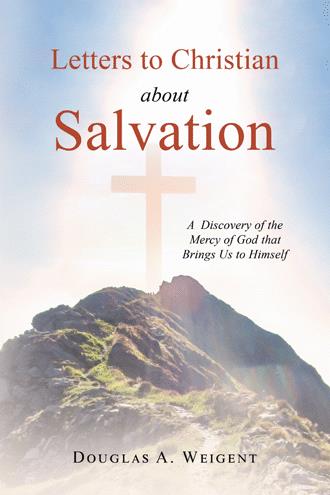
Letters to Christian about Salvation
A Discovery of the Mercy of God that Brings Us to Himself
by
Book Cover & Preview Text
By our first-born nature we are unwilling to come to Christ. The willingness to come to Christ is the result of God’s choice, grace and power in the human heart and the will. God overcomes man’s enmity (Rom. 8:7-8). “Thy people will be made willing in the day of Thy power” (Ps. 110:3). The power of the gospel will bring many, but not all, arrayed by the choice and grace of God in holiness to put on the glorious righteousness of Christ. The ones chosen will be willing to have their old man crucified that the new man in Christ can be formed in them. They are willing to have the thoughts and purposes of God fulfilled in themselves. They will develop a brooding quality about God’s power, faith and endearing love. They are glad to believe, trust, and obey God to secure honor for Jesus. They seek a greater conviction and assurance of the truth for themselves. They are willing to be led by the Spirit of God. They are willing to bear a good testimony for the veracity of the word of God. The gospel comes not in word only, but in power and conviction in the Holy Spirit (1 Thess. 1:5). In our salvation the Father chose us, the Son died for us, and the Spirit quickens us or performs the work in us. The new birth is God’s plan of choice for the Spirit working in us (John 3:6). “It is the Spirit who gives life; the flesh profits nothing” (John 6:63). Man has no part in being chosen. The Spirit has been likened to the wind; they are both mysterious and sovereign in their operations (John 3:8). Our faith, Christian, is a gift from God and the consequences of the new birth. The Spirit acts in a sovereign way over us. By this I mean sometimes He moves in us, and we know His presence. We do not always know why, but we have a sense of His presence. Sometimes the Spirit is strong and sometimes it seems absent. Sometimes we are enlightened about truth and Jesus. Sometimes we sense we are being called for a service or testimony of Jesus. The grace of God may appear more strongly in your heart at times for His purpose and in His time. Because it may be spiritual and we are only humans that believe in Jesus, we may misunderstand our way. We learn to follow Jesus and, in the process, become veterans experiencing His presence. A natural man or a spiritually “dead” man does not wake himself up with faith and please God. God will only be pleased with His own work. Not all men have faith (2 Thess. 3:2). They that are in the flesh cannot please God (Rom. 8:8). Without faith it is impossible to please God (Heb. 11:6). We learn that God is present and faithful (Isa. 49:23). The work of the Holy Spirit precedes our believing. “God has chosen you from the beginning for salvation through sanctification through the Spirit and faith in the truth” (2 Thess. 2:13). The order for you in salvation first takes place by being drawn by God (John 6:44). Secondly, you act on the call to come to Jesus and receive a new heart of faith, a new spirit and the Holy Spirit (Ezek. 36:26-27). This means you have been born again and declared righteous before God. This act of God is called Justification and is like you never sinned. God has promised to remember your sins no more (Heb. 8:12, 10:17). God’s act of remitting the sins of men and accounting them free by His grace through faith in Christ, is not by their works, but by the redemptive blood-shedding of the Lord Jesus Christ (Rom. 3:23-26, 4:5-8). God forgives believing sinners. Unbelief is spiritual blindness. The third step in salvation is called sanctification, which is a state of separation unto God. A Christian immediately enters this state after Justification or after he has been born again. Sanctification is God’s will for us (1 Thess. 4:3). God is holy (1 Pet. 1:16), and we are grateful that He has gracefully chosen to make us holy. We are separated unto God, who became to us wisdom, righteousness, redemption and sanctification (1 Cor. 1:30). We are to be conformed to the image of Christ (Rom. 28-30). Sanctification is an important part of our salvation and connection through the Holy Spirit. It is the work of God. “We have been sanctified through the offering of the body of Jesus Christ once for all” (Heb. 10:10). God “works all things according to the counsel of His will” (Eph. 1:11). While we are positionally set free in the court of God from sin by the blood of Jesus in Justification, we still sin (John 1:10). Therefore, we must still undergo growth in the Lord or experience maturity (2 Pet. 3:18). The effect of obedience to the Word of God in our life is progressive or experiential sanctification. This is God’s choice, and “He who began a good work in you will perfect it” (Phil. 1:6). At the same time, sanctification is to be earnestly pursued (Heb. 12:14; 1 Pet. 1:15). At times, we will feel like we have lived a failed life. Only Jesus really knows your pain and cares for you. Progressive sanctification is fully supported by a study of the word of God. The Bible tells us, “Sanctify them in the truth; Thy word is truth (John 17:17). Sanctification will be an intense struggle (Rom. 7, 8; Gal. 5). The moral accomplishment in us is a mystery because both the Spirit and the believer contribute something in the paradox of God’s grace and man’s responsibility. In “fear and trembling” we progressively grow in grace, knowledge of the truth, and in obedience of faith, by the grace of God. Also, “God has been at work in you, both to will and to work for His good pleasure” (Phil. 2:12-13). On this pathway, we discover God’s love and mercy and our responsibility. We grow in love with Jesus which is salvation. Thus, we are progressively separated from the power of sin into practical holiness with the blessing of beholding our salvation, by the graceful choice of God (Isa. 12:2). In the future, we will know a complete sanctification called glorification and freedom from the presence of sin (Col. 1:27, 3:4). The people that God chose, the Holy Spirit comforts, seals and guides into all the truth are God’s elect. The Holy Spirit is completely necessary to accomplish the Father’s eternal purpose (Rom. 8:28-30). Praise the Father, Son and Holy Spirit. Amen.
Formats



Book Details
About the Book
“Letters to Christian about Salvation” describes the spiritual journey we take in the discovery into the nature of God saving our soul for His eternal presence. God allows us to discover His love, mercy and goodness. He reflects His glory in choosing vessels of mercy to be born again with a new heart of faith to receive Jesus Christ as their Savior and Lord. We discover His love. The know ledge of Christ gained in our conscience about Jesus becomes our victory that overcomes the world. God overcomes us and saves us from ourselves, and we become a part of His glory in Jesus. In Jesus, God becomes to us wisdom, righteousness and sanctification. He becomes the greatest wonder of our life. God gets our heart when we find His presence alive in Bible study. The Word becomes the origin of our understanding, faith, peace, and security for this life and the life to come. When the Lord draws us closer to Himself, we discover convictions in our heart that reveal His patient work in us to establish an abundant life. Letters about salvation will open your heart, by the grace of God, to hear God's goodness and behold your salvation. It can open your heart to the truth, fear, obedience, and gratitude for the sovereignty and majesty of our Creator. We learn, by the grace of God, we are saved in love by His workmanship. In salvation, we learn to surrender gladly to God and willingly choose to let God be God. Amen.
About the Author
Douglas A. Weigent earned a B. A. degree in Biology from Western Washington University and the M.Sc. and Ph.D. degrees in Microbiology and immunology from the University of Washington. His postdoctoral work was conducted at the University of Minnesota (Hormel Institute) and the University of Texas Medical Branch in Galveston, Texas. His faculty work was conducted in the Departments of Physiology and Biophysics and Cell, Developmental and integrative Biology at the University of Alabama at Birmingham, Alabama. Although he has no formal religious education, he has had a strong personal interest in Church life and Bible study for many years. He lives in Birmingham Alabama with his wife, Diane, to whom he has been married for 51 years. They have one daughter, Rachel. and one grandson, Christian.