
The Keys To The Kingdom
A Study in the Apostles Doctrine
by
Book Cover & Preview Text
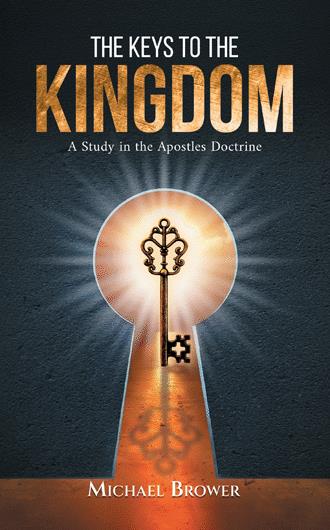
When Jesus led his Apostles to Caesarea Philippi, he brought them to a quiet place far from the crowds. It was there, in a moment away from the noise of public opinion, that he asked a question that would shape the future of his church. “Who do people say that the Son of Man is?” The answers reflected the confusion of the time: John the Baptist, Elijah, Jeremiah, one of the prophets. People recognized Jesus as someone significant, but they did not understand who he truly was.
Then Jesus asked the question that mattered most: “But who do you say that I am?” Peter answered with a clarity that did not come from human reasoning: “You are the Christ, the Son of the living God.” Jesus affirmed that this confession came from the Father, not from flesh and blood. And on that confession on—the truth of who he is—Jesus said he would build His church.
This moment is more than a familiar story. It is the foundation for understanding how Jesus intended his church to function. Right after Peter’s confession, Jesus introduced a phrase the Apostles would have immediately understood: the keys of the kingdom. In their world, keys represented authority—the kind entrusted to stewards who acted on behalf of a king. To receive keys meant you were authorized to open and close, to admit and to guard, to act with the authority of the one who entrusted them to you.
Jesus told his Apostles that whatever they bound on earth would be bound in heaven, and whatever they loosed on earth would be loosed in heaven. Their teaching would not be their own ideas. They would be revealing what God wanted them to establish. Their role was not to invent doctrine but to deliver it.
This is the heart of The Keys to the Kingdom. If Jesus entrusted the Apostles with the keys, then the teachings they delivered—about baptism, communion, giving, and the function of the church—are not suggestions. They are not traditions that can be reshaped to fit modern preferences. They are the pattern Christ intended for his people from the beginning.
The early church understood this. Acts tells us that the first believers “continued steadfastly in the Apostles’ doctrine.” They weren’t choosing one interpretation among many. They were devoting themselves to the teaching Jesus had authorized. The Apostles were not simply influential leaders. They were the men whom Jesus chose, trained, empowered, and entrusted with the message of the kingdom.
That is why their teaching carries such weight. When Peter preached on Pentecost, he wasn’t offering a personal viewpoint. He was using the keys. When he told the crowd to repent and be baptized for the forgiveness of sins, he was opening the door to the kingdom exactly as Jesus intended.
When the early church gathered to break bread, they weren’t experimenting with worship styles. They were following the pattern handed down by the men who had walked with Jesus. When Paul taught about giving, he wasn’t offering financial advice. He was passing on instructions authorized by the Lord.
In every generation, the church faces the temptation to drift. Culture changes. Preferences shift. People look for new approaches, new interpretations, new ways to make faith more appealing. But if Jesus truly gave the Apostles the authority to establish doctrine, then their teaching is not something we are free to revise. It is something we are called to receive, obey, and pass on.
This book invites readers to return to that moment in Caesarea Philippi and see it as the starting point for understanding the church today. If Jesus entrusted the Apostles with the keys, then the way we approach baptism, communion, giving, and worship must begin with their teaching. Not with tradition. Not with personal preference. Not with modern trends. With the words and instructions of the men who were given the keys.
The goal is not to complicate faith but to clarify it. The Apostles’ doctrine is not a maze. It is a map. It shows us how to enter the kingdom, how to live as God’s people, and how to remain faithful to the pattern Jesus established. When we follow their teaching, we are not following men. We are following Christ through the men he appointed.
The kingdom of God does not need to be reinvented. It needs to be rediscovered. And the way back is the same today as it was in the first century: through the teaching of the Apostles, the men who were given the responsibility to open the door.
This preview offers only a glimpse of what follows, but the heart of the book is simple: if we want to understand the church Jesus built, we must begin where he began—with the confession of who he is, and with the men he entrusted to carry his message to the world. Their doctrine is the key. Their teaching is the pattern. And their words still open the door to the kingdom today.
Formats

Book Details
About the Book
This book is a study of the Apostles Doctrine that Jesus himself told his Apostles would be bound in Heaven.
About the Author
Michael Brower serves as an elder and teacher, known for explaining difficult Bible books in clear, practical ways. Living near Branson, Missouri, he divides his time between family, serving the church, and the outdoors. He is blessed with a dedicated wife of 50+ years, three children, seven grandchildren, and his first great-grandchild.