
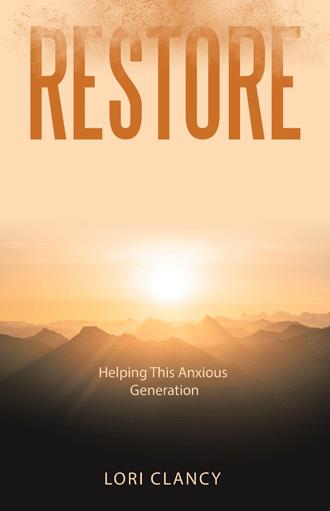
Restore
Helping This Anxious Generation
by
Book Cover & Preview Text
What is the Mental Health Pyramid? The mental health pyramid is a way to explain and define basic mental health needs in levels that build on one another. Just like Maslow’s hierarchy of needs, if someone doesn’t have the basics, it becomes more difficult to build beyond the basics to have a higher level of stability and health. The basic premise is that we have mental health needs. All of us do. We have needs that help build stability, healthy relationships and basic regulation of our moods, minds, and bodies. We need to have a foundation to build upon to be at our best mentally. Just like Maslow’s hierarchy of needs, when something in life shifts, we fall back down the pyramid to start over. Life has ebbs and flows. There are always mountaintops and valleys, times we struggle with a loss or life shift, and at times we are thriving. The mental health pyramid is a way to explain how to harness more times of thriving and how to get back to where we want to be when we get knocked down. There are also little setbacks. If I have a cold or a minor illness, there are days my body is saying I need to rest. It affects my mental health. When my body doesn’t feel well, my mind and will are going to be less likely to combat negative thoughts and feelings. There are days we have a fight with a friend or family member, and we get stuck emotionally or mentally in a negative holding pattern, and we need our resources to shift gears out. The goal of this pyramid is to provide a structure to help people move toward mental health. I am a mental health and addiction counselor - we spend much more time in our society talking about mental illness and problems than we do mental health and the solutions. My goal is to focus on what we can do instead of what we can’t. I know there are A LOT of problems in our society today. I got it. I see people in their worst emotional states. But I also have attempted to live my own life in a way that is healthy, makes sense and moves me toward the abundant life. I also study people. There are definitely patterns of behaviors, thoughts, and lifestyles that produce a higher level of mental health. This pyramid is an explanation of why some people are mentally healthier than others. It is also a strategic plan to help us and the teens we love grow into mental health. Start with what we have: First, let's talk about genetics. I always say, genetics/your DNA is one variable we have little control over. As we learned in kindergarten: “You get what you get, and you don’t pitch a fit.” We cannot control the genes we biologically inherited from our parents. But I am challenging you and the kids you work with to look at what they CAN control. If you inherit a genetic gene pool that is rich in depression and anxiety, then you need to utilize this mental health pyramid to mitigate the risks you inherited. This principle is the same with addiction and general health issues. I inherited a vulnerability for heart disease. I cannot do anything about the risk, but I can do my best to eat healthily, exercise, and keep my stress down. My goal is to control what is in my circle of control. One of my favorite topics to speak about with late elementary school students and early middle schools is the risk of addiction. I have worked with some teens that are highly genetically predisposed when it comes to addiction. They live with grandparents or another relative because mom and dad are in active addiction. Grandparents also have active addiction problems. While these teens cannot control their genetics, the one addiction risk category they can control is age of first use. My goal in prevention is to delay the age of first use for any high-risk teen (or anyone, actually). The research is abundant that the later someone tries any substance of addiction, the less likely they are to struggle with addiction. Nothing is 100%, but this is a great example of controlling what we are able to control. Our goal with the teens we work with is to help them gain control over the things within their control and let go of what they cannot. By definition, anxiety is when we focus on what we cannot control and do not focus on what we can. This is a concept we will circle back to throughout the ideas in this book.
Formats


Book Details
About the Book
This book is a tool to identify adolescent mental health needs and provide resources, support, and encouragement for teens to be all they can be in their mental health. Restore is a spin off of Maslow’s hierarchy of needs, which are the basic needs that all humans have. In his theory, a person needs to meet the basic level of need, such as food, water, and shelter, before he can move up to safety needs or love and belonging. In the same framework, this tool helps us build a framework for teens and the adults who love them so that they are able to not just survive adolescence, but to thrive in it. Restore provides helpful stories, tools and resources for adults to help the adolescents they love. This book is a must for teachers, youth leaders, parents, coaches anyone who works with teenagers.
About the Author
Lori Clancy is a Licensed Mental Health and Addiction Counselor in the mountains of Western North Carolina.