
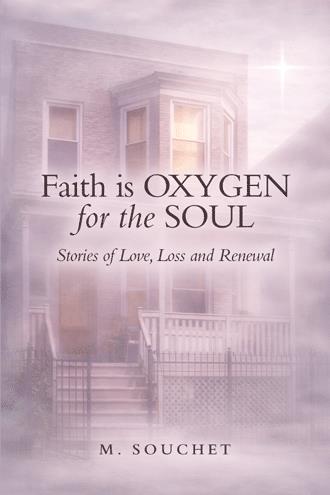
Faith is Oxygen for the Soul
Stories of Love, Loss and Renewal
by
Book Cover & Preview Text
Fear is a shadow that can either silence us or shape the light we choose to carry forward. But shadows exist only because light is present. One day, I would come to understand that the very shadow that tried to quiet my voice would become the contrast that allowed my light to shine brighter. No matter how vigilant our parents are, the world still finds ways to break through—sometimes subtly, sometimes with devastating force—shattering innocence in moments we never see coming. This chapter is difficult for me to write. It requires returning to places I once avoided, lifting the weight off memories I buried simply to survive. For years, I believed these stories were too painful, too shameful, to give voice to. I feared that naming them would give them power. What I have learned instead is this: what remains hidden grows stronger. What is brought into the light begins to lose its hold. These experiences did not define me—but they shaped me. Through faith, love, and a determination I can only describe as God-given, I learned how to carry them without letting them destroy me. As a child, I slowly became aware that the world was not always safe. Fear didn’t arrive all at once; it crept in quietly, settling into my thoughts and dreams. I became watchful, cautious, alert to danger even when I couldn’t explain why. That fear grew alongside me, changing shape as I grew older. Between the ages of ten and thirteen, it widened in scope. I saw things children should never have to see. Men with dark intent watched and waited. Once, a man stood naked beside his car as I passed. Another time, a man in a vehicle exposed himself to me. My heart pounded as I lowered my eyes and walked faster, instinctively shrinking myself, trying to disappear. I felt ashamed without knowing why. I told no one. Even as a child, I learned an unspoken rule many girls learn far too early: sometimes silence feels safer than truth. By fourteen, fear was joined by grief. That year, I lost a friend—sweet, silly, always laughing. He loved walking through the neighborhood blasting music from his boombox while waiting for the school bus. One morning, a man tried to steal it. My friend refused to give it up. The man stabbed him repeatedly and left him dying on the sidewalk. A beautiful life was taken over something so insignificant. That night, I sat on my bed with my knees pulled to my chest, staring at the wall, asking questions with no answers. Where was justice? Where was God? Fear had already taken up residence in me, but grief sealed its place. It was the first time I truly understood how cruel and random the world could be. At fifteen, I witnessed just how quickly violence could escalate. Late one night, my uncle was driving my aunt, my grandmother, and me home. The streets were eerily quiet, the kind of silence that feels heavy rather than peaceful. As we turned onto our block, our headlights revealed two men brutally beating another man in the middle of the road. The sound of fists hitting flesh is something you never forget—wet, sickening, final. Blood stained the pavement. Then one of the attackers calmly walked to his car, opened the trunk, and pulled out a tire iron. His intent was unmistakable. This was no longer just a beating—it was an attempt to end a life. Without hesitation, my uncle jumped out of the car, shouting for them to stop. Somehow, his courage pierced their rage. The men fled. My uncle helped the battered man to his feet and drove him home. He had been attacked while simply walking home from work. I sat in the back seat trembling, my hands clenched so tightly my nails dug into my palms. Life felt unbearably fragile. At seventeen, I experienced the wound that would take the longest to heal. I went on a date with an older man—confident, charming, from a wealthy Chicago family. My mother warned me he was too old and told me to be careful. I promised her I would. He suggested stopping by his apartment to say hello to his brother before dinner. A quiet voice inside me—instinct, or maybe God—urged me to stay in the car. I ignored it, not wanting to seem rude or overcautious. At first, everything appeared harmless. His brother was there. A few friends. Conversation and laughter filled the room. Then, one by one, everyone left. Suddenly, it was just the two of us. When he leaned in to kiss me and I pulled away, something changed. His expression hardened. He became aggressive. He threw me onto the bed, holding me down as I cried and begged him to stop. He didn’t. There was no apology. No acknowledgment. Only silence, as if I had ceased to exist. He drove me home without a word. I walked into my house carrying a burden so heavy it would take years to lift. I told no one—not my mother, not my family. I blamed myself. Maybe I had been too nice. Maybe I shouldn’t have gone inside. Maybe I had somehow invited it. For years, I carried the weight of shame alone. I eventually told one cousin because I could no longer hold it by myself. She urged me to go to the police. I couldn’t. I was terrified—of not being believed, of being humiliated, of lawyers and accusations, of disappointing my mother. Years later, I finally told my mother. She cried—not in anger, but in grief that I had suffered alone. She told me she wished I had trusted her love enough to speak, that she would have fought for me. Slowly, God began to untangle the lie I had carried for so long—that I was to blame. I began to understand that God does not give us fear. He gives us courage, strength, and light. I was not weak. I was not dirty. I was not at fault. ear stole pieces of my innocence, my trust, and my sense of safety—but it did not steal my soul .I learned that fear is a thief, not a master. I had a choice: to live bound by it or to seek joy. To live as a victim or to rise as a warrior. I chose joy. I chose faith. I chose life. Healing was not instant. It came quietly and gradually, through patience, love, and grace. Even in the darkest moments, I saw God’s hand—in my mother’s love, in my uncle’s courage, in small acts of kindness that reminded me I was not alone. Fear may follow me, but it does not define me. Faith gives me roots. Hope gives me wings. And slowly, my heart found the courage not just to survive—but to live fully.
Formats

Book Details
About the Book
Faith Is Oxygen for the Soul is a powerful Christian memoir of faith, resilience, and generational love. Raised in a two-story brick house on the streets of 1920s Chicago, the author’s childhood was shaped by two extraordinary women: her fearless grandmother, Abuelita, whose faith never wavered, and her tender, quick-witted mother, whose love carried both strength and sacrifice. Through vivid memories—from the warmth of a crowded kitchen to quiet moments of endurance—this memoir reveals how ordinary moments can hold extraordinary meaning. More than a story of survival, Faith Is Oxygen for the Soul explores faith tested by trauma, mental health struggles, loss, and unanswered prayers. It captures the tension between trusting God and asking hard questions, reminding readers that doubt does not weaken faith—it deepens it. For readers seeking hope, spiritual growth, and encouragement during life’s hardest seasons, this inspirational memoir offers comfort, clarity, and the reminder that faith—like breath—sustains us one moment at a time.
About the Author
Raised amid drugs, gangs, violence, and loss, I am asked how I found happiness and purpose. The answer is faith. Introduced to God young, Stories of Love, Loss and Renewal strengthened through trials, I learned hope is fuel. This journey shows I was never alone—and that what God did for me, He can do for you.