
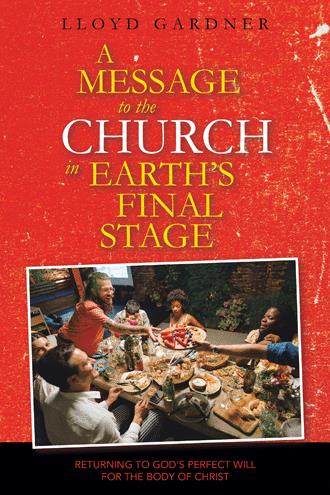
A Message to the Church in Earth’s Final Stage
Returning to God’s perfect will for the body of Christ
by
Book Cover & Preview Text
Discipleship vs Church Going
All authority has been given to Me in heaven and on earth. Go therefore and make disciples of all the nations, baptizing them in the name of the Father and the Son and the Holy Spirit, teaching them to keep all that I commanded you; and behold, I am with you always, even to the end of the age.
—Matt 28:18 – 20 (NKJV)
A disciple in the Bible was a student of a rabbi who was usually a man who had completed the formal training in a recognized school of thought. Disciples would choose a rabbi to follow and learn from who was respected for his reputation in the community for teaching students about Jewish law and tradition. The schools of thought were named after the rabbi who was the teacher. Saul, before his name was Paul, learned under Gamaliel, a respected and famous rabbi in those days. After they graduated from the school of their rabbi some would set up their own school to continue the teachings they had learned.
Jesus took a different route. As far as we know he did not submit during his formative years to a respected rabbi. Yet, when Andrew and John first met Jesus they referred to Him as Rabbi (John 1:38). Somehow Jesus had influenced them in such a way that they recognized His spiritual credentials even though there is no record of Him studying under a recognized rabbi. Perhaps they had witnessed His baptism by John the Baptist or heard John speak of Him. For whatever reason, they became disciples (students) of Jesus.
Knowing this, we ask where did Jesus get His formal training? We know that as early as the age of twelve He was in the temple confounding the teachers with the questioning style of the rabbis of that time (Luke 2:46-49). Jesus knew and understood the scriptures well and used them often in His discourses with the teachers of the day. No doubt He had learned much from His earthly parents but we must remember that He had a special connection with His heavenly Father as well. He did not learn from an elite rabbi or school of training but from His Father. He was not caught up in the doctrinal arguments of the day but was guided by the hand of His Father in word and deed.
So when the disciples began to follow and learn from Jesus they were not hearing from the theology of the day but from the God of eternity. Instead of coming from the perspective of the religious notions of the day, He took the perspective of His Father and scripture, the word of His Father. Jesus would often launch an argument with the words “You have heard that it was said,” and then conclude His argument with how our hearts are affected (Mat 5:21, 33, 38, 43).
An example is where Jesus speaks to the issue of adultery—“You have heard that it was said, ‘You shall not commit adultery; but I say to you that everyone who looks at a woman to lust for her has already committed adultery with her in his heart’” (Mat 5:27, 28). Jesus, the Teacher, realized that it is man’s heart that is the problem, not just the outward act. He would say we need to get our hearts right before we can overcome the problem.
So our commission from the Lord is to “. . . make disciples of all the nations, baptizing them in the name of the Father and the Son and the Holy Spirit, teaching them to keep all that I commanded you.” Our calling as His church is to make disciples (students) of all the nations by teaching them to keep the things He taught His first disciples and us as well. If we have taught them appropriately, the test would be “are they doing the things that Jesus told us to do?”
My question at this point is, Are we making disciples in our churches, or are we simply trying to fill the pews with church goers? The command was to His first disciples but He included us when He said, “. . . and lo, I am with you always, even to the end of the age” (Mat 28:20). To the end of this church age, our mandate is to make disciples of people by teaching them to “keep all that I commanded you.” So Jesus, as Rabbi, chose these first men to be His disciples and then, as if they were His graduates, He sent them forth to make disciples of the nations. That process has come down to us in the twenty-first century. We have been made disciples and are being sent forth to make more disciples by teaching them what our Rabbi taught.
So the textbook for the teacher of those we hope to be disciples of Jesus is God’s word the Bible. The Lord has left us with ample material, and the lead Teacher, the Holy Spirit, to enable us to fulfill the Great Commission in the area in which the Lord has placed us. Paul shared with one of his students, Timothy, this great advice: “ All Scripture is given by inspiration of God, and is profitable for doctrine, for reproof, for correction, for instruction in righteousness, that the man of God may be complete, thoroughly equipped for every good work. ” (2 Tim 3:16, 17).
So scripture has come down to us by the Holy Spirit to enable us to make disciples of those God puts in our care. It is not mere theology, or doctrine but God’s truth breathed out of His mouth and ready to help guide believers toward being disciples of the Lord. The Bible is a textbook on how to live as followers of Jesus and is profitable for all the stages of a student’s learning process. The curriculum is training in how to live by the righteousness of our God so that we reach a point of being equipped to do what God has put us on this planet to accomplish.. Each of us has a calling to some aspect of His eternal purpose and the church is the classroom in which we learn from one another and are encouraged to follow through on what He calls us to do (Eph 2:10).
This textbook is not just for learning truth but is a manual for reproof and correction for those times when we wander off of His clear path for us. The traditional church is now being called to move past its market-driven motivation to gain more members who bring in more money. Our motivation must be the guidance of the Holy Spirit whose task on earth in this age is to inspire and empower the ekklesia of God to take hold of its God-granted mission to make true disciples of one another.
Formats

Book Details
About the Book
It comes as no surprise to most Christians that the church Jesus died to establish is in a state of serious crisis. Many people are leaving traditional churches in search of more effective ways of functioning or they are abandoning church life altogether. This book was written not to present some novel way to improve our traditional churches but recommends a thorough return to simple family style Christianity as it was revealed in scripture. It highlights the unscriptural way we experience church life today and compares it with the way the body of Christ was meant to function. The church is a spiritual organism, regenerated, inspired and growing by the Holy Spirit not an organization controlled by men using human strategies. Jesus promised He would build His victorious church and would send the Holy Spirit to guide that process. It is time to abandon our market-driven approach to church life and return to God’s way. As we approach the end times the body of Christ will become our sanctuary away from the persecution of the world system while providing an environment for true spiritual growth toward maturity. This book was written for these days of spiritual turmoil to provide God’s answer for the end times.
About the Author
Lloyd Gardner is a former pastor who walked away from traditional church in search of biblical Christianity. His journey brought him to the realization that our way of experiencing life as His church needs to return to the simple, pure way of fellowship that encourages growth leading to real spiritual maturity.