
THE NEW ROMAN ROAD
Reaching People in the New Digital Frontier
by
Book Cover & Preview Text
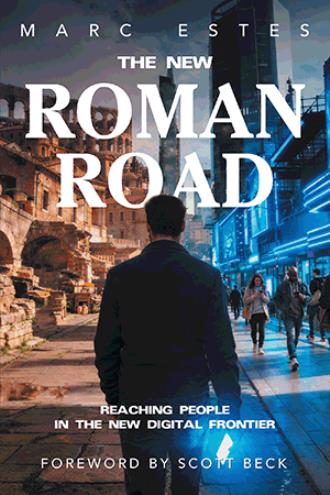
The Road Then and Now Two thousand years ago, a tentmaker from Tarsus walked the dusty highways of the Roman Empire carrying a message that would change the world. The roads he traveled were a marvel of engineering, 50,000 miles of interconnected stone pathways that linked city to city, market to market, culture to culture. Historians call them the arteries of the empire. Paul called them opportunity. It wasn’t by accident that the gospel spread so rapidly in the first century. The Roman Road system made it possible for Paul and the early church to move with unprecedented speed and reach. He could write letters in Corinth and have them delivered to Rome. He could preach in synagogues, marketplaces, and forums, knowing that news of Jesus would ripple across trade routes like wildfire. When Paul declared, “I have become all things to all people so that by all possible means I might save some” (1 Cor. 9:22), he wasn’t only talking about his flexibility in cultural engagement. He was leveraging the tools, roads, and systems of his day for the sake of the gospel. The Roman roads were more than stone, they were providence. Fast forward to today. Our roads are not made of stone but of fiber optic cables and wireless signals. Instead of horse drawn carts, we have smartphones. Instead of scrolls, we have screens. But the principle remains the same: God uses the infrastructure of the age to carry His unchanging message. The difference is scale. Rome connected millions. Digital roads connect billions. A Church Behind the Curve Here’s the uncomfortable truth: the Church has not kept pace. While tech companies experiment with artificial intelligence, pastors are still asking whether it’s okay to livestream a service. While teenagers are spending hours on TikTok, many churches don’t even have a YouTube channel. While entire industries have reinvented themselves digitally, too many congregations are waiting for “things to go back to normal.” They won’t. According to Pew Research, the percentage of Americans who describe themselves as religiously unaffiliated has grown from 16 percent in 2007 to 29 percent in 2021. That’s nearly a third of the nation, most of them digital natives who are more likely to Google “meaning of life” than to darken the door of a sanctuary. Barna reports that 65 percent of Gen Z believes “happiness is up to me,” while only 20 percent say they trust the Church for answers. It’s not that young people are less spiritual. It’s that they are less willing to walk a road the Church hasn’t paved. Meanwhile, digital platforms have become the primary shapers of worldview. TikTok surpassed Google as the world’s most visited website in 2021. YouTube is the second largest search engine in the world, and over 500 hours of video are uploaded every minute. Instagram and Snapchat are among the most used apps for teenagers, with average daily use hovering around three hours. The Church is not just behind, in many ways, it has surrendered ground. Technology and Theology Now, before you despair, remember this: theology has always driven technology. Consider the printing press. Johannes Gutenberg was not trying to build the world’s first viral machine. He was trying to put the Bible in people’s hands. Within fifty years of its invention, presses across Europe had produced more than twenty million books, most of them Scripture. Or consider Billy Graham. In 1951, he launched the “Hour of Decision” radio program, reaching millions who would never attend a crusade. Later, his televised sermons became a fixture in homes around the world. By the end of his ministry, Graham had preached to more people through media than in person. The pattern is clear. When the Church embraces the tools of the age, the gospel accelerates. When it resists, it risks irrelevance.
Formats

Book Details
About the Book
What happens when the Church keeps preaching, but fewer people are listening? When our methods stay familiar, but the world has changed lanes. The New Roman Road is a call to return to the heart of evangelism with fresh eyes and faithful courage. Marc Estes invites readers to rediscover the gospel’s power for real people in real places, and to reach them where they actually live today: online, in everyday conversations, and in the quiet moments of searching that happen long before someone ever walks into a church. With conviction, clarity, and practical steps, this book equips leaders and believers to move from passive Christianity to mercy-driven mission, turning digital space into holy ground and everyday believers into confident witnesses.
About the Author
Marc Estes is a thought leader, author, and CEO of VisitorReach. He has served in leadership across faith and culture for four decades, bringing clarity, hard-won wisdom, and vision to help churches rise, leaders lead, and people live on mission in today’s ever-changing world. Marc lives in Hermosa Beach, California.