
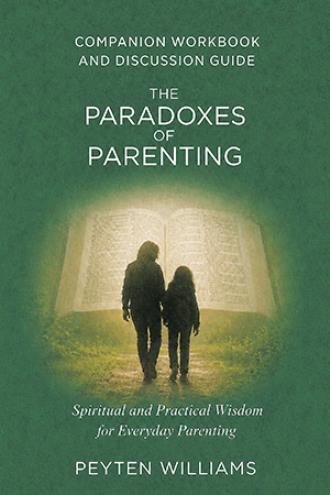
The Paradoxes of Parenting Spiritual and Practical Wisdom for Everyday Parenting
Companion Workbook and Discussion Guide
by
Book Cover & Preview Text
Not God but Godlike This paradox explores how we are not God and we are godlike because we are made in His image. These two concepts can both be true. Holding this paradox reshapes the way we see our children and our own identity as parents. Ultimately, God promises our transformation out of this paradox. Being a Jesus follower means that you and God are working together to transform you into becoming more and more godlike and less and less like dust, and our children will see this transformation. ● Think about your own children and the ways you see parts of yourself in their looks, temperament, or preferences. How do you feel when you see yourself in your children? ● How do you think God sees you? ● How are you like God? Scripture: Read these verses aloud. As you read, highlight words or phrases that stand out to you. So God created mankind in his own image, in the image of God he created them, male and female he created them. —Genesis 1:27 (NIV) By the sweat of your brow / you will eat your food / until you return to the ground, / since from it you were taken; / for dust you are / and to dust you will return. —Genesis 3:19 (NIV) Love is patient, love is kind. It does not envy, it does not boast, it is not proud. It does not dishonor others, it is not self-seeking, it is not easily angered, it keeps no record of wrongs. Love does not delight in evil but rejoices with the truth. It always protects, always trusts, always hopes, always perseveres. (1 Corinthians 13:4–7 NIV) I do not understand what I do. For what I want to do I do not do, but what I hate I do … For I have the desire to do what is good, but I cannot carry it out. For I do not do the good I want to do, but the evil I do not want to do—this I keep on doing. (Romans 7:15, 7:18–19 NIV) “The fear of the Lord is the beginning of wisdom” (Proverbs 9:10 NIV) Observe ● What words or phrases stand out? ● What do you notice about the tension in this passage? Interpret ● What does this passage reveal about God? ● About us? ● About children? Apply ● How might this Scripture change the way you see your child this week? ● How might it change how you see yourself? Excerpts All parents have a parent identity: the tough parent, the strong parent, the pushover parent, the friend parent, or the codependent parent, to name a few that have been bandied about over the years. Whatever parenting identity we choose informs our responses to our children from small situations to big moments. It’s really important for parents to both determine who they want to be as well as who they currently are. The paradox of the godlike, but not God, can help us determine an identity that can best serve us and our children: one that is both strong and kind and one that maintains boundaries, prioritizes relationships, and walks in humility. *** I am godlike to my children in so many ways: in the way I love them and do my best to embody the characteristics of God as I am made in his image, and my whole being yearns to reflect his nature. I am their creator (at least my body participated in creating them), and I am their authority, their provider, and their protector. There are things about me that they must respect, and when they bump into disrespect, dishonesty, disobedience, and the like, it is my role to hold up those boundaries for them. All of these are similar to how God loves us. As parents, he gives us an opportunity to be godlike. Discussion and Reflection Questions 1. What stands out to you as the key idea from this chapter? 2. What qualities of God do you think you reflect best to your children? 3. If your children grew up to be just like you, would you be proud of them? 4. What is your relationship with God, and how is that showing up in your parenting? 5. Which is harder to live: that you are godlike or that you are not God? 6. When do you experience the “pull” between these two truths? 7. What would it look like to live more fully in the paradox this week? 8. Where do you need Jesus to help you live in this paradox? Practice In this chapter, you learned a framework for elements of a solid apology. God is all about restoration. How might you practice restoration with your children this week? Will you model a fantastic apology? Will you teach them how to apologise? If you’ve never taught your child how to apologize, no matter their age, choose a time when they are not needing to apologize - a calm time - and share that you heard an idea about apologies and wanted to share it with them. If they are younger, you can say you’d like to adopt it as a family as the way to apologize. If they are a teen, you can invite their opinion and see if they have any ideas of their own about what makes a great apology. Create your family apology formula together. Elements of a solid apology Eye contact + “I” + state sin + ask forgiveness + “I forgive you” (or “thank you for saying sorry”) + hug/high five —-------------------------------- relationship restoring apology Close In Prayer
Formats


Book Details
About the Book
Are you ready to dive deeper into the spiritual truths that transform your home? Introducing the Companion Workbook and Discussion Guide for The Paradoxes of Parenting: Spiritual and Practical Wisdom for Everyday Parenting. This interactive resource is designed specifically to help you apply the "unforced rhythms of grace" to the messy, beautiful reality of daily life. Whether you are reading the primary book in conjunction with this guide or are looking for a simple, standalone Bible study, this workbook is the perfect resource for individuals and small groups. Over a seven-week journey, you will explore the powerful tensions of faith that redefine parenting, such as recognizing you are "Not God but Godlike" and discovering how "Boundaries Create Freedom". Each week provides a structured path for growth: • Scripture & Reflection: Deep dives into the Word to reshape your parenting identity and perspective. • Discussion Questions: Thought-provoking prompts designed to spark honest, transformative conversation. • Practical Practices: Tangible, real-world steps to move from belief to behavior in your home. With dedicated Leader Tips to help you facilitate a thriving small group, this guide provides the spiritual and practical tools you need to parent with confidence. Stop striving and start thriving by taking the next step toward becoming the parent Jesus created you to be.
About the Author
Peyten Williams spent 16 years as a classroom educator and administrator before founding Bowbend Consulting. A mom of three, she builds her work on a Christian foundation. Now a parent and teacher coach, workshop facilitator, and keynote speaker, she equips parents and teachers to be the strong and kind adults in the room—so they can raise thriving kids of character.