
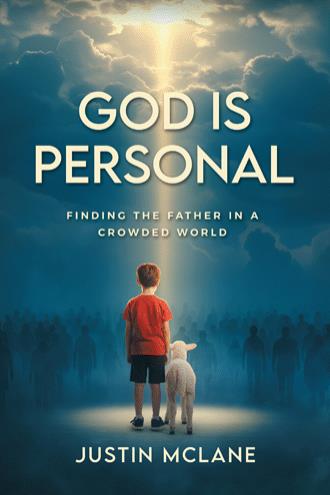
God is Personal
Finding the Father in a Crowded World
by
Book Cover & Preview Text
Satan uses lies to distort God’s character. Creating doubt in our relationship with God further isolates us and sends us to others to give us the self-worth we desire. We begin to look at God solely as a judge. We fail to see that we have a friend in God. John 15:13-15 tells us that Jesus is our friend. In plain and simple terms, He is our friend, and there is no greater love than to lay down your life for a friend. Sometimes our prayers feel like they’re going unanswered. Sometimes we get so impatient that we give up on them before God answers them. We tell each other, and ourselves, that God is too busy to answer prayers. God, who created the universe, who loves all of His creation, doesn’t have time to listen to our prayer about how our car is low on fuel and we need to make it a few more miles until we get to the gas station. Some of the biggest lies we ever believe are rooted in our failures, not always the obvious ones, but often the quiet, personal ones we carry deep inside. Sometimes it’s not even moral failure, but simply the disappointment of not becoming the person we thought we would be by now. We set goals, spiritual or otherwise, and when we fall short, the voice of shame is quick to step in. It doesn’t shout; it whispers. It says, “See? You’re not who you pretend to be. God’s tired of this.” And slowly, subtly, we begin to believe that God’s love is conditional. That it’s running out. This kind of thinking often happens quietly. We don’t always recognize it until it’s already reshaped the way we approach God. Instead of coming to Him like children, we approach like guilty servants, heads down, afraid to ask for anything. We assume He’s distant, cold, and disappointed. We might still say the right words in church or in prayer, but our hearts have already stepped back. We think, “I’ve failed too many times. God must be done with me.” We become the older brother in the prodigal story—still in the house, but bitter, burdened, and disconnected. I can’t count how many times I’ve offered to pray for someone and heard them respond with, “Don’t bother—God won’t do anything for me.” And it’s never said casually. You can hear the pain behind it. The fatigue. The quiet belief that they’ve fallen outside the reach of grace. That lie is heavy, and it doesn’t come from theology; it comes from wounds. From guilt that was never healed, shame that was never confronted, and expectations that crushed the soul over time. But the truth of the gospel is that your failure does not disqualify you; it prepares you for grace. The cross wasn’t meant for perfect people. God’s love isn’t for the strong—it’s for the surrendered. In Scripture, we see again and again that God runs toward the brokenhearted, not away from them. He seeks out the ashamed, the lost, and the doubting. From Peter’s denial to David’s collapse to Paul’s violent past, the pattern of grace is clear: failure is never final when God is involved. So if you've believed the lie that you've gone too far, failed too deeply, or disappointed God too often, let me tell you this: you haven’t. God’s love isn’t fragile, and His mercy doesn’t run on your performance. You are still welcome at His table, not as a second-class guest, but as a son or daughter, invited, embraced, and known. It's time to stop listening to the lies of the world and society, shut the devil up and read the Word of the Lord. His Truth, the Truth, the ultimate Truth. And so we know and rely on the love God has for us. God is love. Whoever lives in love lives in God, and God in them. – 1 John 4:16
Formats

Book Details
About the Book
We live in a world that is loud, crowded, and constantly demanding our attention. Every notification, opinion, and achievement competes for our focus, leaving us exhausted and spiritually distant. Many of us have traded genuine intimacy with God for religious performance, and the quiet voice of the Father for the clamor of culture. As a combat veteran and pastor, Justin McLane knows the cost of striving and the emptiness of a life based on performance. In God is Personal, he guides readers through the process of tuning out the noise, dismantling the lies that keep them distant, and rediscovering the profound, tender reality of God as their personal Father. This book is a direct challenge to the digital distraction and performance culture that has convinced us God is distant. It is an invitation to stop striving and start abiding, and to find the peace that only comes from His presence.
About the Author
Justin McLane is a combat veteran, pastor and speaker who found his faith after years of living as pagan. He uses his unique journey to challenge believers to move past religious routine and into a genuine, intimate relationship with God.