
I PERMIT NO WOMAN
The Need for Biblical Equality in Today’s Church
by
Book Cover & Preview Text
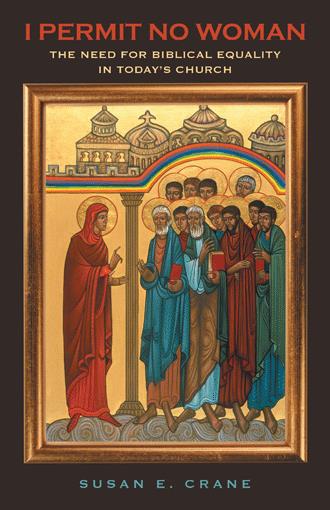
As promised by the prophet Joel, God poured out His Spirit on all who believed in Jesus Messiah on the first Pentecost after Jesus’ Resurrection (Acts 2). The new thing God was doing became evident at the dawn of the Early Church. Do you not perceive it? Many American Christians today are reluctant to believe that God poured out the Spirit on every believer who followed Jesus – both women and men, slaves and free, even Gentiles and Jews. Despite Simon Peter’s assertion that what they were witnessing was the fulfillment of the prophecy of Joel, many Christians prefer to believe in the principle of male headship over women, insisting that God created women to be submissive in all things. Is this true? In Romans 16, the apostle Paul sends greetings to ten co-workers in the gospel, then living in Rome. Eight of those ten co-workers in the gospel were women! Yet a large proportion of American Christians today believe the Bible teaches it is wrong for women to preach or serve as pastors. This rigidly-held belief is based largely on the cultural tradition that only men can fill the role of being ‘the head of the family’ or ‘the head of a church.’ However, Ephesians 5:23 clearly tells us that … “Christ is the head of the church, his body, and is himself its Savior.” Why then did the Early Church recognize a notable woman apostle named Junia? How did Phoebe get to be the minister of the church in Cenchreae? Or Lydia the leader of the church in Philippi that met in her home? And why was Aquila’s wife Prisca the one to explain Christian baptism to the renowned speaker Apollos, who knew only about the baptism of John? The Bible does tell us about these women, who served in leadership capacities in the first century church. Why do so many American Christians still insist that women are Biblically prohibited from teaching or preaching? God was doing a new thing in the Early Church – a transformation so radical – it turned the existing social order upside down. While patriarchy still ruled in most ancient societies, in the first house-churches it was not so. Male and female believers all worshiped together. Both men and women contributed whatever gifts the Spirit gave them for the upbuilding of the church. And no one forbade them! All baptized believer were one in Christ. Even slaves and masters were on equal footing at church. Jews and Gentiles learned how to accept each other and overcome years of prejudice in order to worship together. What happened to the equality in Christ that was the hallmark of the early church in Galatians 3:28? Over time, that equality was eroded by patriarchal powers both in society and in the Church. Over the past 75 years in the USA, equality in Christ has come under direct attack by Complementarian Christians, who claim that God created man to have “headship over women, both in the family and in the Church. Complementarian Christians then marketed their ideas through books, movies and programs heavily promoted by church leaders. The media was saturated with patriarchal ideas as being good for families and good for the nation. At the same time that feminism and women’s rights were being promoted across America, the Church was intent upon undermining those efforts, in the interest of returning to patriarchy under the guise of Biblical Manhood and Womanhood. God is always at work in the world redeeming the creation and reconciling humankind to Himself. It seems, however, that people (even believers) are just as busy undoing the “new thing” God was doing in the Early Church, so as to keep the old power structures in place with men ruling over women, and the rich exploiting the poor. This book will explore “the new thing” God inaugurated in the Early Church which people still find so threatening. Bible verses often used to keep women out of ministry today will be examined in light of cultural, historical, and linguistic information to provide a context for better understanding of the author’s original intent. It is my sincere hope that someday soon all God’s people will choose to dwell together as one in Christ Jesus, so that God’s kingdom may come and God’s will be done on earth, as it is in heaven.
Formats

Book Details
About the Book
I PERMIT NO WOMAN is a book about the women God calls into ministry, and the ways church and society invent to keep them out of ministry, usually by claiming the Bible prohibits any woman from preaching. 1 Timothy 2:12 is the verse cited. But that verse only mentions one particular woman who is not named. That woman should not be permitted to teach for a reason – because she is not teaching the Bible, but some other belief system that is leading church members away from the true word of God. Furthermore, the passage says nothing about preaching, only teaching an unknown subject matter represented by the infinitive verb authentein. Join the author on a journey into the secrets of ancient Ephesus and delve deeper into the Gnostic ideas that were the likely cause of Christians abandoning their faith in Jesus, due to false teachings. The author believes that God was doing a new thing in the first century Church, something so radical it turned the social divisions of their time upside down. Men and women worshiped together in house churches, as did Jews and Gentiles, slaves and free. Each believer was encouraged to use their gifts of the Spirit for the upbuilding of the church in love. What happened to the equality those first Christians enjoyed? Today’s church is in sore need of recovering that equality.
About the Author
The Rev. Dr. Susan E. Crane is an ordained pastor recognized by ABC-USA. Her career spans 49 years so far. She served as pastor of four churches in three states and now serves as the Area Resource Minister for 14 Baptist churches in Western Maine. Her ongoing research and study of scripture in search of faithful answers to tough questions about women in ministry has led to the publication of this book she hopes will encourage the women God is still calling into ministry.