
A Tale of Two Mahatmas: Mahatma Phule and Mahatma Gandhi
A Christian Analysis
by
Book Cover & Preview Text
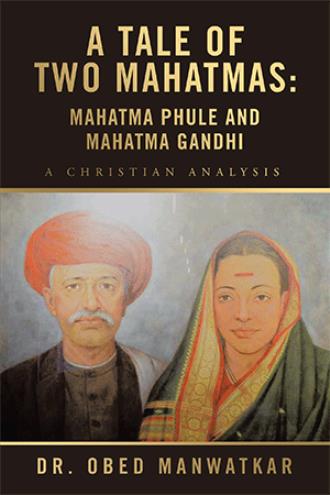
The Tale of Two Mahatmas: Phule and Gandhi—Their Vision and Contributions on Social Reform: A Christian Analysis invites readers into a thoughtful, respectful, and critical conversation between history, social reform, and faith. This book explores the lives and legacies of Mahatma Jyotirao Phule and Mahatma Mohandas K. Gandhi—two towering figures whose visions reshaped Indian society and continue to influence global discussions on justice, equality, and moral leadership. India’s social landscape has long been shaped by deep-rooted inequalities, particularly those connected to caste, gender, education, and economic power. Phule and Gandhi responded to these realities in distinct yet overlapping ways. Phule, writing and working in the nineteenth century, emerged as a radical social reformer who boldly confronted Brahminical dominance and caste oppression. He championed education for women and marginalized communities, challenged religious orthodoxy, and spoke unapologetically on behalf of those excluded from power and dignity. Gandhi, active in the twentieth century, approached social reform through nonviolence, moral discipline, and spiritual self-transformation, seeking to awaken the conscience of both oppressor and oppressed. This book does not merely recount their biographies. Instead, it critically engages their ideas, methods, and social visions, asking how and why they mattered—and still matter—today. It examines how Phule’s sharp critique of social hierarchy disrupted accepted norms and laid foundations for later movements of resistance and empowerment. At the same time, it evaluates Gandhi’s emphasis on truth (satya), nonviolence (ahimsa), and service, exploring how these principles mobilized masses and shaped ethical leadership. A distinctive contribution of this work is its Christian analytical framework. Drawing from biblical teachings and Christian social ethics, the book enters into dialogue with both thinkers. Themes such as justice, liberation, love of neighbor, human dignity, sin, repentance, and reconciliation provide lenses through which Phule’s and Gandhi’s ideas are examined. Rather than positioning Christianity as superior or adversarial, the book adopts a dialogical approach—listening carefully, affirming shared values, and offering constructive critique where tensions arise. The Christian tradition has long emphasized care for the poor, resistance to injustice, and the belief that all people are created in the image of God. These convictions resonate strongly with Phule’s insistence on equality and Gandhi’s moral vision of society. At the same time, the book does not shy away from difficult questions. How does one respond to systemic injustice—through radical confrontation or moral persuasion? Can nonviolence adequately address deeply entrenched oppression? How do religion and social reform interact without reinforcing exclusion or hierarchy? Each chapter thoughtfully weaves historical context, social analysis, and theological reflection. Readers are guided through Phule’s critique of religion and power, Gandhi’s spiritualized politics, and the broader implications of their thought for contemporary struggles around caste, communal harmony, human rights, and ethical leadership. The book encourages readers to see social reform not merely as political activity, but as a moral and spiritual calling. Importantly, this work avoids romanticizing its subjects. Both Phule and Gandhi are treated with respect, yet examined critically. Their limitations, contradictions, and contested legacies are acknowledged, allowing readers to engage them as complex human beings rather than untouchable icons. This balanced approach makes the book valuable not only for academic study but also for personal reflection and dialogue across faiths and ideologies. Written in a clear, accessible style, The Tale of Two Mahatmas is suitable for students, scholars, clergy, social activists, and general readers interested in Indian history, interfaith studies, theology, and social justice. It is particularly relevant for those seeking to understand how religious thought can inspire social transformation while remaining accountable to ethical scrutiny.Ultimately, this book is an invitation—to reflect, to question, and to act. By bringing Phule and Gandhi into conversation with Christian ethics, it challenges readers to rethink what it means to pursue justice, practice compassion, and live responsibly in a pluralistic world. Their stories remind us that social change is neither simple nor quick, but it begins with courageous ideas, moral conviction, and a willingness to stand with the marginalized. The Tale of Two Mahatmas is not only a study of the past; it is a guide for the present and a hopeful vision for the future—calling readers to embody justice, truth, and love in their own contexts.
Formats

Book Details
About the Book
The Tale of Two Mahatmas: Phule and Gandhi—Their Vision and Contributions on Social Reform: A Christian Analysis is a reflective and critical exploration of two of India’s most influential social reformers, Mahatma Jyotirao Phule and Mahatma Mohandas K. Gandhi. Though shaped by different historical contexts, social locations, and methods of resistance, both thinkers dedicated their lives to confronting injustice, challenging oppression, and restoring human dignity. This book examines their responses to some of India’s most pressing social realities—caste discrimination, inequality, education, women’s rights, poverty, and moral responsibility. Phule’s radical critique of caste hierarchy and his advocacy for the marginalized are placed alongside Gandhi’s philosophy of nonviolence, truth, and ethical self-transformation. Rather than idealizing either figure, the book engages their strengths, tensions, and limitations with honesty and depth. What sets this work apart is its Christian analytical lens. Drawing from biblical themes of justice, liberation, love of neighbor, and the inherent worth of every human being, the author enters into dialogue with Phule and Gandhi to ask profound questions: How do faith and social reform intersect? What does true liberation look like? How can religious ethics inspire lasting social change without reinforcing exclusion? Written for scholars, students, faith leaders, and socially conscious readers, this book invites reflection across religious and ideological boundaries. It challenges readers to rethink leadership, holiness, and activism in a pluralistic society. Ultimately, The Tale of Two Mahatmas is not only a study of history, but a call to renewed commitment toward justice, compassion, and transformative action in today’s world.
About the Author
Dr. Obed Manwatkar is a theologian, interfaith scholar dedicated to building bridges across faiths and cultures. Through teaching, ministry, and global dialogue, he inspires understanding, reconciliation, and justice, encouraging people to embrace diversity with compassion, wisdom, and hope for a more harmonious world.