
From Conflict to Connection
Thriving in Marriage with Biblical Wisdom and Emotional Strength
by
Book Cover & Preview Text
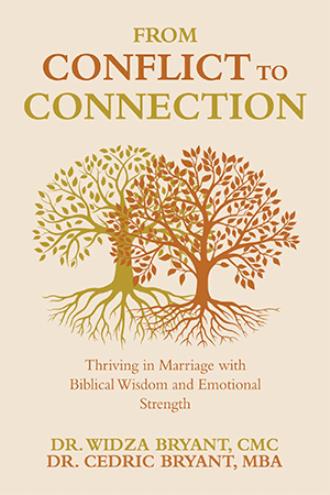
Preview of From Conflict to Connection: Applying Biblical Principles and Emotional Competence to Thrive in Marriage In a world where the pressures of modern life stra in even the strongest marriages, From Conflict to Connection offers couples a beacon of hope and a roadmap for lasting love. Dr. Widza Bryant, alongside her husband, Dr. Cedric Bryant, draws from over 25 years of marriage to reveal how couples can move beyond conflict, build emotional and spiritual intimacy, and thrive together in God-centered love. This book is more than theory—it is lived experience. Through candid storytelling, the Bryants share their journey of joy and heartbreak, triumphs and trials, and the hard-won lessons that have strengthened their bond. They invite readers into moments that are both deeply personal and universally relatable: the nervous spark of first encounters, the daily frustrations of miscommunication, the challenges of raising children, and the profound, life-altering crises that can either break or fortify a marriage. A Story of Connection Amid Difference Cedric and Widza’s journey began at the close of 1999. A chance encounter at a gym in Trenton, New Jersey—an accidental locked car key and the quiet presence of a man they would one day marry—sparked the beginning of a lifelong partnership. As they began to build a shared life, they discovered remarkable similarities. Both were attending Rider University, graduating the same year. Both were immigrants—Cedric from Liberia, Widza from Haiti—who had arrived in the U.S. at an early age. Both had grown up navigating life largely without parental support, while their siblings remained in their home countries. They shared struggles and resilience shaped by early displacement, cultural adjustment, and ambition to build meaningful lives in a new country. At the same time, their differences were evident. English was Cedric’s first language, while Widza grew up speaking Creole and French. Their social circles were distinct: Widza’s friends were primarily Haitian, while Cedric’s were more diverse. These differences required intentionality, communication, and a commitment to understanding one another—early lessons in emotional intelligence that would become the foundation for their marriage. When Love Alone Isn’t Enough Though their love was deep and genuine, the Bryants soon learned that love alone could not sustain them. Early in their marriage, they faced reactive communication, unrecognized emotional triggers, and unhealthy patterns that created tension and misunderstanding. Love without emotional awareness, they discovered, was vulnerable to exhaustion, miscommunication, and distance. Their turning point came amid profound life challenges. In 2002, shortly after the birth of their twins, they noticed differences in their sons’ development. After multiple evaluations, they received a diagnosis: cerebral palsy. The news left them reeling—emotionally numb, spiritually shaken, and relationally strained. At first, fear, disappointment, and isolation drove them apart, highlighting the critical need for both spiritual and emotional maturity to navigate life’s most painful realities. Further trials reinforced this lesson. Widza survived a traumatic fire in Haiti, which became a moment of divine interruption, leading her to surrender her life fully to Christ. Cedric’s eventual spiritual awakening aligned their marriage toward faith-centered growth. But even as they committed to God, they realized that spiritual devotion alone could not heal the emotional patterns that undermined connection. They could pray together, read Scripture, and worship, yet still fall into frustration, defensiveness, and misunderstanding behind closed doors. The Power of Emotional Intelligence Through these experiences, the Bryants discovered the transformative power of emotional intelligence (EQ) in marriage. EQ is the ability to recognize, understand, and manage one’s own emotions while also perceiving and responding effectively to the emotions of others. As Daniel Goleman explains, emotional intelligence is a set of competencies that can be learned and practiced—skills that are vital for navigating the complexities of intimate relationships. In marriage, EQ is not a luxury; it is essential. The Bryants identify five core components that anchor relational health: self-perception, self-expression, interpersonal skills, decision-making, and stress management. These competencies form a framework for handling conflict, deepening intimacy, and fostering mutual understanding. They also underlie practical strategies for communication, emotional regulation, and spiritual partnership. To make these concepts actionable, the Bryants introduce the 4Ms Framework: Mouth, Mind, Mood, and Money. Each domain represents an area where emotional intelligence must be applied consistently: • Mouth: Communication is central to connection. Words can build trust or inflict harm. Proverbs 18:21 reminds us that “the tongue has the power of life and death.” Learning to speak with grace, clarity, and empathy protects the emotional health of the marriage. • Mind: Thoughts shape actions and emotional responses. Romans 12:2 urges believers to renew their minds, allowing God’s truth to reshape perspective, decision-making, and problem-solving. • Mood: Emotional regulation is key. Couples must learn to pause, reflect, and respond rather than react impulsively in conflict or stress. Emotional mastery allows for grace, patience, and constructive dialogue. • Money: Financial stewardship and transparency affect trust, stress levels, and long-term alignment. Teamwork in money matters strengthens the marriage and prevents resentment or secrecy. Applying emotional intelligence across the 4Ms fosters resilience, deepens connection, and creates a marriage that thrives even amid challenges. A Christ-Centered Approach to Growth Throughout From Conflict to Connection, the Bryants intertwine Scripture, personal narrative, and practical application. They emphasize that spiritual maturity and emotional intelligence work hand-in-hand: one without the other leaves a marriage unbalanced. From intentional prayer and shared devotional practices to conflict resolution strategies and emotional check-ins, readers are equipped to cultivate a home marked by grace, humility, and mutual respect. The book also emphasizes the ongoing nature of growth. Marriage is not a destination but a journey—a covenant requiring daily choices, reflection, and surrender. Love, while foundational, is not enough. True transformation happens when couples embrace discipline, cultivate emotional maturity, and invite God into the center of their union. Who This Book Is For Whether you are newly married, decades into your relationship, or navigating seasons of challenge, From Conflict to Connection offers encouragement, insight, and practical tools. Couples will learn how to: • Navigate conflict without damaging connection • Deepen emotional and spiritual intimacy • Build practical habits that sustain love over time • Respond to life crises with unity and faith • Cultivate joy, resilience, and mutual respect in daily life This book is both a guide and a companion—a reminder that marriage is sacred, transformative, and meant to reflect the love of Christ. A Call to Action Readers are invited to move from surviving to thriving, from struggle to strength, and from love to lasting covenant. Through honest storytelling, biblical grounding, and practical emotional intelligence strategies, the Bryants offer a roadmap for couples seeking to honor God, nurture connection, and grow together through life’s highs and lows. From Conflict to Connection is a journey of hope, a blueprint for transformation, and an invitation to experience marriage as God intended: a partnership rooted in faith, nurtured by emotional intelligence, and strengthened through grace.
Formats

Book Details
About the Book
In a world where the pressures of modern life strain even the strongest marriages, From Conflict to Connection offers a beacon of hope and a roadmap for lasting love. Dr. Widza Bryant, alongside her husband, Dr. Cedric Bryant, draws from over 25 years of marriage to reveal how couples can move beyond conflict, build emotional and spiritual intimacy, and thrive together in God-centered love. This book is more than theory—it is lived experience. Through candid storytelling, the Bryants share their journey of joy and heartbreak, triumphs and trials, and the hard-won lessons that have strengthened their bond. From navigating differences in background, culture, and communication to facing life-altering crises like a child’s cerebral palsy diagnosis, their story demonstrates the transformative power of faith, grace, and emotional intelligence in marriage. Readers will discover practical, biblical strategies for strengthening their relationships, including how to manage emotions, communicate effectively, resolve conflict, and grow spiritually as a couple. Each chapter integrates Scripture, emotional insight, and real-world tools to help couples cultivate resilience, deepen connection, and reflect Christ’s love in their daily lives. Whether you are newly married, seasoned in your relationship, or facing challenges that test your commitment, From Conflict to Connection provides encouragement, guidance, and hope. It is an invitation to embrace marriage as a sacred journey, a covenant to be nurtured, and a partnership designed for transformation. Move from surviving to thriving, from struggle to strength, and from love to lasting covenant—one day, one choice, and one step at a time.
About the Author
Dr. Widza Bryant is an author, speaker, coach, and leadership strategist passionate about faith, emotional intelligence, and purpose-driven living. Drawing on over 25 years of marriage, professional leadership experience, and ministry, she equips couples and leaders to cultivate emotional maturity, spiritual integrity, and relational health. She co-founded Bryant & Bryant Consulting, champions inclusive leadership, and co-authored Leadership Practices: A Global and Biblical Perspective with her husband, Dr. Cedric Bryant. Dr. Cedric Bryant has over two decades of experience developing leaders, teams, and organizations. A sought-after strategist and culture practitioner, he also consults in healthcare, guiding organizations toward efficiency, quality, and improved outcomes. His philosophy centers on transformational leadership. He co-authored Leadership Practices: A Global and Spiritual Perspective.