
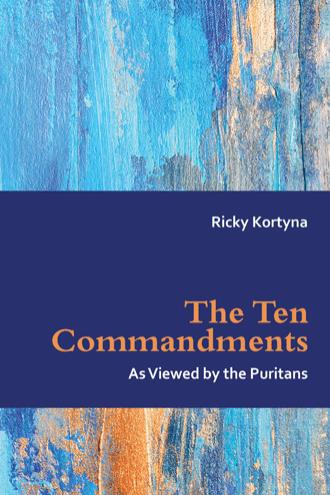
The Ten Commandments as Viewed by the Puritans
by
Book Cover & Preview Text
The First Commandment And God spoke all these words, saying: “I am the Lord your God, who brought you out of Egypt, out of the land of slavery. You shall have no other gods before me.” –Exodus 20:2 The first tablet, containing the first commandment, declares that God must be first in our worship and first in our lives. To obey this commandment, the Puritans sought to understand what it prohibited and what it demanded of them. With Scripture as their guide, they affirmed and responded to the supremacy of God. God declares who He is and how His people should respond in Isaiah 1: First, He who is the Lawgiver proclaims His Name, and by His Name demonstrates His authority, in order to incite attention, reverence, and obedience. I am Jehovah. I , who am speaking to you, am Jehovah, the eternal God who is, who was, and who shall be. I am the living God who lives from eternity to eternity, who has given life and being to all and to whatever lives; and who maintains and governs all by My influence. I am worthy of all honor, service, and obedience. It is the felicity of rational creatures to know, honor, fear, and serve Me as Jehovah. I, Jehovah, am the only Lawgiver who can save and destroy. Therefore, “Hear, O heavens, and give ear, O earth; for the Lord has spoken” (Isa 1:2). 1 God reintroduces Himself by reminding Moses, the Israelites, and all those who follow that it was He who led them out of Egypt, out of bondage. Why did God do such a thing? Calvin writes: “By this he means that he has truly bound them to himself so that the people cannot revolt against him without meriting further punishment.” 2 Further on in his sermon Calvin explains: “This is what the title means which is claimed in this passage, saying: ‘I am not solely the Lord who has come to startle you, but, as the same time, I am your God. I have chosen you for myself. It is my will that you be my inheritance.’” 3 1 a' Brakel, The Christian's Reasonable Service, 83-103. 2 Calvin, John Calvin's Sermons on the Ten Commandments, 51-65. 3 Calvin, 51-65. There is a binding that has been pronounced: a limited number of people have been chosen by God to be His. We, the chosen, cannot escape our destiny, rebel against it as we will. God did create us, form us, thereby making us His. “We are the children of Adam, miserable in nature, heirs of death, possessors only of sin, and in consequence it is fitting that we should be execrable to our God.” 4 God does not deny that there are other gods, but God, with a capital “G,” is over all other gods, with a small “g.” What other gods can there be? Ursinus offers this definition: “Another god is any and every thing to which we may attribute the properties, attributes and works of the true God, even though the thing itself does not possess them, and even though they are inconsistent with its nature.“ 5 According to the Psalmist in 96:5: “For all the gods of the nations are idols: but the LORD made the heavens.” Thus, God begins the Ten Commandments with a declaration of His primacy. “I shall be your God and you shall be My people” echoes throughout the Bible. The Covenant between God and His people is “without interruption, without intermission.” 6 God is God over all, believers and non-believers, animate and inanimate, physical and spiritual. God is the God of the past, the present, and the future. None shall be placed in importance before God. An example of God vs god is seen in I Kings 18:21: “And Elijah came unto all the people, and said, how long halt ye between two opinions? if the LORD be God, follow him: but if Baal, then follow him. And the people answered him not a word.” When given a clear choice between God or god, the people responded by not answering. Jonathan Edwards, in a 1734 sermon on this verse, arrived at the following doctrine: “Unresolvedness in religion is very unreasonable. “ 7 Christ did not hesitate to die for His people, yet His people hesitate to follow Him, despite the First Commandment’s clear decree. 4 Calvin, 51-65. 5 Ursinus, The Commentary of Dr. Zacharias Ursinus on the Heidelberg Catechism, 488-516. 6 Boston, The Whole Works of the Late Reverend Thomas Boston of Ettrick: An Illustration of the Doctrine of the Christian Religion with Respect to Faith and Practice, Upon the Plan of the Assembly's Shorter Catechism Comprehending a Complete Body of Divinity, 92-126. 7 Edwards, The Works of Jonathan Edwards, 57-61.
Formats

Book Details
About the Book
This is a heavily referenced book, with just shy of 400 footnotes, of which nearly all are quotes from Puritan sermons. These references show the deep thought and heartfelt love of Christ that the Puritans are known for. It is the hope of this author that the contents of this book will be a source of both sermon reference material for those preaching on the Ten Commandment or as a companion work for those who wish to delve deeply into a personal study of the Commandments.
About the Author
Mr. Kortyna, a Physician Assistant by training, received his Master of Theological Studies from the Reformed Presbyterian Seminary in Wilkinsburg PA. He is married to Deborah Kortyna. They both enjoy reading and fine dining.