
The Mysteries of Life and Death
by
Book Cover & Preview Text
CHAPTER ONE: INTRODUCTION AND DEFINITIONS Life and death are universal experiences we all encounter. If you are reading this, you are likely to consider yourself alive, engaged in the journey of life. While we believe we understand what life and death entails through our experiences, articulating their essence is quite challenging. It is akin to trying to hold water in your hands without a glass; you can feel its presence, but it slips through your fingers. This struggle to define these concepts mirrors the attempts to express love and faith-- both vital and enriching yet, capturing their true nature in words often feels elusive, like chasing something that moves too swiftly to catch. I aim to share my reflections on life and death in the hope of clarifying these profound topics. I will explore first the concept of life, followed by death, but to truly grasp one, we must examine both in relation to one another. Before delving into our exploration of life and death we must ask ourselves, why study these profound topics? At first it may seem unnecessary, especially since we are alive and the idea of death can feel intimidating, even morbid. However, while confronting these realities, we can discover deeper meaning in our lives and the way we choose to live. Across various cultures there is a recognition of the significance of both life and death. Given that every human will experience life and death, one would think it is well thought out and integrated into our culture and thinking. Yet, countless individuals steer clear of confronting these questions. Why do we exist only to perish? What is our true purpose? Are these inquiries too complex to grasp, leading us to indulge in life's pleasures as if to say,” let us eat drink and be merry for tomorrow we die?” Or are they simply too daunting to contemplate? It is essential that we embrace both life and death, as doing so not only enriches our understanding of both but also deepens our connections with our spouses, parents, children, close friends and others who impact our lives. For instance, when a person loses a partner after many years together or a child, the surviving loved one experiences an emotional death of their own, felt deeply both psychologically and physically. This separation brings about psychological responses akin to those faced by terminally ill patients facing their own mortality: denial, depression, grief, anger, despair, and a sense of life's futilities . In fact, many elderly individuals who lose a long-term partner may find their own health deteriorating leading to death within 18 to 24 months . Consider the joy in life with children and watching them grow and mature. The bond or oneness or union you share with them creates a unique essence, life with them that is hard to describe, we call it family. While each one brings happiness to the family, losing one member, especially a child, stands as one of life's most heartbreaking tragedies. The remaining family experiences a wave of denial, anger, grief, and depression that can be long lasting. We think such a tragedy may strike others but not ourselves. Our approach to death shapes how we interact with friends and family who are grieving. If we choose to distance ourselves from death, treating it like a contagious disease, we risk keeping our loved ones at an arm’s length, fearing that acknowledging their loss might somehow affect us. This is when they need our love, support, and prayer the most. However, it is crucial to remember that those who have lost someone dear to them are experiencing a death themselves. With profound loss, separation from the loved one, and sorrow, they need the understanding, love and support only another loved one can share. As the journey through grief can be a drawn-out trial, C.S. Lewis, in a “Grief Observed”, emphasizes his emotions, mood swings, the slow recovery and lasting effects of losing of loved one. Job 42:11, shows the long-term effects of losing 10 children, a prolonged illness, and having difficult and trying support. Similarly, Lucy Hone writes in “Resilient Grief” and shares her own experiences of loss and the challenges faced when comforting the bereaved, particularly after the tragic loss of a child. Recovery can take several years and leave lasting impacts. We should also recognize and embrace the spiritual aspect of man. Near death experiences have brought to attention the existence of a consciousness that can think, feel, and exist beyond our physical forms. In works such as, “Evidence of the Afterlife” by Jeff long M.D. and “The Gifts of Near Death Experiences” by Dennis Lynn, Sheila Fabricant Lynn and Matthew Lynn , numerous personal accounts of out of body experiences are shared. For Christians, the spirit of man is an integral part of our faith and practice so, it is no surprise that Paul acknowledges the fact of out of body experiences in II Cor 12:1-2 and affirming his understanding of the role of the spirit of man. Similarly, John's experience in revelation suggests a comparable encounter, as he is transported to heaven and writes about it in the Book of Revelation. In the field of medicine, practitioners learn to treat the whole man, body, soul and spirit. My own journey with God, shaped by scripture, taught by the Holy Spirit, personal experiences, and my relationship with God, reinforces the idea that God addresses and cares for the totality of man spiritual and physical. Therefore, we should strive to reflect God's example in our lives.
Formats

Book Details
About the Book
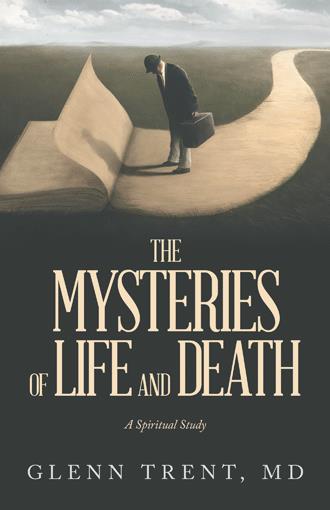
Even Christians who are devout in their faith question the meaning of life and death at some point in their lives. Life and death are not meant to be feared. God wants us to understand and embrace each of them. Glenn Trent relies on years of experience as a physician who witnessed death in both his personal and professional lives to give meaning to the multifaceted experiences of life and death, providing definitions, understanding, and practical meaning to life itself and the culmination of life that is death. After introducing definitions and the composition of the brain and why it is important to the study of life and death, he discusses physical life and death, addresses the unions and separations where we spend most of our lives, examines our spiritual life with God and the meaning of spiritual death, and concludes by discussing the life and death of Christ, the creation of man, salvation, and how these factor into life and death and the events that surround them. Included is an appendix that offers a brief commentary on inerrancy and God’s image. In this spiritual study, Christians learn why it is important to understand and not fear life and death while on our earthly journeys.
About the Author
Glenn Trent, MD is a retired orthopedic surgeon who practiced medicine for forty-seven years. He is a born-again Christian who taught Sunday School for over twenty-five years and has been an enthusiastic student of history, Koine Greek, and the scriptures. Dr. Trent and his wife have three children and six grandchildren.