
Be Present, LIVE Fully
A Guide to Balancing Growth, Connection, and Purpose
by
Book Cover & Preview Text
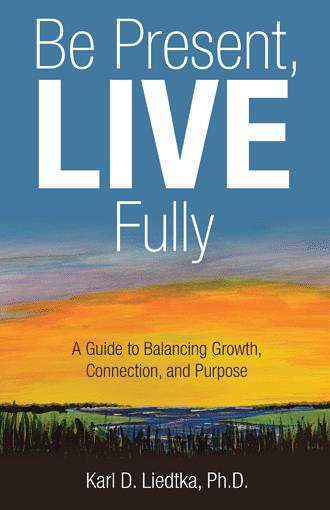
My initial purpose in creating this system was to help people navigate the extremely challenging times in which we live. However, I wonder, has there ever been a time in history without tumultuous struggles? Death, disease, famine, and war—the Four Horsemen of the Apocalypse—have long been companions to the human experience. Furthermore, has there ever truly been a "golden age" of humanity—a time when significant progress was made in becoming more human? We’ve experienced golden ages in scientific and medical discoveries, with breakthroughs in knowledge, procedures, and innovations that have changed the course of history. But have we ever discovered a better way to improve human beings themselves—and, if so, have we ever implemented those practices? Some might argue that such a golden age occurred during the time of the Greek empire, when an intellectual awakening began to shape human thought. However, it’s easy to forget that those times were also fraught with war. Additionally, a significant population of enslaved people served the needs of others, which in turn allowed the free to contemplate the nature of their existence. So, my initial argument—that we need this model because we’re living in a historically bad time—no longer holds water. In truth, there are far more common human experiences that disrupt our well-being, which don't revolve around major catastrophes. Unfortunately, humanity has long struggled with depression, anxiety, social comparison, jealousy, anger, regret, hubris, addiction, and the challenges—both beneficial and perilous—of new technological discoveries, from the creation of the wheel to artificial intelligence. I am not proclaiming that this system is the one humanity has been waiting for. In fact, the ideas presented are not new creations. These ideas have been shaped by many of the world’s greatest thinkers, who pondered how we can do the "being human" thing much better. The Be Present, LIVE Fully model draws influence from the insights of philosophers and psychologists such as Socrates, Plato, Aristotle, Diogenes, Epicurus, Lao-Tzu, Zeno, Ed Diener, Carol Ryff, Martin Seligman, Mihaly Csikszentmihalyi, Viktor Frankl, Carl Rogers, Abraham Maslow, Barbara Fredrickson, Paul Wong, Todd Kashdan, Richard Tedeschi, Lawrence Calhoun, David Brandon, Itai Ivtzan, Laurie Santos, Tim Lomas, and many others in the field of positive psychology, second-wave positive psychology, and existential psychology. The Be Present LIVE Fully framework promotes a model of well-being that is flexible and adaptable, designed to fit the individual at different developmental stages. This model does not propose a universal formula for happiness. Instead, it promotes the idea that life is not just about being happy; it encourages learning and growth from all experiences, whether pleasant, challenging, or traumatic. This model is a system for self-correction when you're not functioning at your best. It’s a tool for creating balance, identifying priorities, and structuring your life to support sustainable well-being. Well-being is not a luxury. It is not something that can only be achieved by the well-educated, upper class, intellectually gifted, super-rich, corporate leaders, the powerful, or the “blue bloods” of the world. Well-being is attainable, necessary, and something each of us deserves to have. One might argue that the groups mentioned above have more opportunities to enhance their well-being. While they might have more resources, they are also often burdened by societal pressures, cultural expectations, and superficial demands that can be overwhelming. Not all that glitters is gold—everyone has struggles. Why do we not prioritize our own well-being? We change the oil in our cars, visit the dentist, and take care of our personal hygiene. We even indulge in simple pleasures, like savoring a good meal or getting our nails done. So why don’t we focus more on our well-being? I believe it’s because of the lag between neglecting ourselves and the onset of negative effects. Wellness, or lack thereof, doesn’t develop overnight. It takes time to notice the results of a healthy or unhealthy lifestyle. These issues creep up gradually, until they become ingrained habits that we barely recognize. It’s not uncommon for someone seeking mental health assistance to hear the phrase, “What stopped you from seeking help sooner?” Often, the answer is, "I didn’t notice until now. I didn’t realize how much it was affecting my life until it disrupted my routine.” It’s far past time that we stop merely “doing time” in our lives. While the struggles of humanity are timeless, the pursuit of well-being remains ever relevant. That is where the LIVE model comes in. This book begins by exploring the core components of the Be Present, LIVE Fully model, which is divided into two parts. The first—Be—lays the philosophical foundation for the second part: LIVE. The Be section introduces four essential mindsets, captured by the following guiding principles: • Be who you are • Be where you are • Be when you are • Be why you are These “BE” statements provide the mental foundation upon which the rest of the model depends. In the second half of the book, we’ll explore the four practical pillars of the LIVE model: Locus, Intensity, Variety, and Eudaimonia. Together, these elements offer a path toward living more intentionally, more authentically, and more fully.
Formats

Book Details
About the Book
Be Present, LIVE Fully is a practical, philosophy- and psychology-infused roadmap for living with intention, authenticity, and purpose. Drawing on decades of experience counseling, mentoring, and coaching, Dr. Karl Liedtka presents the LIVE model—a flexible system for thriving in today’s complex world. The LIVE framework guides readers through four pillars of well-being: • Locus: Find balance between attending to your own needs and engaging with the world around you. Learn to nurture yourself while remaining present for others, using your personal “oxygen mask” first. • Intensity: Manage your energy wisely by balancing high-intensity challenges with restorative periods of rest and relaxation. Discover how small wins and mindful recovery build sustainable motivation. • Variety: Enrich daily life by embracing new experiences and perspectives across mental, emotional, physical, and spiritual dimensions. Turn ordinary routines into opportunities for growth and insight. • Eudaimonia: Align your actions with deeper purpose, cultivating meaning, fulfillment, and long-term well-being. With reflective exercises, journaling prompts, and real-life examples—from personal growth and parenting to sports and work—this book is a toolkit for anyone seeking clarity, resilience, and a life lived fully. Be Present, LIVE Fully isn’t about a formula for happiness; it’s about creating a life of presence, purpose, and authentic well-being.
About the Author
Dr. Karl D. Liedtka has dedicated over thirty years to helping individuals grow, overcome challenges, and live with greater purpose. As a school counselor, therapist, mentor, and coach, he has worked with people across the lifespan, guiding them through pivotal transitions and personal development. A respected leader in his field, Dr. Liedtka has shared his expertise through publications, presentations, and professional engagement, equipping others with practical tools for meaningful and sustained growth.