
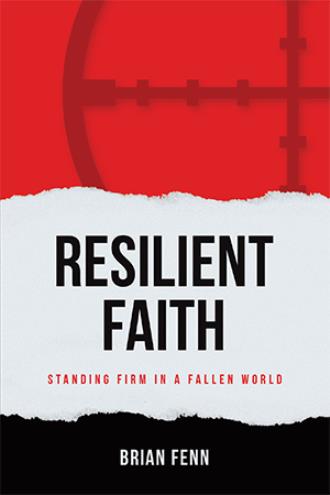
Resilient Faith
Standing Firm in a Fallen World
by
Book Cover & Preview Text
Following the pandemic of 2020, many in the modern Church found themselves shaken. Doors closed. Loved ones were lost to illness. In the aftermath, a wave of doubt swept through the body of Christ. Some quietly pushed their questions aside. Others deconstructed their beliefs entirely, leaving behind not just religion, but faith in God. This wasn’t just a spiritual crisis—it was a cultural one, fueled by the information age and accelerated by the rise of artificial intelligence. Today, we’re inundated by instant information, endless content, and a sea of conflicting opinions all vying for our attention. The result? Isolation, disconnection, and the slow dilution of belief. But long before the pandemic, God had already led me through my own process of deconstructing and rebuilding my faith. This isn’t a book about blind belief—it’s about the kind of faith that holds firm when life crashes down around you. For years, I lived inside the rhythms of church life—serving as a youth pastor and worship leader. Then I traded the pulpit for a patrol car and stepped into a world of chaos, darkness, and hard calls. I served in the jail, the courthouse, and on patrol. I worked as a SWAT sniper and specialized in human trafficking investigations. In those years, I saw firsthand just how broken this world really is. One friend—a former Marine and elite intelligence operator—once told me: “The first line of protection God gives us is common sense.” Trusting God doesn’t mean checking your brain at the door. It means using the wisdom and discernment He’s already placed in your hands. This book is the result of that mindset. It’s a journey through pain, doubt, science, history, and hope. In a world drowning in noise, these chapters trace how God rebuilt my faith—not with easy answers, but with grounded truth. I didn’t find faith by ignoring questions. I found it by facing reality head-on—and there, I rediscovered Jesus. Chapter 1: A Dark Night All nights are dark. Some are darker than most. This was one of those nights. I was working evening patrol as a sheriff’s deputy, assigned to Tulsa’s west side—a once-thriving suburb now riddled with drugs, poverty, and violence. Years of service in the military and law enforcement had exposed me to the depths of human depravity. As a SWAT sniper on 24-hour standby, I was trained to remain calm in danger, always ready for the next call. I didn’t know the next dispatch would shake me to my core. Near the end of my shift, the radio crackled: “Edward seven, welfare check.” The address led to an isolated trailer park. My partner and I arrived together. A small blue car idled in the driveway, packed with belongings. Inside sat a woman, staring ahead. She let us into the trailer, and the stench hit instantly—urine, decay, and filth. No heat, no lights, no running water. We moved through the rooms. In one, a man known for theft and meth use stood. He was detained on a warrant. Returning to the living room, I heard a soft cough. My flashlight landed on a mound of filthy blankets. I lifted the edge. Four small children lay underneath, huddled for warmth. The oldest—no more than eight—was shielding the younger ones with his body. Their pale faces stared up at me. We got them into a warm patrol car and called child welfare. Driving home, their faces haunted me. Anger welled up—not only at the adults who failed them but at God. I’d been raised on verses like “The Lord is faithful; He will establish you and guard you” and “My God will supply every need.” But those words felt distant. “Where is God in the painful reality of life?” The answers I’d heard in church didn’t fit the streets. Over the next seven years, God walked me through rebuilding my faith—not on tradition or fear, but on truth that could stand in the darkest nights. A resilient faith—one that cannot be shaken.
Formats

Book Details
About the Book
In a world where truth is blurred by technology, fear is amplified by crisis, and the Church is pressured to compromise, Resilient Faith: Standing Firm in a Fallen World calls believers back to the unshakable foundation of God’s Word. Drawing from his years as an Army Infantry veteran, SWAT sniper, human trafficking investigator, and ministry leader, Brian Fenn weaves together Scripture, science, history, and personal experience to equip Christians for the days ahead. From the rise of artificial intelligence and global pandemics to spiritual deception and cultural hostility, this book confronts the challenges of our time with biblical clarity and practical wisdom. More than a call to stand firm, this is a rallying cry for discernment, courage, and a hope anchored in Christ. It will prepare you for the shaking to come, and remind you that in Jesus, the Way, the Truth, and the Life, you are unshakable.
About the Author
Brian Fenn is a seasoned ministry leader who supports house churches in over 50 nations. An Army Infantry veteran and former SWAT sniper, he has trained law enforcement nationwide. Blending real-world grit with deep faith, he calls believers to stand firm and live authentically in a shifting world.