
What The Greatest Generation Knew
by
Book Cover & Preview Text
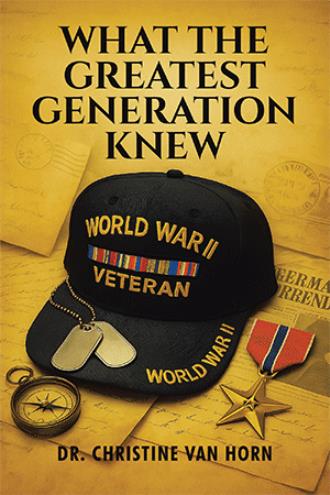
Those men and women did not moan and groan because life was difficult. They ensured their families survived through it and they were grateful for all they had. They were resourceful and did not harm their neighbors to get what they needed. The Greatest Generation is a name given to those who served in the armed services to win the war, often at the cost of their lives. It is also those who served behind the scenes to ensure they could do what was needed in WWII. They were the men and women who worked in factories to make the wartime supplies. They were the ones who protected their neighborhoods while so many men were away fighting in the war. They were the ones who kept the families together as a family unit. They put banners with stars in their windows so that everyone knew they had loved ones who died for world peace. They were those who prayed for all of them. They had a way of life that held their lives together during hard times and times of great conflict, with family members serving around the world to fight for justice. Their bond kept them going strong as a society. There are things they knew that are generally lacking in the world today. It is in our best interest to learn from them. Most of these men and women have passed away, but some remain. They have a legacy to give us. It is our duty to them to uncover it and apply that legacy to our lives today. They valued the family unit in ways that we do not in this day and age. I want you to become more familiar with someone who understood. Meet TV news anchor, Tom Brokaw. Tom Brokaw is a newsman who began the use of the term “The Greatest Generation” to describe the men and women of the WWII era. In other countries the name for this generation is also called the “G.I. Generation” or the “Federal Generation.” Tom Brokaw wrote the book The Greatest Generation after he went to Normandy, France for the NBC documentary on the 40th anniversary of D-Day in 1984. D-Day is when the Allies landed on mainland Europe on June 6, 1944, to come against the Nazis and stop them from advancing further. Tom Brokaw had memories of his early life on a military base during the end of WWII and the impact that had upon his family. I encourage you to read his book to understand this more fully. On June 6, 2024, we memorialized these Normandy veterans on the 80th Anniversary of D-Day. President Biden attended on behalf of the U.S. I aired a podcast called “D-Day – The 80th Anniversary” on my “Timeless Truths” podcast. I will talk more about D-Day in this book so you can get a glimpse of what the veterans of that generation had to face. Then, ask yourself this question. If we had to do it again, would we have the character to do what they did? Today, many of the younger generation feel the world is against them when their parents take away their screen time. What if they had to go into this environment? Could they do it? Would they do it? Have we equipped them to face such challenges? This type of worldwide event could come again. We need to step back and study the character and characteristics of the “Greatest Generation” to learn from their challenges and successes – while we still have the time. In this day and age many people still display the same characteristics as the Greatest Generation. But overall, it is not on the same level as they did. We need to take a more in-depth look at them and ask ourselves if we would act like they did, given the same challenges. As adults in this world, it is important to study what has worked well in history past in order to ensure a good future is given to the generations that follow us. This book will provide answers to some of the dilemmas we face in the world today and teach us how to solve them like the Greatest Generation did. We are all familiar with WWII to some degree but let me also explain a little about the Great Depression. It began in the United States in 1929 when members of the Greatest Generation were young. The Great Depression spread throughout most of the world and lasted about a decade. It brought severe unemployment and inflation rates were very high. It was a worldwide economic downturn, making it hard to take care of the basic family needs and causing severe human suffering. It was a time of standing in breadlines to get daily food for the family. Many lost their jobs and became homeless. Children were often called into work if they could help with income for their family. They learned how to be frugal, working with less than they needed for basic living and survival. Having lived with scarcity and hard economic conditions, the Greatest Generation went into WWII with a strong determination to survive and an understanding of hard times. They also had other strong characteristics from that era that made them unique, much of it bred by the time in which they lived. I am of the generation that is in the middle of the Greatest Generation and the younger generations of today. We are called the “Baby Boomers,” the generation that grew out of the time when the veterans returned home and began their lives again. I have looked both directions (to the past of my parent’s day vs. today) and made observations. Through the eyes of wisdom, I am viewing a stark difference between what the Greatest Generation (mostly gone now) valued, and what is seen in the world today. I am writing this book through that lens, although my Dad is my true inspiration.
Formats


Book Details
About the Book
They lived through the Great Depression and World War II. We still have this moment in time for the men and women of the Greatest Generation and their families to provide their wisdom to a world in desperate need. We need to hear about their character, their stories and the lessons they can share with us today.
About the Author
Dr. Christine Van Horn explains from her depth as a career Certified Emergency Manager (CEM) with a master’s degree from the U.S. Naval War College, a doctorate degree in Christian Theology and all that she learned as a daughter with parents from the Greatest Generation. Her first career choice was to be an archeologist and that love historical research has prevailed. Dr. Van Horn wrote this book to uncover the lessons of the past, to learn from “The Greatest Generation”, and see what we can apply to our lives today. She is an author, teacher, speaker and podcaster. Her books and other information can be found on her website www.drchris.co. Her podcast is called “Timeless Truths” and is available on all podcast platforms. She is a resident of Joliet, IL and Branson, MO. Dr. Van Horn may be contacted through her website or directly at chris@drchris.co. Dr. Christine Van Horn is looking to write a sequel to this book with more stories from all Military Veterans. They all have important experiences to tell. If you have a story to relay, please contact her at: chris@drchris.co.