
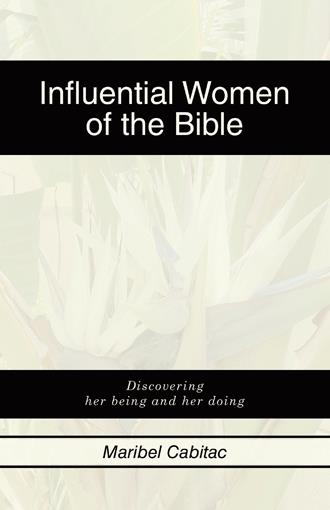
Influential Women of the Bible
Discovering her being and her doing
by
Book Cover & Preview Text
HER SPIRITUAL CLOTHING Whose adorning let it not be that outward adorning of plaiting the hair, and of wearing of gold, or of putting on of apparel. But let it be the hidden man of the heart, in that which is not corruptible, the ornament of a meek and quiet spirit, which is in the sight of God of great price. (1 Peter 3:3-4) What the apostle Peter was getting across in his epistle is similar to what Timothy is saying. What Peter is giving priority here is the "hidden" man that is to be visibly seen by others. It lasts unlike our outward apparel. Wouldn't it be great to have clothing that could last as long as they can if not forever? Especially for the ones that are the favorites of ours. Because of the wear and tear that happens on our clothes they don't last long so we buy new ones to replace them, right? This hidden man is incorruptible or as other translations would say "imperishable". It will last forever unlike our clothes that needs replacement. Ornaments are embellishments that are not necessary to wear but it sure makes one attractive. Woman loves wearing accessories. I'm one of those that don't give care for it as much. I do like to wear my earrings every day and maybe a bracelet for a special occasion. Peter goes on to say "even"... or equal to that of the hidden man is this ornament of a meek and quiet spirit. The Greek word for meek is "praus" meaning gentle and the Greek word for quiet is "hesuchios" meaning tranquil and undisturbed. Can you say you have these qualities? She girdeth her loins with strength, and strengtheneth her arms... (Proverbs 31:17) She maketh herself coverings of tapestry; her clothing is silk and purple. (Proverbs 31:22) Strength and honour are her clothing; and she shall rejoice in time to come. (Proverbs 31:25) This is how the virtuous woman dresses. Did you notice that strength is mentioned three times? Remember that "ezer" indicates strength. But this strength in Hebrew is different than the strength in "ezer". We'll come back to this one. Let's go through each verse. Verse 17. It emphasizes that she is well prepared physically. How she did that back in those days we don't know. What comes to your mind with this "girding the loins and strengthening the arms"? In today's understanding, it could mean being in the gym lifting weights, doesn't it sound like it? She's a woman that keeps her body strong for the work. Although bodily exercise profiteth little (as stated in 1 Timothy 4:8) she does it to keep herself in check to be prepared for the tasks she does. Verse 22. Tapestry is basically material that hold various colors and fabrics. It is intricately made. When I was in my 20's this is what I loved wearing. Multiple colors. I rarely would dress in one color with different shades of that color. Not so now. I keep my dressing simple. Less prints is my preference. Another texture she wears is silk. I used to like wearing silk because of the fact that it is soft and shiny. Again, not so now. I stick with mostly cotton as my fabric of choice. At my age function is more important than fashion. I think my peers can agree with that. Silk. This type of fabric in those days were considered a luxury. And it was only those that could afford it would wear it. I don't think that this virtuous woman wore silk to be showy. First of all, she manages money faithfully and doesn't spend it all on herself. In fact, a lot of the clothing she makes are given away to others not just for her family. There is nothing wrong with having expensive clothes, it certainly is a personal preference. Sometimes scripture is read figuratively that can teach us. And I'd like to think that these passage of scripture are figuratively written. This virtuous woman dresses very well. She wants to dress the best for her Maker. She knows she's God's best and wants to dress for her Maker and for her husband with the best. And what her household can afford. Silk again is a valuable texture and what she wears is valuable because she knows as a woman of God she is valuable. Purple clothing. Purple clothing was mostly worn by those of royalty. Purple in those days were not worn by many people and the process to make this color in those days was long and difficult. The purple was manufactured by the Phoenicians from a marine mollusk (shellfish). The shell was broken in order to give access to a small glad which was removed and crushed. The crushed gland gives a milky fluid that becomes red or purple on exposure to the air. Piles of these broken shells still remain on the coast at Sidon and Tyre. A total of 250,000 mollusks was required to make one ounce of the dye, which helps us understand how valuable this dye was. The virtuous woman didn't mind the work it took to make purple clothing. Purple is most known to be a symbol of royalty. She knows she's a child of God who is royalty, and so she lives as a royal. She wears that color proudly for she knows she is from God's royal kingdom. Can you securely say that of yourself? That you come from a royal family, God's royal family. Verse 25. The word strength here in Hebrew is "oz" meaning power, capable; valiant. And honour in Hebrew is "hada" meaning majesty and splendor. Don't these words give you a picture of royalty? Remember she believes she is of royalty. And the result of that is the second half of the verse. A person of royalty will naturally respond this way. Whatever her future holds whether good or bad she will rejoice.
Formats

Book Details
About the Book
Whether you know it or not we all influence another whether good or bad. God made women to influence in ways that can change history, leave a legacy and fulfill God’s plans and purposes. Most would view that a woman of influence is the famous, educated and maybe accomplished (she certainly can be) but not so in the Bible.
In Maribel’s book she uncovers women in the Bible such as Esther, Deborah, Zipporah and Johesheba. A woman of influence is godly, obedient, secure and everything she is and does is drawn from her inner calling as Ezer Kenegdo. Her book starts with addressing Eve, her very beginning. Over 100 verses of scripture are mentioned leaving you with many lessons to learn from. All of which are applicable to all women of today.
About the Author
Maribel studied and graduated at the University of Hawaii, Leeward Campus and studied at the Berean School of the Bible. She has over 40 years of ministry experience and has served as a pastor’s wife, worship team member and leader, and women’s ministry leader.
Maribel was born and raised in Waipahu, Hawaii. She’s married, have two adult children and lives in the SCV in Southern California. She loves playing the piano, sewing and enjoys road trips with her family.