
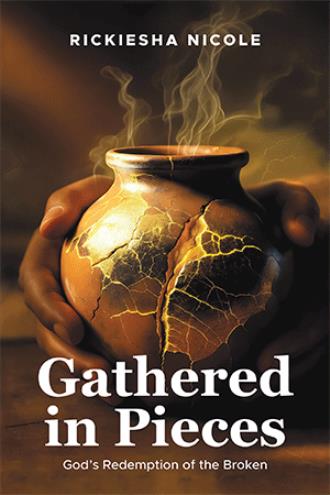
Gathered in Pieces
God’s Redemption of the Broken
by
Book Cover & Preview Text
CHAPTER 1 The Silence After the Scream The night did not begin in darkness. It began in motion- footsteps, dust rising on the road, a man and a woman returning from separation. There had been distance, disagreement, perhaps even defiance. But now they were traveling together, and the city of Gibeah opened to them like a familiar place. A place where they believed they would be safe. But the walls did not protect her. No one names her. Scripture simply calls her "the concubine." An accessory to the Levite, property returned to him, a body before she is a soul. We do not know her age, her hopes, or the sound of her voice. We only know her silence. She is handed over. Violated. Brutalized by men who bore the name of God but not His heart. Her story is wedged in the middle of scripture like a bruise in holy skin; a place most readers turn away from. And yet, here she lies : on the threshold, arms stretched, voice gone. This chapter, the beginning of this book, begins with her. Because maybe your story also begins with something you didn’t choose. Maybe you’ve also been betrayed by someone who claimed to love you. Maybe you know what it is to scream, and find the night gave no answer. Hollow Kind of Faith The Levite rose early in the morning. He did not look for her in the night. He did not cry out. He slept. Then, at dawn, he gathered his things and called to her: “Get up, let’ s go.” But she did not rise. She could not. There is a terrifying theology hidden in this moment: the theology of convenience. The Levite was a religious man, a man who spoke for God, and yet he sacrificed a woman to preserve himself. How often has faith been weaponized? How often has scripture been used to excuse the silence or absence of those who should protect? Some of the deepest wounds we carry come from those who claimed to represent God. The silence in the text is deafening. There is no divine interruption. No angel to stop the door from closing. No miraculous intervention. We ask: Where was God? And we wait. When God Feels Absent This is the ache of trauma: not only what happens to us, but what doesn’t. The rescue that never came. The justice that never arrived. The comfort that seemed withheld. It feels like abandonment. And it’ s okay to say that. The Levite’s wife becomes for us an emblem of the unanswered prayer, the unhealed wound, the silence after the scream. And while we want to move quickly to resurrection, we cannot skip the tomb. Healing begins when we stop pretending that our pain is less than it is. The first step toward hope is honesty. Complicity in the Camp Gibeah was not a pagan city. It belonged to the tribe of Benjamin, one of the twelve tribes of Israel. These were people who knew the law, who offered sacrifices, who practiced purity. And yet they committed what the text calls "an outrageous thing." The sin wasn’t just in the violence. It was in the silence. The absence of outcry. The host who offered his own daughter. The townspeople who did not intervene. The Levite who watched. We live in a world where many are still sacrificed for others ’ convenience. Abused behind closed doors. Ignored in church pews. Dismissed by systems more concerned with appearance than truth. And yet, God included her story. Not to glorify it. Not to condone it. But to witness it. Her death becomes a cry to heaven that splits Israel in two. God does not erase her. He records her. You Are Not Forgotten This book is not about tying up the pain in a neat theological bow. It’s about walking through the valley with eyes wide open. It's about rediscovering the God who doesn’t always prevent suffering, but never wastes it. The God who weeps. Who bleeds. Who stays. You may not feel Him now. You may still be lying on your own threshold. But this is not where your story ends. She was gathered in pieces… literally. But God is a God who gathers what has been shattered. He makes mosaics from shards. He rebuilds lives out of ruins. He turns trauma into testimony. This is the beginning of that redemption. Not because the pain is gone. But because He is present in it. Even when we cannot feel Him, He sees. Even when we are unnamed, He knows. Even when we are broken, He begins to gather. Welcome to the journey.
Formats

Book Details
About the Book
She was discarded without a name and left in the cold by the one who should have fought for her. Still, God saw her. The Levite’s wife in Judges 19 is one of the most haunting, silenced figures in the Scripture. Although her story is often avoided, overlooked, and misunderstood, behind her trauma lies a deeper invitation to see ourselves, our suffering, and our God with new eyes. In a spiritual exploration, Rickiesha Nicole tenderly unpacks the hidden grief of this nameless woman and speaks directly to the heart of every believer who has endured pain in silence. Through powerful biblical reflections, personal insights, and unwavering hope, she explores what it means to heal when we don’t feel God is near and how to find purpose in the ache of trauma. Through her loving guidance, believers are encouraged to: • Embrace the God who sees the unseen; • Find Christ’s companionship in pain; • Think and feel beyond trauma; • Rediscover identity; and • Love wisely without growing numb. Gathered in Pieces is a raw, redemptive journey through trauma, faith, and healing that invites the brokenhearted to confront their pain and discover purpose in God’s unshakable love.
About the Author
Rickiesha Nicole is a mother, nurse, craft enthusiast, and martial artist whose life is a tapestry woven with creativity, compassion, and quiet strength. With a heart forged in the fire of trauma and refined by the grace of God, Rickiesha writes to give voice to the stories often left in silence. Her passion for inner healing, spiritual formation, and truth-telling flows from her lived experiences.