
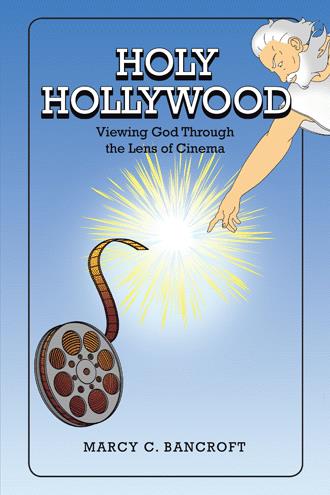
Holy Hollywood
Viewing God Through the Lens of Cinema
by
Book Cover & Preview Text
Chapter 2: Adaptation If your life was made into a movie, what would it be called? Fast and Furious, Misery, The Sound of Music, The Big Lebowski, Apocalypse Now? It’s an interesting question. You’d want the title to be short but speak volumes. Another point of interest is that our life-movie titles change over the course of time. We may have started out calling it School of Rock, but now we call it Whiplash. What experiences made us who we are today? What events or choices took us down our current roads? Is our life-movie playing out like we thought it would? Much the same as a screenwriter will take a novel and make adaptations to it for its presentation on the big screen, God makes adaptations to our stories for His purposes. When watching a movie at home, sometimes a disclosure will appear that says, “This film has been modified from its original version. It has been formatted to fit this screen.” God does something similar to us that changes us from our original versions. He does this because we all need change. Although we don’t have a say in what form that change will come, we can choose how we process and respond to it. For example, in the movie the Green Book, would Bronx bruiser Tony Lip have become friends with the cultured and brilliant African American musician Don Shirley if he wasn’t offered the cross-country chauffeur job? From Goodfellas, would Henry Hill have ever been a mobster if he hadn’t grown up in Brooklyn in the 1950’s? In Cast Away, how different would the life of Chuck Noland have been if he had never gotten on that plane? These characters still had choices to make. They each still got to decide how they would behave in the situations they were in. Tony didn’t have to accept the job offer or talk about personal things with Don or care what Don was trying to achieve on that deep south concert tour. Henry Hill could’ve been an electrician like his dad. Chuck Noland could’ve given up and died on the deserted island where his plane crashed never seeing another soul again. If we give it thought, we can recall some person or situation we didn’t expect that altered our course. It could’ve been someone or something that has brought us more happiness than we deserve or something we wish we could rewind back to and erase. If it was in our control, we may opt out of life’s un-predictabilities because of the possible pain they bring. But since we can’t control them, it’s helpful to know we can do more than just live through them. We can do more than accept that ‘the Dude abides’. When something interrupts our plans, our first instinct may be that it’s a bad thing. But if we adapt our thinking and our reactions by recognizing God is trying to show us something, we can trust He’ll take a painful thing and repurpose it for the good of us and those with whom we come in contact. If we trust He’s the One making an adaptation to our lives, we can also trust He’ll help us through it from start to finish. In Jeremiah 17:7-8, the Bible says, “those who trust God are like trees planted by the water…that do not fear when heat comes”. And the heat will come whether we trust in Him or not. Permit me to illustrate a life interruption from an animated film. In the movie Toy Story, the main character Woody, a cowboy doll, has the world on a string. (pun intended). He’s Andy’s favorite toy getting played with more than all the others. Andy watches Woody’s TV program and decorates his room with Woody posters, bed sheets, and drawings. Woody has the respect of all the other toys in Andy’s room until one day with great excitement, Andy rips into a gift he receives for his birthday. The impressive and futuristic Buzz Lightyear enters the picture. Andy has a new favorite toy. As the next scene in the movie unfolds, the song Strange Things plays in the background. From Woody’s perspective, the scene cuts from one shocking room change to another. Andy replaces posters of Woody with posters of Buzz; he gets new Buzz bedsheets and now draws and displays pictures of Buzz instead of Woody. If all that wasn’t hurtful enough, Andy chooses to sleep with Buzz under his arm while Woody is placed distantly away in the toy chest. The words of the song perfectly describe how Woody feels. “Strange things are happening to me. Strange things. There’s no doubt about it.” His world has been up-ended and he’s powerless to make things go back to the way they were. This doesn’t stop him from trying, though. Woody bad mouth’s Buzz around the other toys, minimalizing and undermining Buzz’s talents and character. He becomes so bitter that he’s not the happy-go-lucky toy he used to be. He takes his resentment to a level even he didn’t think he was capable of and knocks Buzz out of a two-story window. His situation then becomes worse than before. In Woody’s time of desperation, he develops tunnel vision, focusing only on how he’s been dealt a raw deal and relying solely on his skewed methods to restore what he has lost. Like Woody, our expectations aren’t guaranteed. Our routines and what we value can be compromised and interrupted. When these interruptions come, we can choose to deal with them by hardening ourselves against another attack, lashing out, running away, or worrying about them until they stifle other areas of life. We can choose to use substitutionary methods to cope with them like work, entertainment, or substances. But when we do those things, we miss the purpose for which the interruptions have come.
Formats

Book Details
About the Book
Holy Hollywood: Viewing God Through the Lens of Cinema is an admission ticket into the curious theater of analogy. In this narrative, familiar scenes from movies are used to shine a spotlight on the love of God, the word of God, and how we can apply His word to our lives. Some topics covered include criticism, life interruptions, the God and mankind power struggle, and the authenticity of Jesus which are compared to movies such as Jaws, Silver Linings Playbook, Cool Hand Luke, and Talladega Nights. Movies offer more than entertainment. The connections we make with them and the lessons we learn from them stick with us long after the film is over. God’s word in the Bible does the same. By borrowing examples from films, this book is able to illustrate God’s word in vivid ways. Over thirty Bible verses are referenced and over sixty movies are mentioned. The Great and Powerful isn’t at the end of a long yellow brick road; He’s as near as a heartbeat. From page to page, come and experience for yourself the relevance of the Bible and the tangible involvement and love God has had for you through every day of your own life movie.
About the Author
Marcy Bancroft has been married to her high school sweetheart for thirty years, and they have two adult sons. For the past two decades she’s facilitated devotionals and Bible studies for adults, youth, and children. She coaches a women’s prison volleyball ministry and serves her community weekly through a Christian charitable organization. To her, movies aren’t just entertainment; they’re capsules of the human experience. She believes when the human experience encounters the God who created it, mysterious and magnificent things unfold.