
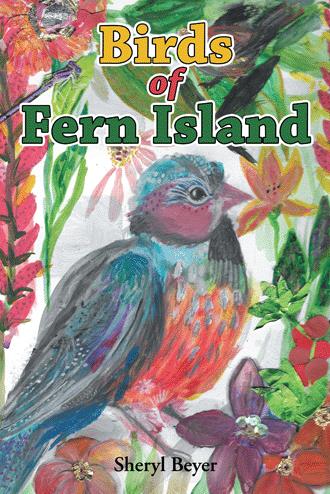
Birds of Fern Island
by
Book Cover & Preview Text
The morning was cool and damp. Cody hauled his green kayak onto the shore, the hull slick with lake water, and locked it to the six-kayak rack with a bike lock. The rhythm of his days had shifted—no city traffic hum outside his apartment window, just the lap of water against the shore. Strange how quickly life could flip. Cody remembered watching Emma on the dock, passing by as she greeted new arrivals. Her voice carried over the water as she greeted a couple. Cody noticed how the man and woman moved together smoothly and in sync. The man wore a waist pack, while she carried a slim purse with many zippered pockets. No camera, no hiking poles. They stood out because of what they had left behind. The man said, “Hi’ya, glad you could meet me,” and the woman’s eyes lit up, eager to explore. “Welcome to Fern Island,” Emma called out, her voice drifting over the water. “Where the pace slows, the signal fades, and nothing here’s urgent. You might hike to the beach, explore the lighthouse, or sit beneath a tree and let the wind remind you to breathe. I’m Emma, your campground host. I’ll be around if you need anything.” Now, as Cody finished securing his kayak, she walked toward him. The sun reflected in her brown hair. “Mind if I walk with you toward your campsite?” she asked. “I have a few things to check on at the remote sites.” He nodded and adjusted his pack. “Sure.” At site 12, Emma lifted her phone and took a picture of the paper on the post—camper names and registration details. This was part of her routine. Cody glanced around. She caught the look. "It amazes me how much stuff people bring,” he said. “And the snack food left on the tables...” He paused, “Guess bears don’t live here, but I still stash my food as if it were a possibility.” Emma smiled. “Mice are an issue; I found out at the lighthouse and in the storage areas of the maintenance sheds that mice chew through plastic. Water bottle bundles have been gnawed through, and water has leaked out. In the lighthouse, I keep my food in sealed tins; I learned the hard way.” Cody adjusted his shoulder strap, his eyes wandering over the peaceful shimmer of the trees. Then, casually, almost hesitantly: “So your parents are leaving, huh?” Emma’s smile tilted at the corners, teasing but edged with something Cody couldn’t quite place. “Yeah. Yesterday was their last Sunday at Taft Island Church. Dad’s been the pastor, and Mom’s in the choir. We had a potluck afterward—oh, and ice cream and pie too.” Cody chuckled; more question than laughter. “That’s a thing? A send-off with pie?” “You bet,” Emma said, her voice lighter. “In church communities? Absolutely. The choir loves their fellowship. It’s bittersweet. We’ve been here ten years. Now they’re moving to a city three hours away.” She paused. “There are other changes, too. Pastor Pete’s taking over our service, splitting time between here and his old church on the mainland. Ferry rides every weekend. He’s going to be stretched thin.” At Site 14, Emma snapped a photo of the laminated reservation form. Then they moved back onto the sandy trail, and Cody noticed their footsteps were quiet on the warm earth. Indian Paintbrush displayed fiery bursts of orange-red against the subdued greens. Their conversation fell into a rhythm that matched their steps. Cody took out his phone and opened the bird app, smiling as he explained, “I’m recording bird songs while we walk. The app sorts out the birds from other sounds and then gives us a list of the birds it recorded.” He paused, then added with a friendly shrug, “Might as well. You’re multitasking, so I will too.” Emma nodded, then paused to take the trash bag from the can, tie it shut, and place it in her wagon. She also relined the trash can. Afterward, she picked up a stray shoe with a hole and put it into her wagon. He hesitated, then asked, “If I may, why are they moving now?” She exhaled, shoulders slumping, and scuffed her heel in the sand. “A few reasons. The congregation’s shrinking. Most of my peers moved to the mainland for work, which is unlikely to grow. My parents want to be closer to family. Their parents are still in the city. It makes sense as they get older.” Cody moved to the edge of the bluff. Below, water shone through dune grass and pine. “Yeah,” he said. “Makes sense. What will they do there?” They passed site 15. No paper posted; campers hadn’t understood the system. Emma made a mental note and slipped her phone into her back pocket. She reached into a box in her wagon, pulled out a paper and pen, wrote something, and then clipped it to the post. “Dad accepted a counselor position at a senior living community,” she said. “Organizing activities, discussion groups. Apparently, there’s a weekly sing-along.” Cody laughed. “Sounds like a fit. What about your mom?” Emma nodded, expression soft. “She’s done tax accounting for years. The move’s a transfer. She jokes she’ll crash all his events—especially that sing-along.” They walked uphill, the trail’s incline steady. Their breathing matched the rhythm of their steps. Cody said something—a question rising in his voice—but Emma just smiled, conserving her breath. Cody reached over and took hold of her wagon’s handle. She let go, relieved of the weight.
Formats

Book Details
About the Book
Step onto Fern Island, a work of gentle Christian fiction, where birdsong, stillness, and the wonder of creation fill every page. These stories quiet the heart, awaken the senses, and remind us of the beauty God has woven into the world around us. This is what readers have said: “I sat on my porch swing each night and read a chapter or two, then spent time watching birds and listening to nature.” —Jan “I savored each chapter—every sense, sound, and sight. The Bat chapter is my favorite.” —Kay “I loved Emma’s energy—so athletic and alive. I related to her, and the ending is gentle and hopeful.” —Diane “Gratitude is expressed throughout the story, I liked the phrase ‘thank you, more please.’” —John Whether shared in a book club or savored alone, Birds of Fern Island offers a gentle retreat into nature and the joy of God’s creation—perfect for readers who long for peace on the page. “Look at the birds of the air; they do not sow or reap or store away in barns, and yet your heavenly Father feeds them. Are you not much more valuable than they?” —Matthew 6:26 (NIV)
About the Author
Sheryl Beyer is inspired by nature, faith, and creative reflection. Her storytelling invites readers to notice the small wonders of God’s creation, embrace change, and trust in life’s unfolding rhythm.