
Prophetic Leadership
Foreseeing the Right Action in the Right Season
by
Book Cover & Preview Text
Leadership is not a new concept within the world, but the depth of understanding and scholarship on the subject remains relatively new. As far back as recorded history, leadership has been a factor of how the world functions as a complex system, from just two people in a garden to kingdoms forming in the earth (Genesis 1:26-11:32, NKJV). The way leadership functions on the earth determines how smoothly or how dysfunctional everything can go. Within the realm of scholarship, warfare set the standard for capturing historical actions and leadership through Biblical and historical accounts. From the beginning, dominion sets apart humanity for an ultimate purpose in the earth (Genesis 1:26-28, NKJV). Enmity was placed between the woman and the serpent shortly thereafter (Genesis 3:15, NKJV). After the Fall in the Garden of Eden, part of the curse for the woman was, “He shall rule over you” (Genesis 3:16, NKJV). Yet, Solomon prayed that he would receive wisdom so he could lead Israel favorably (1 Kings 3:5-14, NKJV). Leadership received a negative or positive connotation to it, depending on how it was practiced. In addition to the historical conflicts, both spiritual and natural, within the Bible, the Greeks and Chinese produced major works on warfare and leadership. For the Greeks, Thucydides captured the historical accounts of the Peloponnesian War and the strategy of the leadership behind it (Strassler, 2008). For the Chinese, Sun Tzu taught leadership and strategy in parables (Tzu, 2011). Within the ancient world these languages had a written form that captured these historical works. Leadership and strategy received prominence within two major ancient cultures because of relevance and importance. One may argue leadership and strategy never lose its prominence. But the focus within scholarship has clearly increased and expanded greatly since World War II. A “leadership crisis has continued since 1970” that must be addressed (Greenleaf, 2008, p. 10). Northouse (2019) covered several leadership styles in his work, but prophetic leadership received no reference. Not all leaders grasp the principle of “beginning with the end in mind” (S. Covey, 1989, pp. 95-144). Perhaps, until now, no one has had the desire to focus on this leadership style or has not desired to integrate a Biblical worldview within a leadership style. “God has perfect strategic foresight” (Michel, 2005, p. 1). If this is true, then the Bible must hold some keys to how God acts in and through His people. Research Direction Since this work emphasizes a Biblical perspective, some Scripture shall be examined within context in the original languages so key words and narratives produce a realistic and applicable approach to leadership and foresight for today’s leaders. Strauss and Howe (1997) posited “a Prophet generation is born during a High” in culture (p. 19). In this work, prophetic leadership shall be proven to emerge in every generation. If “the LORD God does nothing on earth unless He reveals His secrets to His servants, the prophets” (Amos 3:7, NKJV), then prophetic leaders must be present, as the verb tense indicates. Given the resources available within the field, prophetic leadership shall involve more creativity in presenting a new concept and model that had not been fully explored or explained until this work. In the area of the future and foresight, several works, both scholarly and popular press, have been written. The goal is to review the current works that have the most relevance and popularity and perceive where the gaps are with respect to Biblical strategic foresight and foresight in general. The examination of foresight and leadership practiced within other nations shall hopefully reveal the best practices that cross through the cultures. Prophetic Leadership and Strategic Foresight Although the idea and concept of prophetic leadership and Biblical strategic foresight produced in this work are original, Greenleaf (2008) inspired prophetic leadership to be defined and produced. He “embraced the theory of prophecy that prophetic voices of great clarity, with a quality of insight equal to that of any age, speaks cogently all of the time” (Greenleaf, 2008, p. 10). The idea of prophetic leadership is not new, but the concept of how prophetic leadership can be interpreted and applied leaves room for expansion and exploration. From a Christian perspective, the title of prophetic leadership keeps a focus on the Biblical calling and character of this office (Perkins, 2023, p. 2). From a Biblical perspective, a prophetic leader must be a servant leader as well. God declared the prophets are his servants (Amos 3:7, NKJV). From an Islamic perspective, prophetic leadership centers around Prophet Mohammed and servant leadership (Ahmad, 2019, pp. 22-27). The examination of Scriptural narratives in context with key words shall be reviewed and explored in depth to glean the best practices and form them into an actual blueprint. Not all leaders envision, or even contemplate, the future. If leaders care about their people and organizations, they must have more concern for their future. One of the major hallmarks of leadership is “taking action and envisioning the future” (Kouzes & Posner, 2017, p. 115). The actions in the present determine the kind of future leaders and their followers will produce. Strategic foresight “focuses on what would be most critical to an organization’s success” (Hines, 2006, p. 18). With this being considered, a leadership type has not been added to the literature to label someone a foresight leader or future-minded leader. A visionary leader may see possibilities, but the term does not capture the extent of future orientation or examination of past events and current trends. The term “prophetic leadership” has not exclusively been used to define a leadership type, but the label gives the idea of someone focused on events that have not yet come to pass yet anticipates their fulfillment. Since prophetic leadership has existed in actual history, the time is now to define a future-oriented leader and deliver a Biblical strategic foresight model all can use.
Formats

Book Details
About the Book
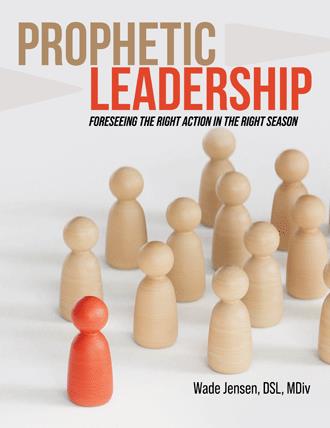
Prophetic Leadership highlights prophetic leaders who’ve been hard at work since God placed humankind on the earth to “take dominion” (Genesis 1:26-28, New King James Version (NKJV)). Prophetic leaders exist as another type of leader through Scripture and history. They receive insight through natural or supernatural means, so they know exactly how to advance the organizations they serve. Every generation has prophetic leaders. By examining the life of Joseph, the practice of Jeremiah, and other Scriptures referencing prophecy, prayer, strategy, timing, and seasons, the author reveals a detailed blueprint of what it means to be a prophetic leader. He explores the impact Joseph and Jeremiah had on others as well as how to apply the principles of prophetic leadership to achieve goals and help others. Prophetic leaders can change the fate of a small enterprise, a large company, or entire nations – it all depends on what the prophetic leader is trying to accomplish. With this book, you’ll understand the importance of prophetic leaders and learn how to identify and empower them to thrive in the future.
About the Author
Wade Jensen, DSL, M.Div., has always strived to help others fulfill their potential and find fulfillment. He has served in the military and nonprofit organizations for thirty years. He earned a Doctor of Strategic Leadership from Regent University, and three master’s degrees.