
People of Faith and Entrepreneurs as Advocates of Change
Oxymoron or a Match Made in Heaven?
by
Book Cover & Preview Text
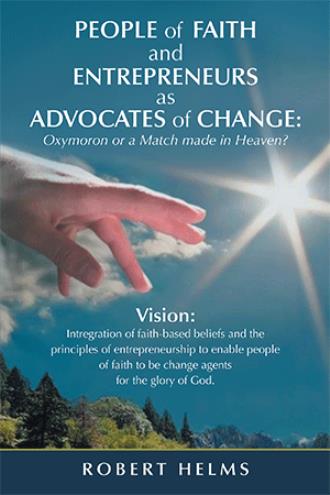
“Without a vision, the people perish” (Proverb 29:18) The trend lines for people of faith are not encouraging. The approaches being used to engage the troubling trends are not working. A new vision is needed. This book presents a new vision for a match made in heaven for engaging troubling trends. This match integrates faith-based beliefs and the principles of entrepreneurship to enable people of faith being advocates of change. These advocates engage and shape the troubling trends confronting people of faith in the contemporary world and in the future. The troubling trends reflect faith-based struggles “not against enemies of blood and flesh, but against the rulers, against the authorities, against the cosmic powers of this present darkness, against the spiritual forces of evil in the heavenly places” (Ephesian 6:12). This book examines a central question: Can people of faith make a difference? The short answer is: Yes. As advocates of change, people of faith are active participants in the spiritual warfare being conducted. The participation includes engaging and shaping the troubling trends challenging beliefs and traditions of people of faith. The approach for implementing the vision is accomplished with mission support projects serving as bridging actions. These bridging actions engage the trends of troubling behaviors (Is) and move them in directions that are more closely aligned with faith-based behaviors (Ought). The advocates recognize and accept that neither meaningful nor successful change occurs easily or as planned. Winston Churchill described “Success as just stumbling through a series of disasters one after another without losing your enthusiasm”. The advocates of change agree the enemy of my enemy is my friend and to work with others who are willing to be part of a team to defeat common enemies. These advocates understand and accept the future is coming one day at a time. This approach leads to the question: Is it better to engage and shape the future or watch from the sidelines and accept whatever the trends bring? The vision supports people of faith who, like their fore bearers, engaged and shaped change as the optimal response. They understand that those who wait until all the facts are known and assessments completed are in danger of being left behind. The attributes of successful change advocates include vision; passion; motivation; lifelong learning; risk-taking; curiosity; creativity; confidence; and a glass that is half-full. The rewards for advocates of change include engaging and surviving the beast to fight another day. In many ways, these advocates are modern day gladiators living on the edge. They may be battered, bruised, and bloody like Paul in 2 Timothy, but the advocates continue to seek the next engagement -- even with the associated risks. The advocates of change build something that has value for others. The need for doing something helpful for others, with emphasis on the weak and vulnerable is a central theme of faith-based actions to realize the vision. Change advocates are good stewards of God’s gifts. They avoid wishful thinking. They are realistic in their efforts and pursue activities that have merit. Above all, they turn themselves over to God and are available to do His will when and where He calls. The change agents integrate and leverage entrepreneurial principles to increase their abilities for making meaningful change. The work habits for advocates of change are fully consistent with the cultural beliefs, behaviors, attitudes and values shared by people of faith. These beliefs include an honest day’s work. Proverbs 10:4 reminds advocates that “Lazy hands make for poverty, but diligent hands bring wealth”. The advocates of change seek feedback. The resources for feedback include the ultimate game changers of God Himself, intermediation of Jesus Christ, and guidance of the Holy Spirit. The advocates seek and use feedback for making the changes needed for success. The advocates of change do not accept defeat. Biblical history includes examples of individuals such as Moses in Exodus 5 and 6 that did not believe they could accomplish what was being asked of them. However, with discipline, determination and help of the divine, all things are possible and the advocates find ways to succeed. The change advocates avoid selling themselves short and quickly turn to God in faith with works. The lifelong learning of change advocates includes faithful Bible reading for scriptural knowledge. The vision of pursuing activities within God’s plan is consistent with beliefs sought by change advocates. God’s unchanging plan is found in the Bible. His big picture is revealed by the Holy Spirit to enable advocates to know and perform His will. Albert Einstein’s counsel that the “significant problems we face cannot be solved at the same level of thinking we were at when we created them” is a central theme of the vision. The advocates of change avoid the same level of thinking that created the challenges. They are not satisfied with tinkering around on the margins. The advocates understand what can be changed, what cannot be changed, and how to manage the risks of change. They seek a good plan as opposed to the best plan. Success is not always the result of the best plan. It often is the result of motivated individuals who prepare, adapt, and execute good plans. Being innovative, flexible and working harder and smarter are common features that define the enduring vision of change advocates. The closing words in the prayers of faith-based change advocates that “not my will but yours be done” says all that needs to be said (Luke 22:42). This book specifically is for those who seek being an advocate of change. It also is for those who have an interest in becoming a change agent pursuing a vision for making a difference. Don’t wait. Come aboard and join our game changing team’s engagement and shaping of the troubling trends challenging contemporary people of faith.
Formats

Book Details
About the Book
Without a vision, the people perish (Proverbs 29:18). The trend lines for contemporary people of faith are not encouraging, and the approaches currently used to engage the trends are not working. It has become clear that a new vision is needed. In a spiritual guide for leaders and members of grass root, faith-based organizations, Robert Helms presents a vision for integrating entrepreneurial principles and faith-based works to engage and shape the trends that are troubling people of faith. Helms introduces methods and tools used to integrate beliefs and principles, examines trends that are challenging people of faith, shares a methodology used to integrate faith-based beliefs with entrepreneurial principles, and concludes by offering operational playbooks that address consumerism; land, food, water, and stewardship; healthy aging; and the final phase of life as well as insights on how to integrate the playbooks into an umbrella program of mission support projects. People of Faith and Entrepreneurs as Advocates of Change presents a vision for integrating entrepreneurship and faith-based beliefs to engage the spiritual warfare of Ephesians 6:12.
About the Author
Robert Helms is a US Army veteran with multiple combat assignments. His current work integrates entrepreneurial principles and faith-based beliefs tailored to address challenges confronting people of faith. Robert holds a PhD and four master degrees, including a Master of Divinity. He is a graduate of the National War College and has served as a research fellow at the National Defense University and a senior research fellow at The Brookings Institution.