
The Honor of God
More about Character than Reputation or the Radiance of Glory
by
Book Cover & Preview Text
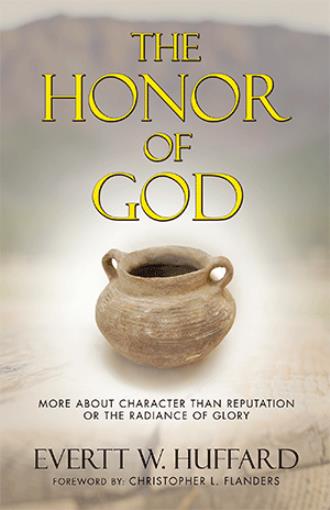
Among the many themes that run throughout the biblical narrative, the honor of God may have eluded the attention of western scholars and practitioners more than any other theme. One reason for this omission is the neglect of a fundamental principle in scripture translation: when translating from Hebrew or Greek texts, the context should guide the choice of words in English. For unknown reasons, the Hebrew word kabod and the Greek word doxa have been translated hundreds of times in the Bible as “glory” in reference to God, regardless of the context. To nuance these terms in English, two aspects of their meaning have been identified as the greatness (glory) and goodness (honor) of God. • Kevin Youngblood (PhD Southern Baptist Theological Seminary) Professor, Harding University Evertt Huffard is uniquely qualified to write this book because of his personal experiences in Middle Eastern honor-shame culture, his academic training, and his lifelong work at the intersection of academia and the church. He makes a significant challenge to the most common translation of the Hebrew and Greek terms usually translated “glory” in both Testaments. His argument that kabod and doxa should usually be translated “honor” should not be ignored. It is hard to imagine a better guide to escaping our cultural blindness to some key biblical and theological truths than Evertt Huffard. His cross-cultural and academic experiences qualify him to speak to the issues he raises in this book. With penetrating analysis, a firm handle on the literature in both the fields of biblical studies and cultural anthropology, and great cultural sensitivity, Huffard exposes and corrects a persistent and stubborn misunderstanding regarding the biblical terms kabod and doxa. Translators, Bible scholars, and missionaries alike are all in his debt. • Derek McNamara (DLit et Phil, University of South Africa) One of the great blessings in studying Scripture is learning that words that you perceive as vague and abstract are in fact concrete. As a young Christian I learned that the basic meaning of the word “glory” or “kabod” in the Old Testament referred to the revelation of God’s presence in his bright “shekinah” glory. Now, while this is true in many passages, there are numerous passages where this meaning left my reading of the text vague. I read these passages with the sense that I was missing something. I was indeed missing something; I was missing the intrinsic honor of God. Evertt Huffard has blessed me and the church by demonstrating that the word “kabod” is a concrete word used to describe both the intrinsic and extrinsic honor of God. • Allen Black (PhD, Emory University) Professor Emeritus of NT, Harding School of Theology
Formats

Book Details
About the Book
Moses demanded to see the glory (kabod) of God on Mount Sinai (Exodus 33-34) but God revealed his intrinsic nature — features of the character of God that define his honor. Nearly half of the English Bible's uses of "glory" refer to God– yet in almost a hundred of these occurrences it could be translated as “honor of God” based on contextual analysis. The Hebrew word kabod and the Greek word doxa have been translated as “glory” in reference to God ninety-five percent of the time, regardless of the context. To nuance these terms in English, two aspects of their meaning have been identified as the greatness (glory) and goodness (honor) of God. What happens in the hearts of unbelievers to give them the light of the knowledge of the doxa of God (2 Cor. 4:4-6)? What could possibly blind us to the Gospel of the doxa of Christ? What is the doxa of God? More importantly, what is “glory”? How do metaphors of light and face inform our understanding of the glory and image of God? Seldom do we hear Christians in the West present the Gospel in terms of “the glory of Christ”—the love of Christ, for sure, but not the honor of Christ. What did Paul want the believers in Corinth to understand about the doxa of God that would be relevant to the church today? When Paul prayed that “to him be honor (doxa) in the church and in Christ Jesus for all generations,” what did he expect from the church in the region of Ephesus to become? The honor of God may have eluded the attention of western scholars and practitioners more than any other theme in Scripture, which has critical implications for biblical studies and ministry.
About the Author
Evertt W. Huffard is Professor Emeritus of Leadership and Missiology at Harding School of Theology, having served as both faculty member and administrator from 1987 to 2019. His nine years of residence in the Middle East introduced him to eastern Mediterranean cultural values of honor and shame that enriched his exegesis of Scripture. His PhD in Intercultural Studies from Fuller Theological Seminary focused on a theology of honor for Christian-Muslim interactions. He has equipped church leaders in over forty countries and served as a consultant for churches across the United States.