
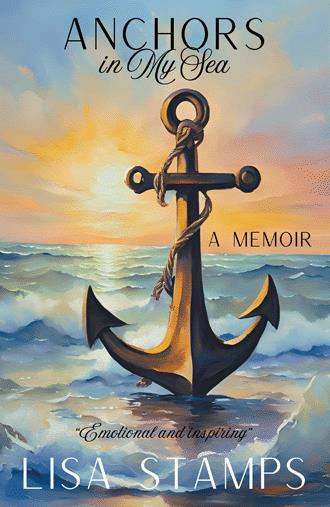
Anchors in My Sea
A MEMOIR
by
Book Cover & Preview Text
More indelible than a birthday, this date each year would be circled on the calendar. Tuesday, February 9, 1971 began as a gray winter day during one of the rare icy winter storms in Alabama. A bitter twelve degrees, it was one of the coldest days I could remember, the white Chevrolet truck was cranked to heat up before our daddy left the warmth of home to join the other loggers in the frigid pines. The high temperature wasn’t expected to get out of the twenties. Wind chills were in the single digits. That kind of cold was miserable for Southerners. My fingers were numb. As I waited for the bus, the frost forced me to remember the biting wind one dreary day a few weeks prior. In January, there was a hog killing in our yard. The previous spring our parents had gifted us each with a baby pig. Little did we know, when we cradled the squealing swine in our arms like babies until they were months old, that their plump rumps would end up on our family’s table for breakfast and supper. They were our snouted pets, fed by hand. I wondered how a person could put on a plate any animal that had a name. The three of us rallied together and refused to eat one night. I think we all shed tears about losing them that way. The temperature had dipped and stuck below freezing that week. I watched as every one of my aunts and uncles shivered while they ground sausage. I asked, “Why did y’all pick such a cold day to kill hogs?” One of my uncles laughed. Then he explained, “You butcher hogs in the coldest weather. That’s how you keep the meat preserved.” I watched in anguish and perplexity as each lady and man in the family completed their particular job while the hogs hung, and big black iron pots boiled. The men gutted them, and the women made chitlins. I dared not try one of the old timey Southern delicacies. The smell of everything sickened me. I tried to forget about that day. Now, the winter continued with a vengeance. After bundling up, we listened for the bus inside, so we didn’t have to wait at the road, shivering. I could hardly bend my elbows. On days like this, Mother tended to pile us thick with layers under our heavy coat. She hated cold weather. The three of us gathered at the breezy living room window, hugging our books and watching for the yellow cheese wagon to top the hill. None of the country parents took their kids to school. Only well-off high schoolers owned vehicles and drove to school. The bus was our only way. We knew we had to be on it. When it rolled into view on the narrow gravel road, we yelled goodbye to Mother and darted out the door. While a straight drive to our school across the Fayette County line into Tuscaloosa County would take only about twenty-five minutes, the bus ride took over an hour as we stopped and started to pick up the sleepy pupils. Temperatures were one extreme or the other during the school year, like an oven or a refrigerator. No student enjoyed the ride in those conditions. Every winter morning we were cold to the bone, even if we sat close to the front where the heat blew on our legs. Chill bumps covered me until I stood by the coal heaters at school to thaw. On arctic days like this, I daydreamed about summer, my favorite season. Thoughts of ninety degrees seemed to warm up my body. During the sizzling months, which were most of the months in Alabama, we had no reprieve. The old school didn’t have air-conditioning. It was sweltering even with the tall wall of windows open. The hot days outnumbered the cold ones. All of us weary kids were drenched with sweat when we reached home in the afternoon. The sauna of summer and the bumpy bus ride on gravel roads drained what little was left of us from the school day. My thoughts of wonderful warm weather were broken. In the middle of the math lesson, another teacher cracked the door and interrupted. She stuck her head in and said, “Please send Lisa to the office.” Then she closed the door. A hush and stillness stole the attention away from our schoolwork. Miss Morgan said, “Go ahead, Lisa.” I hesitated in my seat. I had never been summoned to the office before. I looked at students who looked at me. Their stares burned my skin, sucked the breath out of my lungs. My heart pounded so loud I was certain the other students could hear the drumbeat. I shuddered but had to obey. I rose from my chair, twisted the squeaky knob, and opened the heavy door. My prolonged strides down the wooden hall echoed, and I realized every student in every classroom I passed was hearing my footsteps. When I got to the office, I saw our neighbors, the Smiths. Their eyes darted at me only for seconds. They didn’t show their normal friendliness like they did at church. It was as if they feared I might read the motive of their presence if they looked me square in the face. My sisters, Cindy and Lora, were already there, and our gazes met. We all wore the same dumbfounded expression. The secretary spoke kindly to us. “The Smiths will be taking y’all home.” Shell-shocked, we didn’t dare ask a single question. The Smiths didn’t volunteer any answers. Nothing. Only silence. Deafening silence. We had never been picked up from school before. Never. By the Smiths or anyone. Even when we were sick, we just stuck it out and rode the bus home as usual. I muttered, almost too softly for my sisters to understand, “Somethin’ bad must’ve happened.”
Formats

Book Details
About the Book
What readers say about Anchors in My Sea ...
“A well-written story woven with love, heartbreak, and triumph.”
“A must read for people who call the rural South home or city folks who love wide open spaces.”
“Proof that hope heals.”
“This memoir is full of heart!”
“A real-life example that determination can overcome obstacles and make big dreams come true.”
“An inspirational book of how faith can carry you through grief.”
This is a story about a sheltered young girl who grew up with loss, hard work, and a hero for a mother. It’s a love story that describes how she found her soulmate early while still a tender innocent. It’s a story of growth from a lowly place despite countless struggles to reach lofty goals through grace and endurance.
With equal parts humor and compassion, the author relates how she waded life’s waters to survive and succeed. It speaks of how she lived her dream of having a happy family, how she went from a high school dropout at age fifteen to college at thirty to become a teacher. It’s a story about how she earned a Ph.D. with support from her family, how she lost her husband to suicide, how she joined the ranks of only a few women who sat in the top seat as an Alabama school superintendent. Anchors in My Sea is most of all a story of resilience and hope.
About the Author
Dr. Lisa Stamps
loves this country and homegrown food almost as much as she loves Jesus. She is thankful for the patriotism of her military roots, the innocence of her raising, and the wisdom of her kinfolk. Lisa served almost thirty years as an educator and now spends her time flying planes, attending church, writing, learning guitar, helping those who grieve, loving on family, and especially squeezing grandchildren. She has presented at state, national, and international conferences and published numerous educational articles and a dissertation.
Anchors in My Sea is her first book.