
Your Guide from Birth to Five
The Kinder Garden of Home where littles grow and flourish
by
Book Cover & Preview Text
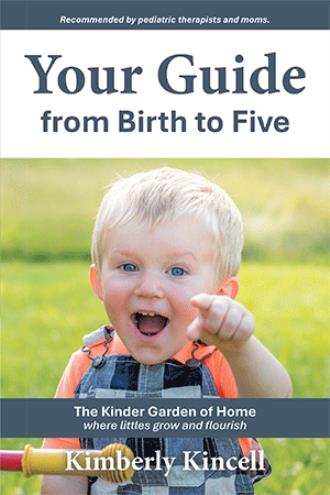
The “Kinder Garden” of Home Where Preschoolers Grow and Flourish B eing the parent of a preschooler is exhilarating, exhausting, marvelous—and absolutely scary! How to raise kids without messing them up for life can seem a bit daunting. On the one hand, this season is beautiful beyond compare. On the other, sometimes when you least expect, a life-altering decision stares you down. One of the early questions is who will pour into your child—especially in light of your own life’s demands. Right now, preschool is pretty much entrenched. At three years old, sometimes two, children go off from their home environment for large portions of their day —because their parents are trying to do what’s best for them. But is that what’s best for them? The answer to that question has lifelong importance. Your preschoolers actually need to be home with you! Are you tempted to think you can’t provide what they need? As a former pediatric physical therapist who spent the most recent decades in education, I’d like to counter that temptation. Recent advances in neural technology have proven that what happens in these early years affects a child for life. We now know that 90 percent of brain development occurs in the first five years of life! The brain doubles in size during the first year alone—proving that these years are definitely important! But what is it that children really need as their brains grow so rapidly in these first few years? It’s not really new brain cells that are responsible for preschoolers’ explosive brain growth, but the neural connections formed between them. Simplified, these are “roads” within the brain that are used throughout the rest of life for thinking and doing—with 40,000 new connections every second. That’s a lot of highway building! But what causes these brain pathways to form? That’s the important question, isn’t it? Classroom time isn’t the answer. We share the big answer in the next chapter, but for now, let’s focus on basic needs. A child's future is not just determined by the genetics he is born with, but rather, the child’s experiences during these years literally shape his brain. And one of the essential experiences is the bond between parent and child! According to researchers like Robert Winston and Rebecca Chicot, “human babies are born very dependent on their parents. … The brain development of infants … depends on a loving bond or attachment relationship with a primary caregiver, usually a parent [emphases added].” When you hug your children, smile at them, and sing them lullabies, you are helping them to pass exams decades later according to Winston—who has had over three hundred papers published in medical journals. Isn’t that a beautiful thought? Children don’t need fancy houses, fancy clothes, fancy vacations, or fancy schools and curriculum. What they truly and desperately need is family. The attachment between parent and child is vital. Children need to be loved. They grow and flourish best in the soil of a secure and loving home. There’s something intrinsically valuable in the gift of parenthood—offered freely and with abandon to our offspring. The relationships forged in a strong home last a lifetime, giving children wings to fly throughout their lives! It’s like a lovely English country garden bursting with colorful blooms. It all looks quite natural, as if waves of color against quant fences just magically appear to cheer the landscape. But we know that’s not true. If we see a lovely garden, it’s because of a committed and diligent gardener. Parents are the gardeners. As tender seedlings, children in a nurturing environment are fed with love, attention, and praise. And as well-cared-for plants do, they grow and flower! The word kindergarten literally means a child’s garden. What better place than the “kinder garden” of home? We tend our babies as they grow through these preschool years—as children build on skills previously mastered. This is the developmental approach. The developmental time table is simply a list of milestones that all children reach in the same general sequence. Important early learning concepts are needed before children are ready for school or academics.” Rather than pushing them out as if they’re already mature plants, we want to ensure that our precious kids get the “greenhouse” essentials needed at two, three, and four years old. First things first! It’s like getting up in the morning and changing out of our nightgowns before going to the grocery store. We need to change first, before going out. It doesn’t work to go to the grocery store first and then change out of our nightgowns. The two things need to be done in the proper order. Or trying to drive to the store before we get in the car. It’s impossible to drive somewhere until we’re first inside the car. And that’s how the preschool years are. Our first graders can’t learn good addition and subtraction if they don’t yet understand what numbers mean. If we skip that part, we’re hindering them. And although they might appear to be successful for a short time, it will all crash if the foundation is missing. For example, it’s possible to teach a three-year-old to recite 2+3=5, but if he doesn’t really know what that equation means, he can’t build on it. Or a child might count to one hundred, but if the numbers are mere words to him, he lacks the foundation needed to do math. That’s why the developmental learning of the preschool years is crucial for future success. Don’t be tempted to skip them! In fact, our rush to push our kids into school earlier and earlier may actually be hurting them. They need these years at home! Important learning takes place before “school” starts. This has been recognized already in several other countries. England has a “Too Much, Too Soon” campaign. In Finland comprehensive education doesn’t start until age seven because Finns have come to understand the importance of preschool experiences— including play. It’s time we, too, root our children in the best experiences possible during these years of unparalleled brain growth and development. After exploring what most fuels kids’ brains, we'll turn to practical ways to easily grow a birth-to-five kindergarten at home to benefit your children for the rest of their lives. Together, we’ll plan an easy, relaxing, yet effective approach. The garden of home just might be the kindest thing you can give to your preschooler. Let’s get started!
Formats

Book Details
About the Book
This book is a true gem! Kim makes it personable, applicable, and practical. I wish that I had the words of wisdom that flows through these pages when my children were five years old and under. I cannot wait to share with loved ones and the families that I serve!
Tiffany Parsons MOT , OTR /L Founder of Agape Love, LLC (The Homeschool OT)
Your Guide from Birth to Five is a natural and beautiful challenge, handed down to parents of preschoolers like an easy-to-listen-to conversation. After working with parents over fifteen years in early intervention, I wish I could go back, hand them this book and say, “Here it is! Here is the encouragement and how-to you are asking for. You really can grow your kids at home!”
Randi Horst, M.S. CCC-SLP
Looking for a solid educational start for your littles? See why home can be the best place to
- Grow your child’s attention span
- Cultivate a love of reading and math
- Fill your home with joy and peace
- Build family relationships
- Prepare for kindergarten and first grade
- Find your own confidence as a mom!
Your Guide from Birth to Five walks you through the first five years, step by step–– toward a successful future!
About the Author
Kimberly Kincell worked with children for over four decades before writing Your Guide from Birth to Five. As a physical therapist, she has worked at pediatric hospitals, clinics, the school system, and in early intervention. A mom of three and “grandmommy” to five, Kim has spent her more recent decades as a board member of a statewide homeschool advocacy organization. Get to know her better at NurturingBirthtoFive.com.