
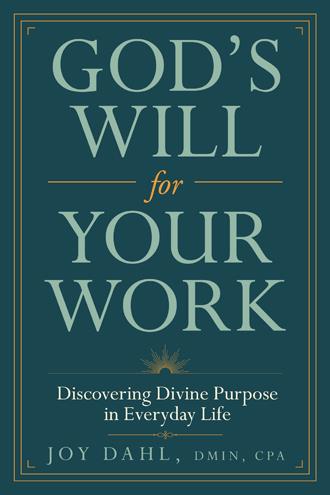
God’s Will for Your Work
Discovering Divine Purpose in Everyday Life
by
Book Cover & Preview Text
This book is about work. Consequently, it is also about workers––not just leaders, executives, and business owners, but all workers in all types of work. To understand work and workers, we must delve into the waters of Theology of Work. When we hear the word “theology,” it can sound like deep water which we are hesitant to explore. And we have questions. Does theology have relevance to the challenges I face in my workplace? Is it for non-scholars like me? Can I understand and apply its premises to my work and life? Will the discussion shine light on answers to my questions? The answer to all of these questions is “yes.” Through this book, we discover what God teaches us about work. You are not alone in your questions about God’s will for your work, so we’ll embark on this journey together. Let’s intentionally let go of the siderail of our current understanding and allow ourselves to tread water with Jesus for just a minute, starting with this: Our view of work shapes our lives more than anything else, simply because we spend more time working than doing anything else. Work is not all of life, but it is central to how we find meaning, purpose, and dignity in our existence––or fail to find it. Do you agree with this statement? Why or why not? We do in fact spend more time working than doing anything else––whether or not it’s paid work, and whether or not it’s a role outside our home. The question centers around whether or not we believe that work is central to how (and if) we find meaning, purpose, and dignity in our daily life. God designed humanity in his image to work. God also developed a strategic mission in the world. And God created each one of us to play a critical role in his mission. Today, God invites us to join him right where he has strategically placed us for this season. For each one of us, the call to God’s mission represents an invitation––which you can accept or ignore. As we establish a framework for our call to God’s mission, we start by exploring God’s overarching mission and our identity as believers sent by and with Jesus into the world. God’s Vision, Mission, Strategies, and People The missio Dei (Latin for “mission of God”) encompasses God’s continuing mission in the world for the redemption of all creation. Followers of Christ are called and sent to join this mission. However, people often struggle to understand and embrace their calling to live and work on mission with God. So, let’s go back to the beginning––the very beginning. “In the beginning, God created…” (Gen 1:1) or in other words, “In the beginning, God went to work.” In the very first verse of the Bible, we begin to learn about work and who God is as a worker––creator, provider, sustainer of life. God actively works in the world through his strategic plan and healthy rhythm. As Scripture unfolds, God reveals his mission. And he actively invites each one of us to join him. As I have studied God’s vision and mission, his intricate scenarios and detailed strategies amaze me. For anyone not drawn to tactical operations, or for those who think a book about mission and strategy isn’t for them, consider these scenarios of strategy development and implementation from our everyday work world: • a teacher preparing the week’s lesson plan • a nurse addressing the day’s patient care responsibilities • a salesrep creating a prioritized call list of clients based on their issues • a hostess seating tables in open sections based on the number of people in each party • a CEO presenting revenue and funding projections to the board of directors • a mom preparing lunches and reviewing the schedule of the day’s drop-offs, pickups, and taxi runs to activities Many of our daily activities involve mission and strategy which serve as drivers of our daily tasks. We image our visionary God who implements mission and strategy through us (his people) as we implement our everyday work. And all of us as Christ-followers are leaders in our circles of influence. So what are God’s vision, mission, strategies, and people? An exploration into God’s mission requires us to first step back and gain a broader perspective of vision. Vision focuses on the future––the end goal and desired outcome. As it pertains to God, his vision includes shalom––a Hebrew word encompassing “the way it is supposed to be.” God gives us a glimpse of his vision in Revelation through his details of the New Jerusalem (which we explore in more detail in chapter 5). His vivid picture reveals people from all nations, tribes, and languages––and the best of all human creation being brought into his eternal city. With this as a glimpse of God’s ultimate vision, we begin to dig deeper into his mission. God’s mission establishes the overarching plan to achieve his desired vision. We can identify God’s mission plan as humanity joining with God in his work through the Cultural Mandate (detailed in chapter 2). So, God’s vision includes all nations, tribes, languages, and the best of human creation––and his mission comprises humanity as coworkers of God. Within this mission we find: 1) the specific strategies to be developed and implemented, and 2) the people who carry out those strategies.
Formats

Book Details
About the Book
WHAT IS GOD’S WILL FOR ME? In other words, what is my purpose? For most of us, if we knew what God wanted us to do, we would gladly put it into practice. Unfortunately, most of us do not understand his will for our everyday lives. Is God’s purpose something we search for? Is it something we achieve? Is it a destination we get to in our spiritual walk? All of these have us as the focus—what we do, what we achieve, where we go. Instead, God’s purpose centers on God. Seeking God’s purpose for us means seeking God’s purpose in and through us—including our work. God has prepared specific good work for each of us to do (our purpose), and he invites us to say yes to these specific missional tasks (our calling). In this pioneering guide for our faith-work journey, Dr. Joy Dahl explores God’s truths about our strategic work within his mission. We learn what God reveals about work and workers, we encounter workplace stories that highlight the ordinary turned extraordinary, and Joy offers insights from her personal and professional experiences and her doctoral journey through Theology of Work. Included are reflection questions, sample prayers, a personal Roadmap to Impact, and weekly 30-Minute Spiritual Workouts. God’s Will for Your Work is a valuable tool to discover God’s will for our work as we pursue a more meaningful and impactful life.
About the Author
Joy Dahl, DMin, CPA works as a fractional CFO providing business strategy and financial leadership to startup and high-growth organizations. She also empowers faith-work integration as a speaker and teacher by equipping believers at all levels to embrace their calling as Christ’s ambassadors. Joy earned two master’s degrees and a doctorate from Dallas Theological Seminary. For more information, visit www.joydahl.com.