
I Am Not A Christian
I Am Kingdom
by
Book Cover & Preview Text
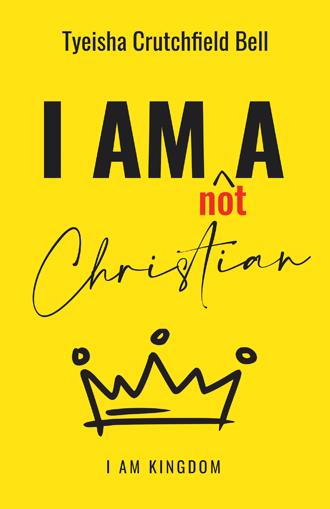
The problem is not the word "Christian". By no means do I tend to illustrate that the problem in our belief system today is derived from an error in the word itself. But rather, the assumptions of the word, both connotative and denotative, that have helped to give false identity to countless people over centuries. And that false identity being the reason that so many Christians, Christ's people, are so far from Christ; attempting to operate within the confines of religion directed by rules and not seeing that the full presence of God has no box. Both meanings have evolved into constraints of who Christ's people should be. And those constraints create boxes that God does not live in; He's too big. Jesus is my Savior, He is my King, He is my Redeemer and my Deliverer. But who I am, my identity, is so much more than me simply following Him. Following Him is something I do. It is not the totality of who I am. Those are reasons that I will sing His praises forever, but it's not the foundation of my connection with Him. The foundation of our love has to come from a place of reverence and declaration, not a place of need or fear of hell. My identity was established by my Creator. I am a child of God, a disciple - that's actually what Jesus called us - I am the representation of the Kingdom of God, so, that's what my identity is. This identity calls me royalty, not a follower. This identity shows that I've been redeemed, it details the grace necessary in that redemption, it tells of a mighty Savior who loved me enough to lay down His life so I could have a relationship with a wonderful Father. This identity details my sonship because of Christ. This identity has nothing to do with a religion and it’s definitely not something that the Antiochenes could have understood as they essentially gave Christians their identity. There is no box for God's creation and the thing that He called very good. Over the many years and generations of trial, turmoil and tribulation, our identity has been reduced to so much less than what God would have us been known as. There are those who use Christianity simply as a survival method: the world is hard, so we need something to believe in to get us through this tough life. They think that we're only here to survive and help others survive; that's the purpose. In that thought process, they begin to lean on Jesus simply to survive. We use Him as an anchor or a lever to pull in the face of adversity and this is how we advance Christianity. We market the simple promise of hope in a devastating life to hungry consumers as the crux of what we believe. Others use Christianity for the promise of prosperity, in this life or the next. They cling to belief in Him solely because of salvation, in hopes of living a better life, making it to heaven or to be healed. These things market Christianity to desperate and hungry people to satisfy their hunger but leave out His sovereignty, our dominion and the point of it all: love. And because our God is good and does all of these things for us, most people are able to experience the benefits of being a child of God or a disciple without actually understanding what it means or walking in it. God brings hope, gives prosperity, He heals the sick and saves us. The problem is that a lot of Christians only use the benefits of being a child of God to further advance the religion Christianity, thus soiling our actual purpose, our real identity. So, people end up believing in God and love Him solely for the benefits He brings. They don't actually desire to be with Him and don't really love Him just because He is God. If being a child of God didn't come with all of the aforementioned benefits, it would be a much harder sell to the masses because we live in a world where people only care about the WIIFM (what's in it for me). Selling people merely on the benefits of God has mass produced people practicing a religion (trying to check a box just to get the benefits) that believes in Jesus for the pot of gold at the end of the rainbow or to not go to hell. Christians. God chose us. At the heart of His choice is a desire for communion with us. We, as His children, have to get to a place where that is enough within our relationship with Him. Where promises of heaven in the afterlife or heaven here on earth don't matter in my acknowledgement and love for who God is. My desire for this book is for the reader to demolish the restraints that religion has made on their relationship with God. It's also my hope that the reader will get back to the heart of God's desire - communion and relationship. The love story that is the Bible tells a tale of a God who desires to just be with His creation. We’ve got to see this as the point of what we’re pursuing - relationship, not religion. I don't mean to imply that religion is all bad. Had it not been for religion, I wouldn't have come to a church where I came to know God in the first place. Rather, I want the reader to see that religion isn't the goal; it's not the point of it all. There is a greater purpose beyond going to church or reading the Bible and there is a deeper love waiting to be uncovered beyond the love of a God who simply does things for you.
Formats

Book Details
About the Book
My desire for this book is for the reader to demolish the restraints that religion has made on their relationship with God. It's also my hope that the reader will get back to the heart of God's desire - communion and relationship. The love story that is the Bible tells a tale of a God who desires to just be with His creation and it’s time for that Gospel message to be our keynote.
And as we’re adopting our own identity, we have to get back to the commission that Jesus left us with. Jesus Himself says that we, Christ’s people, are supposed to be doing things greater than He did while here on earth. Kingdom should be reigning on earth more now than it did while Jesus was physically here because He’s with the Father and because of that sacrifice, He is in us. And through us, the world should be seeing Kingdom.
My belief is that the world isn’t seeing kingdom because Christ’s people aren’t being Kingdom. We are failing to adopt our true identity, disciple, and take up our cross because what it means to be Christ’s people today has been reduced down to our own individual salvation instead of the story of our great King. It’s time for His story to become more important than our own.
About the Author
Writing since she was nine years old, Tyeisha aspires to deliver a fresh look on topics concerning faith and Theology. Her deep love for the Lord and passion to help this generation see and believe in His overwhelming love drives her to authentically express spiritual truths through new perspectives.