
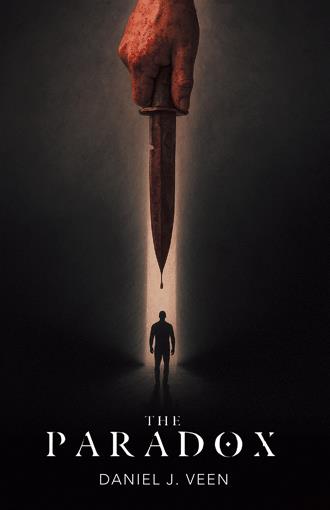
The Paradox
by
Book Cover & Preview Text
Chapter 1
The practice of law almost always involves a large dose of uncertainty. Invariably someone’s life has been, or is about to be, thrown into chaos: the marriage ends, the child stays, the child goes, the bank account disappears in an instant, a man will spend the rest of his days in prison or be as free as the rest of us pretend to be. But the legal profession has one constant: winning is good; losing is bad. This rings true from the billion-dollar class action attorney to a legal aid lawyer staving off eviction for the destitute. Everyone wants to win. It’s that meager certainty, like the small, thin, fragile needle on a compass always pointing north that keeps the legal profession true—so to speak.
This was the case for me, until one day when that steadying comfort was taken, and I found myself clinging to the solid-oak defense table, hoping my client would be found guilty. Freddy Pifton, the client, stood with me to the left, and out of the corner of my eye, I could see his forced, plastic smile and the small beads of sweat rolling down his neck, even though Judge Williams kept her courtroom a brisk sixty-seven degrees. The jury was being escorted back, and Freddy’s time of reckoning had arrived.
The members of this particular jury were mostly common folk with no more than a high school education, which had not been by chance but design. I had used various challenges to get rid of the more educated, even eliminating a medical doctor from the box, my attack galvanized by the doctor’s politically incorrect title for an article in a medical journal: “A Study in Genetic Differences between the Races.” The substance of the article was relatively benign, discussing possible, small genetic differences between white and black athletes in the calf muscle, but that title was explosive. Playing the race card to perfection, I shoved the big, bold letters of the article’s headline down Judge Williams’s throat until she finally coughed the doctor out of the jury. Was the doctor a racist? I neither knew nor cared. A large portion of my defense involved accentuating the confusion a case with two weeks of testimony brings. Intelligence counters confusion, and while education isn’t the best litmus test for intelligence, it is one of the easiest.
Across the black marble aisle stood the prosecutor—handsome, clean-cut, his smile exuding confidence, too young to be trying a case of this magnitude. Long murder trials are tricky creatures, where small bits of vaguely relevant uncertainty can accumulate and choke out the real issues. Whether it would be enough to get my client off, we were about to find out.
As the jury sat down, the attorneys and the defendant sat down also. Like a dog, Freddy was finally catching on regarding when to sit and stand. For much of the trial, he seemed oblivious to his surroundings, nodding off during testimony, yawning as the coroner described the wounds of the victim, laughing quietly in times of silence. But this time, Pifton finally remembered to sit without my aid. A small, nervous smile curled on my lips as the thought of congratulating him briefly passed. In reality, no sane person would be foolish enough to belittle Freddy Pifton. He was over six feet, African American with a stocky frame swelling out of his orange prison suit, arms and neck covered in serpent tattoos, his mocking grin almost always present. His rap sheet started in 1983 with a felonious assault conviction and ended in 2007 on a drug dealing charge that ultimately pleaded down to the lesser crime of possession. Freddy had me to thank for that. Between the 1983 and 2007 convictions were twelve other charges for felonies and misdemeanors. Five of these had resulted in convictions in which Pifton had either done probation and no time or only a few years behind bars.
Formats

Book Details
About the Book
In a darkened, nearly deserted alley, I watch Freddy Pifton brutally stab a man to death. Impossible. Not that my client wouldn’t murder someone. That seems very conceivable, maybe even likely. What violates reason and explanation is how I have been drawn to witness this. Or is it just a dream - a nightmare?
Almost three years ago, Attorney Jon Nevens watched his wife waste away from cancer. When she died despite their prayers, what little faith he had died as well. Struggling to continue on, Nevens draws strength from his two loves: money and his precocious, six-year-old daughter. Maggie generously returns his love; however, the gatekeeper for the riches he covets is a cold, intimidating man, the last of the firm’s founding partners.
While struggling to raise Maggie and climb the corporate ladder, Nevens’s life plunges back into chaos, jolted by a vision frighteningly similar to the crime his client is accused of. What follows is a wild ride spurred on by the supernatural and a flawed judicial system, a journey that leaves Nevens wondering if his career and sanity are slipping through his fingers.
About the Author
Daniel J. Veen is an attorney who has been practicing law in southwestern Michigan for more than thirty years. Many of the characters and situations have been developed and colored from real clients and experiences encountered from over a quarter century of practice.