
The Word in the Wilderness
In the Window: The Simple Series The Old Testament Tabernacle and Finding Yourself Within It
by
Book Cover & Preview Text
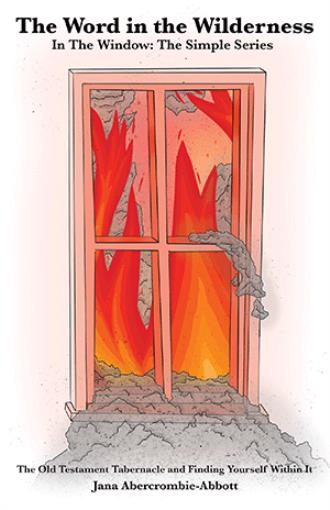
In all created order, the Author of that order—the Creator of the realm of play if you will—instituted the governance of life. He set forth the rules of engagement, laws to which humanity must answer, pertaining to treatment of both God and man. These laws are clearly defined and stringently upheld. The Judge who oversees the law is unwavering in His judgements and unyielding in His verdict. When the law is broken, the appropriate penalty will—without exception—be dispensed. The altar was like that. It was offensive in its boldness and unwillingness to hide in the shadows or allow one to maintain his self-deceit. It was ruthless in its persistence of being noticed. It was unwilling to passively overlook faults. The Law wasn’t instituted simply to give man a standard they should strive to meet. It was instituted to help us all see that we never can. All have fallen short. Every man to ever live, save One, has stood before that law set forth for us and come up short of upholding it perfectly. Some may feel they have come so close, some realize all too well how far their efforts fall short, but the rules state that any standard not met to perfection renders the man guilty. As James informs us, “For whoever keeps the whole law and yet stumbles at just one point is guilty of breaking it all.” While there are many laws, there is but one punishment for them all: death. When Adam and Eve set us all on this downward trajectory, they became the first ones to necessitate the penalty of death. Having their eyes opened to their condition, they became aware that they were naked. Things had changed, some things looked private or dirty or veiled. They needed clothes. God Himself provided them for them. He covered them with skins. In order for a person to put on a skin covering, something had to lose its skin. The first payment of death for the penalty of sin. Every sin from that one to now, from now to Christ’s return, will require the just payment for man’s guilt of sin. No man but Jesus has failed to accrue this debt. As a part of the description of the harvest of the wicked in Revelation, we’re told that an angel comes “from the altar” and calls for the reaping of the lost. This angel was tasked with gathering the payment due to this bronze altar upon which we now gaze. This altar is the collection point of all the payments due for man’s sin. The wages of sin—the required punishment for the failure to comply with the stated rules of this Creator’s world—comes due at this moment in history and all who owe the fee will have the angel of the altar come out to collect his due. It is unavoidable; it is certain; it is assured. The altar was made of bronze. Everything for a reason. Bronze is solid. It doesn’t bend well, and it is sturdy and strong. Unyielding and unwavering. The rules of the altar can’t be bent. They won’t be stretched or relaxed; they can’t be overlooked or reasoned away. The law stands, and the penalties for all who would subvert that law will be called as due and paid in full. Bronze feet don’t move, and bronze altars don’t bend. At each of the corners of the altar, there were horns. There are a few facets of horns that clarify and enlighten us here. One, horns are a symbol of power. Where there are horns, there is someone with control. Many horns, much power. It’s an interesting dilemma, then, to find horns on an altar of sacrifice. The altar has the power. No king, no royalty, no prince among men, no general or commander, no soldier, no mercenary, no giant nor beast comes here and finds themselves at all strong. Before the Judge’s throne we all stand lowly, weak, powerless, and condemned. Two, the horns were used to secure the sacrifice. I think Abraham and Isaac may help us with this one. When Abraham was asked to offer his promised son on an altar on Mount Moriah, we are told that he “bound” him and laid him before the Lord. There’s such sweet beauty in this picture. Abraham was an old man and Isaac a young one. If Isaac had not wanted to be placed upon that altar, how hard might it have been to fend off the old man? To some degree, Isaac had to have been willing, had to have conceded to the wishes of his father. Yet he was bound. The horns of the altar held the offering in place because, like Isaac, not every offering is easy to make. Isaac may have had some modicum of concession, but he was still bound. He still needed restraint. He still would have had some natural, human inclination to take back what seemed so intimately his—his own life. Even when we want to hand things over, we very often have trouble keeping the hand extended until the good is gone.
Formats


Book Details
About the Book
Encompassing countless chapters of Old Testament Scripture, the tabernacle is often considered an unnecessarily descriptive and archaic historic and architectural oddity. Yet God saw fit to give us these descriptions, to build this story, to construct this theme that would prove so central in the lives of God’s chosen people. He wastes nothing. His purposes in this structure and all its many details are pertinent to us, to you. There is meaning and beauty and a distinct, passionate, life changing, spirit combusting, and soul gratifying word for us in the tabernacle. God was thorough and comprehensive; we owe it to the sanctity of His Word to settle ourselves before this ancient structure and find His purpose and passion in it. Find Him in it. Find ourselves in it. Find hope and direction, mercy, faith, and life in it. See the story begin, watch the building arise upon the desert landscape, envision the laborers finding their place within its walls, and discover a sense of belonging as you journey from its ancient beginnings to your own life’s purpose.
About the Author
Jana is a prolific teacher, speaker, and student of the Word. Her passion is the Church and the discipleship and maturation of believers. Seeing the Body of Christ realize the grandeur of God at a deeper level is her aim in this work and every other of her life. Jana has a wonderful husband and two incredible young adult children and is enjoying this season of God’s great favor.