
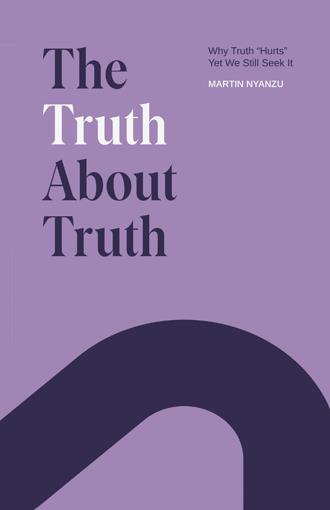
The Truth About Truth
Why Truth "Hurts", Yet We Still Seek It
by
Book Cover & Preview Text
IS TRUTH DEAD?
Isaiah: “So justice is driven back, and righteousness stands at a distance; truth has stumbled in the streets, honesty cannot enter.” (Isaiah 59:14 ESV)
Have you heard anyone utter the statement “truth is dead?” Did it sound logical to you? Did you press them to demonstrate how they came to that conclusion? Or you ignored it because you thought the claimant was jesting? How about this? Have you heard anyone say, “You cannot tell me what to do”? How about those who believe that a truth claim could be valid for you and not for them? A truth claim is a view of reality proposed for acceptance and action. I have read about these perceptions and observed them acted on the screens; however, though I shook my head in disagreement, I thought these ideologies were far away until I realized these patterns in the lives of some people closer to me. By the way, whenever anyone tells you, “You can’t tell me what to do,” they have sunk their ship
because they just told you what not to do, the very thing they are pushing against. To say nobody can tell you what to do is also to theorize that there is no objective standard of behavior. Sometimes people are unaware that is the stance they assume when they make these statements. Because of the contradiction I just pointed out, then, someone can tell somebody what to do, except that what is said must be the truth; it must be rooted in reality and presented in love.
In 1966, the cover of Time magazine read “Is God Dead?” A small group of young theologians, Thomas Altizer and William Hamilton, prominent among them, had arrived at a conclusion about God’s existence that would incite enormous controversy across America. God was dead, they told John Elson of Time magazine, and in scorching red letters cast across the dark cover of what would become one of its best-selling issues, Time shared the prospect with the country. Keep sight of the fact that these were theologians. The public declaration of the death of God theologians became a big deal at the time because it caused a stir Americans’ social and religious life. His demise would have tremendous implications since God is alive and active in the world, according to Christian teachings, and still speaks through scripture. Among many other things, the one effect of a successful killing of God that would be immediately recognized, and perhaps was the goal of the death of God theologians, was to nullify the authority of the Bible. Since scripture contains the breath of God and is living and active (Heb 4:12), the death of God would result in the treatment of the Bible as a piece of literature and nothing more. Since 1966, the deconstruction movement fathered by has gained traction in secularized America.
There is no doubt that before the announcement of the death of God and the escalation of Deconstructionism, America’s spiritual pulse had slackened. The secular state of our society was what gave these theologians the audacity and inspiration to speak. My point is this, deconstructionism as a human philosophy and tradition is the inspiration behind statements like “what is true for you is not true for me,” “you do you, and I will do me,” or “truth is relative” Deconstructionism is a type of interpretation that exalts people’s perspective and seek to separate the connection between words and what they refer to. A deconstructionist is not interested in destroying meaning but in reconstructing it. It is not negation that dismantles a text but criticism that remodels it. It stands against fixed rules of analysis. While the destruction of meaning may not be their initial intention, they end up recreating their meaning, and in the final analysis, they end up confusing the meaning of meaning. Deconstruction has become a technique some are using today in their hermeneutic enterprise.
The last time I checked, the United States of America Constitution, deeply rooted in scripture, was still in operation, though God had “died” long ago. The death of God would mean the demolishing of America’s constitutional foundation. Not only had the constitution been in operation, but churches were also still present and active, and many more, I am sure, are being planted, at least within my context. If God had died in 1966, the churches would have folded, and America would have been woefully unable to offer her citizens spiritual and emotional support from the deadly mass shootings and bloodshed since then up to the present. Jesus promised to build the church; that was a true statement. Many people sought spiritual help during the recent pandemic. The numerous pockets of revivals since the 1960s have been great testimony of God’s active presence in American spirituality. God is not dead after all, instead, the death of God ideology is finished; it was a lie that could not stand the test of time. What does it mean for someone to say, “Truth is dead?” will that statement itself be true? If truth dies, we can no longer make claims
that elevates our various assertions or publish books, we shall all be silenced. The more a person denies the truth, the more they affirm it. It will take the truth to deny truth, this is why truth exalts itself; it never dies and cannot die. The idea that nothing is actually true is to make a statement that something is actually true. Intuitively speaking, each of us has an overwhelming sense that something is actually true of the world we live in. We can only turn to the wrong places and pretend truth is dead. We can only suppress truth, but it is too powerful to stay low.
Formats

Book Details
About the Book
Truth is a bitter pill to swallow, yet it delivers us from bondage and destruction. It is often said truth “hurts,” but does it? or it is lies that hurt? We are in a social conflict because the so-called postmodern era allows for creation of meaning even if it defies reality. Regardless of our perception about the nature of truth, we will still seek it even if we claim it “hurts” because we can’t live without it. Martin Nyanzu examines the nature of truth, what it means to say truth “hurts,” and identifies some of the popular lies currently trending in our culture.
About the Author
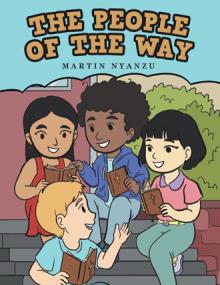
Martin Nyanzu is a Theology and Apologetics PhD Student at Liberty University. He is the author of The People of The Way, an apologetics book for kids. He is also the founder of Unsettled (Liveunsettled.org). His passion is to help bridge the gap between faith and doubt.