
The Last Cowboy in New York
by
Book Cover & Preview Text
One evening, Johnny was reading through some ranching magazines when he saw an article about a rancher breeding white buffalo. From Johnny’s reading of Westerns, he knew that Lakota and Sioux tribes revered white buffalo as the most sacred living thing on the earth. Johnny read that this rancher was looking to sell some calves to other buffalo ranchers. White buffalo in the wild are rare, with only one in ten million being born. A white buffalo is the result of a rare recessive genetic trait. Johnny thought this type of buffalo would attract more tourists who would want to see such a rare animal up close. Johnny decided to visit the rancher to see the white buffalo up close. Johnny drove all the way to South Dakota to speak with the rancher and see his stock. He spent two days at the Carter Buffalo Ranch haggling the price with Mr. Carter III. Johnny negotiated to buy one bull calf and two cow calves. As Johnny had hoped, the white buffalo were quite a draw at the ranch. The herd slowly grew over the next six years to include four white females and two white males. Not all the calves turned out to be white due to the genetics involved. The original bull buffalo calf turned out to be quite a specimen. Fully matured, he weighed close to two thousand pounds with a large woolly hump on his shoulders. He was not a pet, though, especially during rut season. This occurs from June to August. During this time males can be quite aggressive. Approximately one year after the bull calf arrived at the ranch Johnny named him Ulysses after General Ulysses S. Grant. He was so named for his ability to intimidate the ranch hands and other bulls as General Grant intimidated his enemies in the Civil War. Johnny kept the white buffaloes in a one-hundred-and-fifty-acre pasture. This was the first of the pastures he planted with prairie grass. These grasses gave the pastures a wild look, with tall Indian grasses growing in the field and Buffalo grasses as the base. Buffalo grasses grew only twelve inches high, where Indian grass were over four feet tall. Johnny also included other short grasses such as Big Blue Stem, wild rice, wild rye, switch grass and blue stem grass, Blue Grama grass, Prairie June grass and Sand Dropseed. Johnny hoped that the meat from his harvested buffalo would taste different from any other harvested buffalo as most others were fed on hay, grassland, and range grasses. Johnny also thought that there might be something in the buffaloes’ genetics that would make them feel more relaxed if they were eating grasses their ancestors had eaten for thousands of years. By adding white buffalo to the herd, Johnny really felt that he and Pico’s ranch would prosper even more than they could have imagined. All had been going well at the ranch until one cold evening in November. Johnny was seated at his desk, going over the charts he kept for the buffalo and horses on the ranch. Johnny had hoped that all four white female buffalo would be calving the following Spring. These females had come to breeding age and, with Ulysses ability to produce large, vibrant, and healthy offspring, Johnny had hoped for four healthy calves at calving time. Johnny used Ulysses as a stud for some of the brown buffalo as well, hoping to propagate more calves with the white recessive gene trait. That night Johnny had just closed his ledger and poured himself two fingers of Buffalo Trace bourbon when he heard a gunshot coming from the east. This was the part of the ranch where his white buffalo herd was located. Johnny looked through a window with an old telescope field-glass he had. In the moonlight, Johnny could barely make out the silhouettes of two people and what looked like a Jeep. Johnny knew it was deer season, and he was worried that hunters had come onto his property to hunt deer. The entire property was posted ‘No hunting’. Johnny didn’t want any stray bullets hitting his herd. He immediately put down his drink and called two of the ranch hands, Gus, and Miguel, and had them meet him at the stables. He also instructed them to bring their rifles. Johnny put his coat on and went out to his pickup truck and started out for the stables. Once there, they saddled their horses and mounted them with Johnny riding Traveler as always. Johnny told the ranch hands where he had seen the men and suspected they were poaching deer. Together, they rode out to the pasture. As Johnny and his men approached, they could see the headlights of the Jeep. The lights were shining on two men with a rope around the front of the vehicle. They appeared to be trying to drag something. As they drew closer, Johnny became extremely angry. He saw that the men were not trying to drag a deer carcass with their Jeep but were trying to drag a white buffalo. Through Johnny’s field glass, he could now see it was Ulysses tied to the jeep. Johnny knew it was Ulysses as no other white bull was anywhere near his size. In a whisper Johnny told the two ranch hands to be quiet. They all rode closer until they came to about one hundred yards from the jeep. They then dismounted, and Johnny removed his Winchester 30-30 rifle from its sheath attached to his saddle. “Hey, boss,” Miguel whispered, “you gonna’ shoot’em?” “No.” Johnny said, “but we got to keep them here until the sheriff comes.” Then whispering to Gus he said, “you go back to the stables and call the sheriff. Have him bring a four-wheel vehicle out here, too. Tell him we have a couple of poachers, and I will be pressing charges.” There was a pause then Johnny said in a strong whisper, “Go! Now Gus!”
Formats

Book Details
About the Book
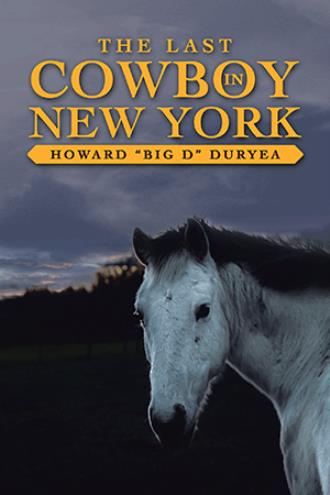
Opening in Brooklyn on the verge of WWII, The Last Cowboy in New York, chronicles the lives of Johnny McGuire and Antonio “Pico” Vannucci from their first encounter as teenage numbers runners to being reunited as WWII dive bomber pilots. Facing together the dangers of war leads to a bond resulting in a lifelong friendship that overcomes all obstacles and inspires their foray into the entrepreneurial pursuits of buffalo and horse ranching. While fighting his own emotional scars of war and personal loss, Johnny discovers the joy of horseback riding and the healing benefits of a working relationship with horses. This discovery motivates him to develop a horse companionship program offered at no cost to fellow service members to help them, like himself, conquer the emotional effects of battle they brought home from war. This program was later extended to include at-risk teenagers. The Last Cowboy in New York follows Johnny, Pico, their families and friends through victory and heartache, times of war and peace, through struggles with their beliefs, and finally, to the ends of their lives. Readers will find The Last Cowboy in New York has within its pages sadness and humor, as well as prosperity, friendship and faith in God and Christ.
About the Author
Howard ‘Big D’ Duryea has drawn on his extensive experiences living in the North Country of New York. There he had the privilege to meet many local characters and his faith in Christ was founded in a small Baptist church, which, along with his passion for folk stories, WWII history, farming and ranching he formed the stories and characters in this book.