
The Garden of Relationships
Where People and Life Events Connect
by
Book Cover & Preview Text
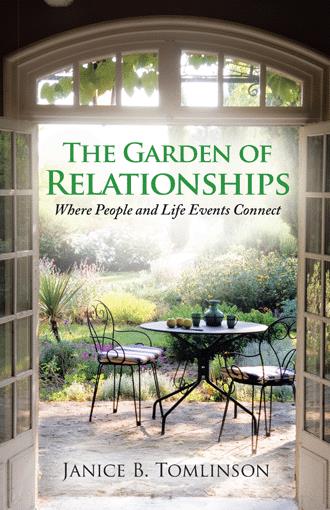
I can still remember the excitement my children had a few years back while they explored the garden at my father-in-law’s home. We watched them move through various flower arrangements, completely mesmerized by the assortment of colors as they walked along the pathway. They wanted to touch the flowers and pick the leaves that looked different from the rest. This memory of my children reminds me that youth have transferable energy that allows adults to seize each moment.
The garden was designed to allow plants to bloom at different times. It highlighted the beautiful contrasts that exist in nature. The lilies will always be my favorite. Their beauty and fragrance captivated me. When something captivates your senses, for that moment in time, nothing else matters. I could not conceal my delight in the lilies. My face was so expressive that, each time we visited, my father-in-law would give me a bunch to take home.
Toward the back of the garden was the fruit and vegetable section. Admittedly, this part of the garden was not much to look at, but we enjoyed exploring it because it was like an obstacle course. As we journeyed, we stepped carefully to avoid cornstalk settling in our hair. It was as if the corn was eager to travel with us, even though it wasn’t quite ready to be picked. We learned that, by their color or size, vegetables usually let us know when they are ready to be harvested.
I reflect on my family time in the garden with fondness. But sometimes I can’t get past my mental images of the worms that called the garden their home. When we put our hands in the soil, of course, just below the surface, the worms are there. Worms are like rose thorns. Both are unpleasant and intrinsically part of things that we consider beautiful. A gardener cannot avoid worms, nor can you avoid thorns if you are planting roses. Similarly, in life we cannot avoid obstacles. We boldly face them in order to create something beautiful. We can overcome difficulties just like a seed that is planted in the ground. After a while we can expect growth.
Our lives are a lot like gardens. It takes effort to ensure that we thrive and flourish during the different seasons. We need to set time aside to nourish what we value; as they say, “You reap what you sow.” The relationships in your life especially require time and attention in order for you to reap their benefits. Naturally, when we water what we have planted, we expect to see growth. When we cultivate relationships by nurturing the people who mean a lot to us, we’ll experience personal and interpersonal growth. Your friends should know that you look forward to their development as much as you expect growth in your own life. But let’s face it, not everything you plant and nurture will grow. Some plants die regardless of the energy we spend caring for them. Having to deal with the disappointment of failed effort sometimes leaves us feeling discouraged. But ultimately, failure is not an option.
People can fit into our lives like puzzle pieces that form a beautiful picture. Have you ever finished a puzzle only to find that one piece was missing from the box or got lost in the shuffle? You may let go of someone only to realize that your life is incomplete without them. I regret losing contact with a friend who had a lot of knowledge and experience in the real estate market. I longed for her counsel at a transition in life when I needed her level of experience. While admiring the picture of your life, you can’t ignore the voids created by the missing pieces, but you can do something about them. Mahatma Gandhi once said that “our greatness lies not so much in being able to remake the world, but in being able to remake ourselves.” Be creative, and make a new puzzle piece by inviting someone into your life.
It is said that all gardens should have compost in order to improve the soil quality and provide a balance of plant nutrients. One of the ingredients is nitrogen. Can you remember a time when you peeled and cut into a potato only to find a dead worm on the inside? I’m sure that, to save the potato, you cut it again, only to find another wormhole. After these two failed attempts, you decided the potato was of no use to you. Now it was destined for the compost.
This could be said of relationships you have invested years in, only to learn as you peeled away the layers that the person did not genuinely have your best interest at heart. This realization may be painful, because it’s hard to separate from people that you have spent years with. However, the beauty of a compost is that what we considered wasteful is not failure. All is not lost. Like the spoiled potato, challenging experiences can lead to regeneration. Over time you will have rich fertilizer to promote personal growth.
Formats

Book Details
About the Book
Our lives are a lot like gardens. It takes effort to ensure that we thrive and flourish during the different seasons. When we cultivate relationships by nurturing the people who mean a lot to us, we’ll experience personal and interpersonal growth.
The Garden of Relationships offers help for anyone seeking inner peace from the effects of past decisions. Grounded in faith, this guide presents nature metaphors designed to help you view the struggles and triumphs of your relationships from new perspectives. Take the opportunity to reflect on events in your life and come to terms with the personal truths that may be difficult to face. If you are restless, you’ll be energized and encouraged to begin resting in God.
This set of personal essays and spiritual lessons invites you to look at the relationships in your life in new ways and gain knowledge that will help you to flourish in the days ahead.
About the Author
Janice B. Tomlinson holds a degree from Tyndale University. She is registered as a Social Service Worker in Toronto, Canada. Serves as a Certified life coach through her business, Within Reach Life Coaching, empowering and encouraging others to become their best selves. She lives with her family in Brampton, Ontario, Canada.